Go to Wolters Kluwer VitalLaw.comGo to Wolters Kluwer VitalLaw.com
VitalLaw®
  • Find answers to your questions
  • Log in to access your subscriptions
In depth. On point.
In depth. On point.
  • Home
  • Legal Directory
  • Home
  • Legal Directory
In depth. On point.
  • Articles
  • Articles
    • ZOOMINFO TECHNOLOGIES LLC, Plaintiff, v. ZENLEADS INC., d/b/a APOLLO.IO, Defendant., U.S. District Court, D. Delaware, (May 6, 2026)
    • ZOOMINFO TECHNOLOGIES LLC, Plaintiff, v. ZENLEADS INC., d/b/a APOLLO.IO, Defendant., U.S. District Court, D. Delaware, (Dec. 15, 2025)
    • ZIP TOP, INC., Plaintiff-Appellant v. SC JOHNSON & SON INCORPORATED, Defendant-Appellee, U.S. Court of Appeals, Federal Circuit, (Dec. 30, 2025)
    • DUKE W. ZINSER, Plaintiff, v. VIVINT, LLC and VIVINT, INC., Defendants., U.S. District Court, E.D. Texas, (Aug. 27, 2026)
    • ZILKR CLOUD TECHNOLOGIES, LLC, Appellant v. CISCO SYSTEMS, INC., Appellee, U.S. Court of Appeals, Federal Circuit, (Aug. 26, 2026)
    • YUKON PACKAGING, LLC, Plaintiff, v. JONES SUSTAINABLE PACKAGING, LLC, Defendant., U.S. District Court, W.D. North Carolina, (May 8, 2026)
    • WYETH LLC, Plaintiff-Appellant v. ASTRAZENECA PHARMACEUTICALS LP, ASTRAZENECA AB, Defendants-Appellees, U.S. Court of Appeals, Federal Circuit, (Jul. 9, 2026)
    • WOODWAY USA, INC., Plaintiff-Appellant v. LIFECORE FITNESS, INC., DBA ASSAULT FITNESS, Defendant-Appellee, U.S. Court of Appeals, Federal Circuit, (Jul. 21, 2026)
    • WOODWAY USA, INC., Appellant v. LIFECORE FITNESS, LLC, DBA ASSAULT FITNESS, Appellee, U.S. Court of Appeals, Federal Circuit, (Jul. 17, 2026)
    • WONDERLAND SWITZERLAND AG, Plaintiff-Cross-Appellant v. EVENFLO COMPANY, INC., Defendant-Appellant, U.S. Court of Appeals, Federal Circuit, (Dec. 17, 2025)
    • WOLVERINE BARCODE IP LLC, Plaintiff, v. ALBERTSONS COMPANIES, INC., Defendant., U.S. District Court, N.D. Texas, (Jul. 9, 2026)
    • WIRELESSWERX IP, LLC, Plaintiff, v. AUDI OF AMERICA, INC., Defendant., U.S. District Court, E.D. Michigan, (Mar. 26, 2026)
    • WINVIEW IP HOLDINGS, LLC, Plaintiff, v. FANDUEL, INC., et al., Defendants., U.S. District Court, D. New Jersey, (Jun. 9, 2026)
    • WILLIS ELECTRIC CO., LTD., Plaintiff-Appellee v. POLYGROUP LTD. (MACAO COMMERCIAL OFFSHORE), POLYGROUP MACAU LIMITED BVI, POLYTREE (HK) CO. LTD., POLYGROUP TRADING LTD., Defendants-Appellants, U.S. Court of Appeals, Federal Circuit, (Feb. 17, 2026)
    • WILDSEED MOBILE, LLC, Appellant v. GOOGLE LLC, Appellee, U.S. Court of Appeals, Federal Circuit, (Apr. 30, 2026)
    • WEPLE IP HOLDINGS LLC, Plaintiff, v. META PLATFORMS, INC., Defendant., U.S. District Court, W.D. Washington, (Jan. 9, 2026)
    • VLSI TECHNOLOGY LLC, Plaintiff-Appellant v. INTEL CORPORATION, Defendant-Appellee, U.S. Court of Appeals, Federal Circuit, (Apr. 14, 2026)
    • VL COLLECTIVE IP, LLC, Appellant v. UNIFIED PATENTS, LLC, Appellee, U.S. Court of Appeals, Federal Circuit, (Feb. 20, 2026)
    • VL COLLECTIVE IP, LLC, Appellant v. NETFLIX, INC., Appellee, U.S. Court of Appeals, Federal Circuit, (Aug. 10, 2026)
    • VIR2US, INC., Plaintiff – Appellee, v. SOPHOS INC.; INVINCEA, INC., Defendants – Appellants, and SOPHOS LIMITED; SOPHOS GROUP PLC, Defendants., U.S. Court of Appeals, Fourth Circuit, (Jun. 23, 2026)
    • VINEYARD INVESTIGATIONS, Plaintiff, v. E. & J. GALLO WINERY, Defendant., U.S. District Court, E.D. California, (Jul. 2, 2026)
    • VINCENT SYSTEMS GMBH, Plaintiff, v. FILLAUER COMPANIES, INC. and MOTION CONTROL, INC., Defendants., U.S. District Court, E.D. Tennessee, (Jul. 30, 2026)
    • VIAVI SOLUTIONS INC., Plaintiff-Appellant v. PLATINUM OPTICS TECHNOLOGY INC., Defendant-Appellee, U.S. Court of Appeals, Federal Circuit, (Sept. 8, 2026)
    • VIASAT, INC., Appellant v. WESTERN DIGITAL TECHNOLOGIES, INC., Appellee, U.S. Court of Appeals, Federal Circuit, (Jan. 7, 2026)
    • VERTEX PHARMACEUTICALS INC., Plaintiff, v. LUPIN LIMITED and LUPIN PHARMACEUTICALS, INC, Defendants., U.S. District Court, D. Delaware, (Aug. 24, 2026)
    • VDPP, LLC, Plaintiff-Appellant v. VOLKSWAGEN GROUP OF AMERICA, INC., Defendant-Appellee, U.S. Court of Appeals, Federal Circuit, (Aug. 19, 2026)
    • VALTRUS INNOVATIONS LTD., et al., Plaintiffs, v. GOOGLE LLC, Defendant., U.S. District Court, N.D. California, (Aug. 10, 2026)
    • VALTRUS INNOVATIONS, LTD., Plaintiff, v. GOOGLE LLC, Defendant., U.S. District Court, N.D. California, (Mar. 16, 2026)
    • LAURI VALJAKKA, Plaintiff, v. NETFLIX, INC., Defendant., U.S. District Court, N.D. California, (Jul. 13, 2026)
    • EDWARD VALDEZ and WILD WEST SECURITY SHUTTERS, LLC, Plaintiffs, v. DANIEL HAMILTON and GERBRIG VANDERWOUDE, Defendants., U.S. District Court, M.D. Florida, (Aug. 20, 2026)
    • US PATENT NO. 7,679,637 LLC, Petitioner, v. GOOGLE LLC, Respondent., U.S. Supreme Court
    • US PATENT NO. 7,679,637 LLC, Plaintiff-Appellant v. GOOGLE LLC, Defendant-Appellee, U.S. Court of Appeals, Federal Circuit, (Jan. 22, 2026)
    • US INVENTOR, INC., INVENTOR'S ASSOCIATION OF SOUTH CENTRAL KANSAS, INVENTORS NETWORK OF MINNESOTA, SAN DIEGO INVENTORS FORUM, INC., MERCEXCHANGE, L.L.C., PAUL MORINVILLE, Plaintiffs-Appellants v. JOHN A. SQUIRES, UNDER SECRETARY OF COMMERCE FOR INTELLECTUAL PROPERTY AND DIRECTOR OF THE UNITED STATES PATENT AND TRADEMARK OFFICE, UNITED STATES PATENT AND TRADEMARK OFFICE, Defendants-Appellees, U.S. Court of Appeals, Federal Circuit, (Aug. 21, 2026)
    • UNIVERSAL ELECTRONICS, INC., Appellant v. ROKU, INC., Appellee, U.S. Court of Appeals, Federal Circuit, (May 13, 2026)
    • UNIVERSAL ELECTRONICS, INC., Appellant v. ROKU, INC., Appellee, U.S. Court of Appeals, Federal Circuit, (Apr. 10, 2026)
    • UNIVERSAL CONNECTIVITY TECHNOLOGIES INC., Plaintiff, v. HP INC., Defendant., U.S. District Court, N.D. California, (Feb. 9, 2026)
    • TWINSTRAND BIOSCIENCES, INC. & UNIVERSITY OF WASHINGTON, Plaintiffs, v. GUARDANT HEALTH, INC., Defendant., U.S. District Court, D. Delaware, (Jun. 16, 2026)
    • THE TRUSTEES OF COLUMBIA UNIVERSITY IN THE CITY OF NEW YORK, Plaintiff-Appellee v. GEN DIGITAL INC., FKA SYMANTEC CORPORATION, FKA NORTONLIFELOCK, INC., Defendant QUINN EMANUEL URQUHART & SULLIVAN, LLP, Sanctioned Party-Appellant, U.S. Court of Appeals, Federal Circuit, (Mar. 11, 2026)
    • THE TRUSTEES OF COLUMBIA UNIVERSITY IN THE CITY OF NEW YORK, Plaintiff-Appellee v. GEN DIGITAL INC., FKA SYMANTEC CORPORATION, FKA NORTONLIFELOCK, INC., Defendant-Appellant, U.S. Court of Appeals, Federal Circuit, (Mar. 11, 2026)
    • TREE DEFENDER, LLC, Plaintiff, v. MIKE HURST CITRUS SERVICE, INC., Defendant., U.S. District Court, M.D. Florida, (Feb. 11, 2026)
    • TRACKTIME, LLC, Plaintiff-Appellant v. AMAZON.COM SERVICES LLC, AUDIBLE, INC., Defendants-Appellees, U.S. Court of Appeals, Federal Circuit, (Jul. 2, 2026)
    • T-MOBILE US, INC., T-MOBILE USA, INC., Plaintiffs-Appellants v. KAIFI LLC, Defendant-Appellee, U.S. Court of Appeals, Federal Circuit, (Aug. 28, 2026)
    • TJTM TECHNOLOGIES, LLC, Plaintiff-Appellant v. GOOGLE LLC, Defendant-Appellee, U.S. Court of Appeals, Federal Circuit, (May 5, 2025)
    • TIR TECHNOLOGIES LTD., Plaintiff, v. COMCAST CABLE COMMUNICATIONS, LLC, COMCAST CABLE COMMUNICATIONS MANAGEMENT, LLC, NBCUNIVERSAL MEDIA, LLC, AND PEACOCK TV LLC, Defendants., U.S. District Court, D. Delaware, (Jun. 24, 2026)
    • TIANMA MICROELECTRONICS CO., LTD., Petitioner, v. LG DISPLAY CO., LTD., Patent Owner., U.S Patent and Trademark Office, Trademark Trial and Appeal Board, (Mar. 18, 2026)
    • TEVA PHARMACEUTICALS USA, INC., Plaintiff-Appellant, v. ELI LILLY AND COMPANY, Defendant-Appellee., U.S. Court of Appeals, Seventh Circuit, (Jul. 13, 2026)
    • TEVA PHARMACEUTICALS INTERNATIONAL GMBH, TEVA PHARMACEUTICALS USA, INC., Plaintiffs-Appellants v. ELI LILLY AND COMPANY, Defendant-Appellee, U.S. Court of Appeals, Federal Circuit, (Apr. 16, 2026)
    • TESLA, INC., Appellant v. CHARGE FUSION TECHNOLOGIES, LLC, Appellee, U.S. Court of Appeals, Federal Circuit, (Feb. 25, 2026)
    • TESLA, INC., Appellant v. CHARGE FUSION TECHNOLOGIES, LLC, Appellee, U.S. Court of Appeals, Federal Circuit, (Mar. 31, 2026)
    • TECHNOLOGY IN ARISCALE, LLC, Plaintiff-Appellant v. RAZER USA LTD., Defendant-Appellee, U.S. Court of Appeals, Federal Circuit, (Jan. 6, 2026)
    • TAPP MFG, INC., Plaintiff, v. SPEED UTV, LLC, Defendant., U.S. District Court, M.D. North Carolina, (Jan. 27, 2026)
    • SYNQOR, INC., Plaintiff-Appellee v. VICOR CORPORATION, Defendant-Appellant, U.S. Court of Appeals, Federal Circuit, (Feb. 13, 2026)
    • SYNOPSYS, INC., Plaintiff, v. REAL INTENT, INC., Defendant., U.S. District Court, N.D. California, (Aug. 10, 2026)
    • SYNGENTA LIMITED et al., Plaintiffs, v. JOHN A. SQUIRES, Defendant., U.S. District Court, E.D. Virginia, (Sept. 10, 2026)
    • SUNOCO PARTNERS MARKETING & TERMINALS L.P., Plaintiff-Appellant v. POWDER SPRINGS LOGISTICS, LLC, MAGELLAN MIDSTREAM PARTNERS L.P., Defendants-Cross-Appellants, U.S. Court of Appeals, Federal Circuit, (Jan. 16, 2026)
    • STRYKER EUROPEAN OPERATIONS HOLDINGS LLC and HOWMEDICA OSTEONICS CORP., Plaintiffs, v. TREACE MEDICAL CONCEPTS, INC., Defendant., U.S. District Court, D. Delaware, (Jan. 29, 2026)
    • ST CASE1TECH, LLC, Appellant v. JOHN A. SQUIRES, UNDER SECRETARY OF COMMERCE FOR INTELLECTUAL PROPERTY AND DIRECTOR OF THE UNITED STATES PATENT AND TRADEMARK OFFICE, Intervenor, U.S. Court of Appeals, Federal Circuit, (Feb. 18, 2026)
    • ST CASE1TECH, LLC, Appellant v. JOHN A. SQUIRES, UNDER SECRETARY OF COMMERCE FOR INTELLECTUAL PROPERTY AND DIRECTOR OF THE UNITED STATES PATENT AND TRADEMARK OFFICE, Intervenor, U.S. Court of Appeals, Federal Circuit, (Feb. 18, 2026)
    • SPIN MASTER, LTD, Plaintiff, v. AOMORE-US ET AL., Defendants., U.S. District Court, S.D. New York, (Jan. 27, 2026)
    • SPACETIME3D, INC., Appellant v. APPLE INC., GOOGLE LLC, Appellees, U.S. Court of Appeals, Federal Circuit, (Aug. 31, 2026)
    • SOUND VIEW INNOVATIONS, LLC, Plaintiff-Appellant v. HULU, LLC, Defendant-Appellee, U.S. Court of Appeals, Federal Circuit, (Jan. 29, 2026)
    • SOLBELLO, INC., Plaintiff, v. SHORESHADE, LLC, Defendant., U.S. District Court, S.D. Georgia, (May 18, 2026)
    • SOCKET SOLUTIONS, LLC, Plaintiff-Appellee v. IMPORT GLOBAL, LLC, Defendant-Appellant, U.S. Court of Appeals, Federal Circuit, (Aug. 4, 2026)
    • SMITH INTERFACE TECHNOLOGIES, LLC, Plaintiff, v. APPLE INC., Defendant., U.S. District Court, S.D. California, (Sept. 3, 2026)
    • SMITH INTERFACE TECHNOLOGIES, LLC, Plaintiff, v. APPLE INC., Defendant., U.S. District Court, S.D. California, (Jan. 28, 2026)
    • SLINGSHOT PRINTING LLC, Appellant v. CANON U.S.A., INC., CANON INC., Appellees, U.S. Court of Appeals, Federal Circuit, (Jul. 21, 2026)
    • SLINGSHOT PRINTING LLC, Appellant v. CANON U.S.A., INC., CANON INC., Appellees, U.S. Court of Appeals, Federal Circuit, (Apr. 23, 2026)
    • SLINGSHOT PRINTING LLC, Appellantit v. CANON U.S.A., INC., CANON INC., Appellees, U.S. Court of Appeals, Federal Circuit, (Jul. 16, 2026)
    • SLINGSHOT PRINTING LLC, Appellant v. CANON U.S.A., INC., CANON INC., Appellees, U.S. Court of Appeals, Federal Circuit, (Jul. 16, 2026)
    • SLICK SLIDE LLC, Plaintiff, v. ZACHARY WITTMAN and V2 ADVENTURE PRODUCTS USA, LLC, Defendants., U.S. District Court, E.D. Wisconsin, (Feb. 25, 2026)
    • Signify North America Corporation, et al., Plaintiffs v. Lepro Innovation Inc., et al., Defendants, U.S. District Court, D. Nevada, (Aug. 7, 2026)
    • SIGHT SCIENCES, INC., Plaintiff, v. IVANTIS, INC., ALCON RESEARCH LLC, ALCON VISION, LLC, and ALCON INC., Defendants., U.S. District Court, D. Delaware, (Mar. 27, 2026)
    • SHOPIFY INC., SHOPIFY (USA) INC., Plaintiffs-Appellees v. EXPRESS MOBILE, INC., Defendant-Appellant, U.S. Court of Appeals, Federal Circuit, (Dec. 8, 2025)
    • SHENZHEN JISU TECHNOLOGY CO., LTD., Plaintiff-Appellant v. THE ENTITIES AND INDIVIDUALS IDENTIFIED IN ANNEX A, VHJWPDYD DRONE, STORES FOKELYI, MYSTIGUE, ADXSHOP, BRILLIRARE, CHIDA3D, CRAWFORD RICH, ERLEEQING, FLUFUNM, GDQ STORE, GEOLINCA, GONGYI, JAMONXI, KASX-US, KEKEROSE, MARCHSAN, MRWALK DIRECT, NEZYLAF, OMNIGOODS STORE, ONECASE, PRIME DIRECT NY, RAY-US, STORE NO. 9, SUBLIME_SHOP, V&JGLOBAL BUSINESS LLC, AMOUSA, DENGMORE, KAWELL, KIPLYKI, MAG DEPARTMENT STORE LLC, MANNYA CO., LTD., MSNF CO. LTD., OAVQHLG3B, POMOKO, QILIAN TRADING CO., LTD., ROYALLOVE, SGDL HOLDINGS INC., SHENZHEN COLOR SHENG LONG SILK TRADING CO., LTD., SHENZHEN HONGFU WUZHOU TECHNOLOGY CO., LTD., SHENZHEN HUI XI TECHNOLOGY CO., LTD., SHENZHEN QUSHI TECHNOLOGY CO., LTD., SYNERGY INC., WSBDENLK CLEARANCE, YOHOME PRODUCTS, KWSKY, MMWUS, MEIBEIBEAUTY, BEAUTYSALON, E-EMALL, COOL ELECTRONICS SHENZHEN, HXSTARTINGLINE, WUXIAO2, BABAQINL009, XHGSM3-32, GAIATOP DIRECT, BEST LIFE NEED, SPLENDID ENERGY LIGHTING, SILDURX THI, SWEETFULL TECHNOLOGY, EKOUSN, ENTASSER, FIUDX CO. LTD., FRSARA, HELDIG, JSQBD, B BREATHTAKING, CHENPULUOS, COLORED FLAG, DO MORE WITH LESS, HONHEY DIRECT, MILTONRE, NARDENM, PRIYAITTAL, RIANLEY, SHENZHEN HONGHAO RUIXIN TECHNOLOGY CO., LTD., SPARK INNOVATORS, TANOMI, VITONG, WOPE, COMERSS, ICOLORFULED, Defendants ZHOUTY, KAZEBLAST, ZSLST, SHENZHEN MAIMI ELECTRONIC TECHNOLOGY CO., LTD., XINYI LIU, Defendants-Appellees, U.S. Court of Appeals, Federal Circuit, (Jul. 22, 2026)
    • SEOUL SEMICONDUCTOR CO., LTD., SEOUL VIOSYS CO., LTD., Plaintiffs v. FINELITE, INC., Defendant/Third Party Plaintiff-Appellant v. SAMSUNG SEMICONDUCTOR, INC., Third-Party Defendant-Appellee, U.S. Court of Appeals, Federal Circuit, (May 13, 2026)
    • SCILEX PHARMACEUTICALS INC., ITOCHU CHEMICAL FRONTIER CORP., OISHI KOSEIDO CO., LTD., Plaintiffs-Appellants v. AVEVA DRUG DELIVERY SYSTEMS, INC., Defendant-Appellee, U.S. Court of Appeals, Federal Circuit, (Aug. 4, 2026)
    • SCHMEISSER GMBH, Plaintiff-Appellant v. AC-UNITY D.O.O., Defendant-Appellee, U.S. Court of Appeals, Federal Circuit, (Jul. 30, 2026)
    • SCALE BIOSCIENCES, INC. and ROCHE SEQUENCING SOLUTIONS, INC., Plaintiffs, v. PARSE BIOSCIENCES, INC., Defendant., U.S. District Court, D. Delaware, (Aug. 18, 2026)
    • SCALE BIOSCIENCES, INC. and ROCHE SEQUENCING SOLUTIONS, INC., Plaintiffs, v. PARSE BIOSCIENCES, INC., Defendant., U.S. District Court, D. Delaware, (Aug. 4, 2026)
    • SCALE BIOSCIENCES, INC. and ROCHE SEQUENCING SOLUTIONS, INC., Plaintiffs, v. PARSE BIOSCIENCES, INC., Defendant., U.S. District Court, D. Delaware, (Jun. 17, 2026)
    • STANLEY A. SANSONE, Plaintiff-Appellant v. UNITED STATES PATENT AND TRADEMARK OFFICE, UNITED STATES PATENT AND TRADEMARK OFFICE DIRECTOR, JOHN A. SQUIRES, UNDER SECRETARY OF COMMERCE FOR INTELLECTUAL PROPERTY AND DIRECTOR OF THE UNITED STATES PATENT AND TRADEMARK OFFICE, Defendants-Appellees, U.S. Court of Appeals, Federal Circuit, (Jun. 24, 2026)
    • MARK H. SANDSTROM, Appellant v. INTERNATIONAL TRADE COMMISSION, Appellee XENOGENIC DEVELOPMENT LLC, Intervenor, U.S. Court of Appeals, Federal Circuit, (Jan. 9, 2026)
    • SAMESURF, INC., Appellant v. INTUIT INC., Appellee, U.S. Court of Appeals, Federal Circuit, (May 21, 2026)
    • SAMESURF, INC., Plaintiff, v. INTUIT INC., Defendant., U.S. District Court, S.D. California, (May 28, 2026)
    • ROBERT BOSCH LLC, MERCEDES-BENZ USA, LLC, Appellants V. WESTPORT FUEL SYSTEMS CANADA INC., Appellee, U.S. Court of Appeals, Federal Circuit, (Aug. 18, 2026)
    • THE RIDGE WALLET, LLC, Plaintiff, -against- BEMMO INC., Defendant., U.S. District Court, E.D. New York, (Dec. 9, 2025)
    • RIDGE CORP., COLD CHAIN, LLC, Plaintiffs-Appellees v. KIRK NATIONALEASE CO., TRUCK & TRAILER PARTS SOLUTIONS, INC., ALTUM LLC, Defendants-Appellants, U.S. Court of Appeals, Federal Circuit, (Jul. 13, 2026)
    • RICOH COMPANY, LTD., Plaintiff, v. ZOOM COMMUNICATIONS, INC., Defendant., U.S. District Court, D. Delaware, (May 1, 2026)
    • RFC LENDERS OF TEXAS, LLC, Plaintiff-Appellant v. SMART CHEMICAL SOLUTIONS, LLC, Defendant-Appellee, U.S. Court of Appeals, Federal Circuit, (Apr. 29, 2026)
    • RENSSELAER POLYTECHNIC INSTITUTE, CF DYNAMIC ADVANCES LLC, Plaintiffs-Appellants v. AMAZON.COM, INC., Defendant-Appellee, U.S. Court of Appeals, Federal Circuit, (Feb. 24, 2026)
    • REGENXBIO INC., TRUSTEES OF THE UNIVERSITY OF PENNSYLVANIA, Plaintiffs-Appellants v. SAREPTA THERAPEUTICS, INC., SAREPTA THERAPEUTICS THREE, LLC, Defendants-Appellees, U.S. Court of Appeals, Federal Circuit, (Feb. 20, 2026)
    • THE REGENTS OF THE UNIVERSITY OF MICHIGAN, Plaintiff-Appellant v. LEICA MICROSYSTEMS, INC., Defendant-Appellee, U.S. Court of Appeals, Federal Circuit, (Jul. 31, 2026)
    • THE REGENTS OF THE UNIVERSITY OF CALIFORNIA, UNIVERSITY OF VIENNA, and EMMANUELLE CHARPENTIER Junior Party (Applications 15/947,680; 15/947,700; 15/947,718; 15/981,807; 15/981,808; 15/981,809; 16/136,159; 16/136,165; 16/136,168;16/136,175; 16/276,361; 16/276,365; 16/276,368; and 16/276,374), v. THE BROAD INSTITUTE, INC., MASSACHUSETTS INSTITUTE OF TECHNOLOGY, and PRESIDENT AND FELLOWS OF HARVARD COLLEGE, Senior Party (Patents 8,697,359; 8,771,945; 8,795,965; 8,865,406; 8,871,445; 8,889,356; 8,895,308; 8,906,616; 8,932,814; 8,945,839; 8,993,233; 8,999,641, 9,840,713, and Application 14/704,551)., U.S Patent and Trademark Office, Trademark Trial and Appeal Board, (Mar. 26, 2026)
    • RECOR MEDICAL, INC., Plaintiff-Appellee v. MEDTRONIC IRELAND MANUFACTURING UNLIMITED CO., Defendant-Appellant MEDTRONIC VASCULAR, INC., MEDTRONIC, INC., Defendants, U.S. Court of Appeals, Federal Circuit, (May 19, 2026)
    • RAVIN CROSSBOWS, LLC, Appellant v. JOHN A. SQUIRES, UNDER SECRETARY OF COMMERCE FOR INTELLECTUAL PROPERTY AND DIRECTOR OF THE UNITED STATES PATENT AND TRADEMARK OFFICE, Intervenor, U.S. Court of Appeals, Federal Circuit, (Aug. 6, 2026)
    • RANGE OF MOTION PRODUCTS, LLC, Plaintiff-Appellant v. ARMAID COMPANY INC., Defendant-Appellee, U.S. Court of Appeals, Federal Circuit, (Feb. 2, 2026)
    • RANGE OF MOTION PRODUCTS, LLC, Plaintiff-Appellant v. ARMAID COMPANY INC., Defendant-Appellee, U.S. Court of Appeals, Federal Circuit, (Aug. 11, 2026)
    • RANDOM CHAT, LLC, Plaintiff, v. ALTRA FEDERAL CREDIT UNION, Defendant., U.S. District Court, E.D. Texas, (Mar. 6, 2026)
    • RALLY AG LLC, Plaintiff, v. APPLE, INC., Defendant., U.S. District Court, D. Delaware, (Aug. 7, 2026)
    • Q TECHNOLOGIES, INC., Plaintiff-Appellant v. WALMART, INC., Defendant-Appellee, U.S. Court of Appeals, Federal Circuit, (Feb. 5, 2026)
    • PURADIGM, LLC, Plaintiff-Appellant v. DBG GROUP INVESTMENTS LLC, AP SCIENCES GROUP, LLC, FKA ACTIVEPURE TECHNOLOGIES, LLC, ACTIVEPURE MEDICAL LLC, AERUS LLC, AERUS FRANCHISING LLC, ARS HOME SOLUTIONS LLC, AERUS ENTERPRISE LLC, VOLLARA LLC, VOLLARA CONCEPTS LLC, Defendants-Appellees, U.S. Court of Appeals, Federal Circuit, (Apr. 1, 2026)
    • POM GROUP INC, Plaintiff; v. SCHEDULE A DEFENDANTS, Defendants., U.S. District Court, W.D. Pennsylvania, (Apr. 16, 2026)
    • PICTOMETRY INTERNATIONAL CORPORATION, Appellant v. ROOFR INC., Appellee, U.S. Court of Appeals, Federal Circuit, (May 22, 2026)
    • PICTOMETRY INTERNATIONAL CORPORATION, Appellant v. ROOFR INC., Appellee, U.S. Court of Appeals, Federal Circuit, (May 22, 2026)
    • PFIZER INC., Appellant v. SANOFI VACCINES US INC., SK BIOSCIENCE CO., LTD., Appellees, U.S. Court of Appeals, Federal Circuit, (Jul. 31, 2026)
    • KIRK PEMBERTON, Plaintiff, v. JACK IN THE BOX INC., Defendant., U.S. District Court, S.D. California, (Jan. 13, 2026)
    • PETER HENRIK PEDERSEN, Appellant v. UNIFIED PATENTS, LLC, Appellee, U.S. Court of Appeals, Federal Circuit, (Mar. 26, 2026)
    • PARTNER ONE ACQUISITIONS INC., ASSIMA USA LLC v. WHATFIX PRIVATE LIMITED, WHATFIX, INC., U.S. District Court, D. Delaware, (Jan. 27, 2026)
    • THE PARALLAX GROUP INTERNATIONAL, LLC, Plaintiff-Appellee v. INCSTORES LLC, Defendant-Appellant, U.S. Court of Appeals, Federal Circuit, (Mar. 20, 2026)
    • OTSUKA PHARMACEUTICAL CO., LTD., Plaintiff-Appellant v. LUPIN LTD., LUPIN PHARMACEUTICALS, INC., Defendants-Appellees, U.S. Court of Appeals, Federal Circuit, (May 21, 2026)
    • OTSUKA AMERICA PHARMACEUTICAL, INC., AVANIR PHARMACEUTICALS, LLC, FKA AVANIR PHARMACEUTICALS INC., Plaintiffs-Appellees v. HETERO LABS LIMITED, HETERO LABS LIMITED UNIT-III, CAMBER PHARMACEUTICALS INC., Defendants-Appellants, U.S. Court of Appeals, Federal Circuit, (Jul. 1, 2026)
    • ORTIZ & ASSOCIATES CONSULTING, LLC, Plaintiff-Appellant v. VIZIO, INC., Defendant-Appellee, U.S. Court of Appeals, Federal Circuit, (Dec. 17, 2025)
    • ORION LABS TECH, LLC, Plaintiff, v. TALKDESK, INC., Defendant., U.S. District Court, N.D. California, (Apr. 30, 2026)
    • ORANGE ELECTRONIC CO. LTD., Plaintiff-Appellant v. AUTEL INTELLIGENT TECHNOLOGY CORP., LTD., Defendant-Cross-Appellant, U.S. Court of Appeals, Federal Circuit, (Jan. 23, 2026)
    • ONEPASS DATA TECHNOLOGY LLC, Plaintiff, v. VERIZON COMMUNICATIONS INC. AND CELLCO PARTNERSHIP D/B/A VERIZON WIRELESS, Defendants., U.S. District Court, D. Delaware, (May 26, 2026)
    • ONEPASS DATA TECHNOLOGY LLC, Plaintiff, v. AT&T MOBILITY LLC AND AT&T SERVICES, INC., Defendants., U.S. District Court, D. Delaware, (May 26, 2026)
    • OLLNOVA TECHNOLOGIES LTD., Plaintiff-Appellant v. ECOBEE TECHNOLOGIES ULC, DBA ECOBEE, Defendant-Cross-Appellant, U.S. Court of Appeals, Federal Circuit, (Jun. 4, 2026)
    • OASIS TOOLING, INC., Plaintiff-Appellant v. SIEMENS INDUSTRY SOFTWARE INC., GLOBALFOUNDRIES U.S. INC., Defendants-Appellees, U.S. Court of Appeals, Federal Circuit, (Feb. 26, 2026)
    • NST Global, LLC, d/b/a SB Tactical v. SIG Sauer Inc., U.S. District Court, D. New Hampshire, (May 5, 2026)
    • NOVAPLAST CORPORATION, Plaintiff, v. INPLANT, LLC, et al., Defendants., U.S. District Court, D. New Jersey, (Dec. 15, 2025)
    • In re Entresto (Sacubitril/Valsartan) Patent Litigation, U.S. District Court, D. Delaware, (Jan. 21, 2026)
    • NORWICH PHARMACEUTICALS, INC., APPELLANT v. ROBERT F. KENNEDY, JR., IN HIS OFFICIAL CAPACITY AS SECRETARY OF HEALTH AND HUMAN SERVICES, ET AL., APPELLEES, U.S. Court of Appeals, District of Columbia Circuit, (Jun. 26, 2026)
    • NORMA U.S. HOLDING LLC, Plaintiff, v. XINGTAI JINWO COMMERCIAL TRADING CO., LTD., Defendant., U.S. District Court, E.D. Michigan, (May 5, 2026)
    • NOKIA TECHNOLOGIES OY, Plaintiff, v. WARNER BROS. ENTERTAINMENT INC., WARNER BROS DISCOVERY, INC., and HOME BOX OFFICE, INC., Defendants., U.S. District Court, D. Delaware, (Mar. 5, 2026)
    • NIMBELINK CORP., Plaintiff-Appellant v. DIGI INTERNATIONAL INC., Defendant-Appellee, U.S. Court of Appeals, Federal Circuit, (Feb. 23, 2026)
    • NIKE, INC., Appellant v. LULULEMON ATHLETICA CANADA INC., LULULEMON USA INC., Appellees, U.S. Court of Appeals, Federal Circuit, (Aug. 5, 2026)
    • Nike, Inc., Plaintiff, v. lululemon usa inc., Defendant., U.S. District Court, S.D. New York, (Mar. 31, 2026)
    • THE NIELSEN COMPANY (US), LLC, Appellant v. TVISION INSIGHTS, INC., Appellee, U.S. Court of Appeals, Federal Circuit, (Aug. 14, 2026)
    • THE NIELSEN COMPANY (US), LLC, Plaintiff, v. TVISION INSIGHTS, INC., Defendant., U.S. District Court, D. Delaware, (May 29, 2026)
    • NETWORK-1 TECHNOLOGIES, INC., Plaintiff-Appellant v. GOOGLE LLC, YOUTUBE, LLC Defendants-Appellees, U.S. Court of Appeals, Federal Circuit, (Apr. 23, 2026)
    • NETLIST, INC., Appellant v. MICRON TECHNOLOGY, INC., MICRON SEMICONDUCTOR PRODUCTS, INC., MICRON TECHNOLOGY TEXAS, LLC, Appellees, U.S. Court of Appeals, Federal Circuit, (Sept. 2, 2026)
    • NETLIST, INC., Appellant v. MICRON TECHNOLOGY, INC., MICRON SEMICONDUCTOR PRODUCTS, INC., MICRON TECHNOLOGY TEXAS, LLC, Appellees, U.S. Court of Appeals, Federal Circuit, (Sept. 2, 2026)
    • NETLIST, INC., Appellant v. MICRON TECHNOLOGY, INC., MICRON SEMICONDUCTOR PRODUCTS, INC., MICRON TECHNOLOGY TEXAS, LLC, Appellees, U.S. Court of Appeals, Federal Circuit, (Sept. 2, 2026)
    • NETFLIX, INC., Appellant v. DIVX, LLC, Appellee, U.S. Court of Appeals, Federal Circuit, (Feb. 13, 2026)
    • ASHLESHA A. NESARIKAR, ANIKA A. NESARIKAR, ABHIJIT R. NESARIKAR, Plaintiffs-Appellants v. THE UNITED STATES PATENT AND TRADEMARK OFFICE, JOHN A. SQUIRES, UNDER SECRETARY OF COMMERCE FOR INTELLECTUAL PROPERTY AND DIRECTOR OF THE UNITED STATES PATENT AND TRADEMARK OFFICE, Defendants-Appellees, U.S. Court of Appeals, Federal Circuit, (May 12, 2026)
    • NEONODE SMARTPHONE LLC, Plaintiff, v. APPLE INC, Defendant., U.S. District Court, N.D. California, (Jun. 8, 2026)
    • NEC CORPORATION, Plaintiff, v. ANKER INNOVATIONS TECHNOLOGY CO., LTD., and ANKER INNOVATIONS LTD. (d/b/a eufy), Defendants., U.S. District Court, E.D. Texas, (Jun. 3, 2026)
    • NANTWORKS, LLC, NANT HOLDINGS IP, LLC, Plaintiffs-Appellants v. NIANTIC, INC., Defendant-Appellee, U.S. Court of Appeals, Federal Circuit, (Apr. 23, 2026)
    • MULTIMEDIA TECHNOLOGIES PTE. LTD., Plaintiff, v. LG ELECTRONICS INC. and LG ELECTRONICS USA, INC., Defendant., U.S. District Court, E.D. Texas, (Mar. 18, 2026)
    • MPH TECHNOLOGIES OY, Plaintiff-Appellant v. APPLE INC., Defendant-Appellee, U.S. Court of Appeals, Federal Circuit, (Aug. 3, 2026)
    • MOTOROLA SOLUTIONS, INC., Plaintiff, v. HYTERA COMMUNICATIONS CORPORATION LTD., Defendant., U.S. District Court, N.D. Illinois, (May 14, 2026)
    • MOTOROLA SOLUTIONS, INC., Plaintiff, v. HYTERA COMMUNICATIONS CORPORATION LTD., Defendant., U.S. District Court, N.D. Illinois, (Apr. 8, 2026)
    • MITII, INC., Plaintiff, v. OPENAI OPCO, LLC, Defendant., U.S. District Court, N.D. California, (May 8, 2026)
    • MICRON TECHNOLOGY, INC., MICRON SEMICONDUCTOR PRODUCTS, INC., MICRON TECHNOLOGY TEXAS, LLC, Appellants v. NETLIST, INC., Appellee, U.S. Court of Appeals, Federal Circuit, (Feb. 20, 2026)
    • MICRON TECHNOLOGY, INC., MICRON SEMICONDUCTOR PRODUCTS, INC., MICRON TECHNOLOGY TEXAS, LLC, STATE OF IDAHO, Plaintiffs-Appellees v. LONGHORN IP LLC, Defendant-Appellant, U.S. Court of Appeals, Federal Circuit, (Dec. 18, 2025)
    • MICRO-GAMING VENTURES, LLC, Plaintiff, v. DRAFTKINGS, INC., Defendant., U.S. District Court, D. New Jersey, (Mar. 30, 2026)
    • METROM RAIL, LLC, Appellant v. SIEMENS MOBILITY, INC., HITACHI RAIL GTS USA INC., FKA GROUND TRANSPORTATION SYSTEMS USA INC., HUMATICS CORP., PIPER NETWORKS, INC., Cross-Appellants, U.S. Court of Appeals, Federal Circuit, (May 11, 2026)
    • MEMORYWEB, LLC, Appellant v. SAMSUNG ELECTRONICS CO., LTD., Appellee, U.S. Court of Appeals, Federal Circuit, (Dec. 19, 2025)
    • MELINTA THERAPEUTICS, LLC, MELINTA SUBSIDIARY CORP., REMPEX PHARMACEUTICALS, INC., Plaintiffs-Appellees v. NEXUS PHARMACEUTICALS, INC., Defendant-Appellant, U.S. Court of Appeals, Federal Circuit, (Jun. 5, 2026)
    • MEDMIX SWITZERLAND AG, Appellant v. JOHN A. SQUIRES, UNDER SECRETARY OF COMMERCE FOR INTELLECTUAL PROPERTY AND DIRECTOR OF THE UNITED STATES PATENT AND TRADEMARK OFFICE, Intervenor, U.S. Court of Appeals, Federal Circuit, (Jun. 15, 2026)
    • MEDIVIS, INC., Appellant v. NOVARAD CORP., Appellee, U.S. Court of Appeals, Federal Circuit, (Mar. 3, 2026)
    • MEDITECH DEVELOPMENT, INC., Plaintiff v. SOLVENTUM CORPORATION and 3M COMPANY, Defendants, U.S. District Court, W.D. Texas, (Aug. 31, 2026)
    • MCP IP, LLC, Plaintiff, v. RAVIN CROSSBOWS, LLC, Defendant., U.S. District Court, W.D. Wisconsin, (Mar. 26, 2026)
    • MCOM IP, LLC, Plaintiff-Appellant VICTORIA E. BRIEANT, Sanctioned Party-Appellant v. CITY NATIONAL BANK OF FLORIDA, Defendant-Appellee, U.S. Court of Appeals, Federal Circuit, (May 15, 2026)
    • MASIMO CORPORATION, a Delaware corporation; and CERCACOR LABORATORIES, INC., a Delaware corporation, Plaintiffs, v. APPLE INC., a California corporation, Defendant., U.S. District Court, C.D. California, (Jul. 20, 2026)
    • MAQUET CARDIOVASCULAR LLC, Plaintiff/Counterdefendant, v. ABIOMED, INC., ABIOMED R&D, INC., and ABIOMED EUROPE GMBH, Defendants/Counterclaimants, U.S. District Court, D. Massachusetts, (May 4, 2026)
    • MAQUET CARDIOVASCULAR LLC, Plaintiff/Counterdefendant, v. ABIOMED, INC., ABIOMED R&D, INC., and ABIOMED EUROPE GMBH, Defendants/Counterclaimants, U.S. District Court, D. Massachusetts, (May 1, 2026)
    • MAQUET CARDIOVASCULAR LLC, Plaintiff/Counterdefendant, v. ABIOMED, INC., ABIOMED R&D, INC., and ABIOMED EUROPE GMBH, Defendants/Counterclaimants, U.S. District Court, D. Massachusetts, (Apr. 15, 2026)
    • MAQUET CARDIOVASCULAR LLC, Plaintiff/Counterdefendant, v. ABIOMED, INC., ABIOMED R&D, INC., and ABIOMED EUROPE GMBH, Defendants/Counterclaimants, U.S. District Court, D. Massachusetts, (Apr. 8, 2026)
    • MANUFACTURING RESOURCES INTERNATIONAL, INC., Appellant v. JOHN A. SQUIRES, UNDER SECRETARY OF COMMERCE FOR INTELLECTUAL PROPERTY AND DIRECTOR OF THE UNITED STATES PATENT AND TRADEMARK OFFICE, Intervenor, U.S. Court of Appeals, Federal Circuit, (Apr. 7, 2026)
    • MANUFACTURING RESOURCES INTERNATIONAL, INC., Appellant v. JOHN A. SQUIRES, UNDER SECRETARY OF COMMERCE FOR INTELLECTUAL PROPERTY AND DIRECTOR OF THE UNITED STATES PATENT AND TRADEMARK OFFICE, Intervenor, U.S. Court of Appeals, Federal Circuit, (Mar. 31, 2026)
    • JOSH MALONE, Plaintiff - Appellant, v. UNITED STATES PATENT AND TRADEMARK OFFICE, Defendant - Appellee., U.S. Court of Appeals, Fourth Circuit, (May 5, 2026)
    • MAGNOLIA MEDICAL TECHNOLOGIES, INC., Plaintiff-Appellant v. KURIN, INC., Defendant-Appellee, U.S. Court of Appeals, Federal Circuit, (Mar. 6, 2026)
    • MAGNOLIA MEDICAL TECHNOLOGIES, INC., Petitioner, v. KURIN, INC., Patent Owner., U.S Patent and Trademark Office, Trademark Trial and Appeal Board, (May 14, 2026)
    • MAGNOLIA MEDICAL TECHNOLOGIES, INC., Plaintiff, v. KURIN, INC., Defendant., U.S. District Court, D. Delaware, (Sept. 9, 2026)
    • FA-HSING LU, Plaintiff-Appellant v. HYPER BICYCLES, INC., Defendant-Appellee, U.S. Court of Appeals, Federal Circuit, (May 6, 2026)
    • LOYAL-T SYSTEMS LLC, Plaintiff, v. AMERICAN EXPRESS COMPANY & AMERICAN EXPRESS TRAVEL RELATED SERVICES COMPANY INC., Defendants., U.S. District Court, S.D. New York, (Jul. 6, 2026)
    • LONE STAR SCM SYSTEMS, LTD., Appellant v. ZEBRA TECHNOLOGIES CORPORATION, Appellee, U.S. Court of Appeals, Federal Circuit, (Dec. 12, 2025)
    • LITTLE GIANT LADDER SYSTEMS, LLC, Plaintiff-Appellant v. TRICAM INDUSTRIES, INC., Defendant-Appellee, U.S. Court of Appeals, Federal Circuit, (Feb. 5, 2026)
    • Linfo IP LLC, Plaintiff, v. ZipRecruiter Incorporated, Defendant., U.S. District Court, D. Arizona, (Aug. 26, 2026)
    • LINDA'S LEATHER, LLC, Plaintiff, v. VICTOR ZAMBRANO, et al., Defendants., U.S. District Court, E.D. Kentucky, (Jan. 27, 2026)
    • LIGHT & WONDER, INC., Petitioner, v. EVOLUTION MALTA LIMITED, Patent Owner., U.S Patent and Trademark Office, Trademark Trial and Appeal Board, (Jun. 22, 2026)
    • LIFE SPINE, INC., Appellant v. GLOBUS MEDICAL, INC., Appellee, U.S. Court of Appeals, Federal Circuit, (Jun. 4, 2026)
    • LG ELECTRONICS INC., Plaintiff Below, Appellant/Cross-Appellee, v. INVENTION INVESTMENT FUND I, L.P., INVENTION INVESTMENT FUND II, LLC, INTELLECTUAL VENTURES I LLC, and INTELLECTUAL VENTURES II LLC, Defendants Below, Appellees/Cross-Appellants., Supreme Court of Delaware, (Apr. 7, 2026)
    • LEXOS MEDIA IP, LLC, Plaintiff, v. OVERSTOCK.COM, INC., Defendant., U.S. District Court, D. Kansas, (Feb. 2, 2026)
    • LEGO A/S; LEGO SYSTEMS, INC.; and LEGO JURIS A/S, Plaintiffs, v. ZURU INC., Defendant., U.S. District Court, D. Connecticut, (Apr. 2, 2026)
    • LED WAFER SOLUTIONS LLC, Plaintiff, v. SAMSUNG ELECTRONICS CO. LTD., et al., Defendants., U.S. District Court, N.D. California, (Jun. 16, 2026)
    • LEADING TECHNOLOGY COMPOSITES, INC., Plaintiff-Appellant v. MV2, LLC, Defendant-Cross-Appellant, U.S. Court of Appeals, Federal Circuit, (Feb. 10, 2026)
    • LA JOLLA PHARMA, LLC, Plaintiff, v. JOHN A. SQUIRES, Under Secretary of Commerce for Intellectual Property and Director of the United States Patent and Trademark Office, Defendant., U.S. District Court, E.D. Virginia, (Jan. 21, 2026)
    • Lab Technology LLC, Plaintiff, v. Greenlight Financial Technology, Inc., Defendant., U.S. District Court, D. Delaware, (Jul. 23, 2026)
    • KURARAY AMERICA INC., Plaintiff, v. SEKISUI CHEMICAL CO., LTD., Defendants., U.S. District Court, E.D. Virginia, (May 12, 2026)
    • KOSS CORPORATION, Plaintiff, v. SKULLCANDY, INC., Defendant., U.S. District Court, D. Utah, (Mar. 25, 2026)
    • Kohler Co., Plaintiff, v. Signature Plumbing Specialties LLC, Defendant., U.S. District Court, S.D. New York, (Jul. 24, 2026)
    • KNOA PHARMA LLC, KNOA PHARMACEUTICALS LLC, FKA PURDUE PHARMACEUTICALS L.P., Plaintiffs-Appellants v. ACCORD HEALTHCARE, INC., Defendant-Appellee, U.S. Court of Appeals, Federal Circuit, (Jun. 8, 2026)
    • KEYSIGHT TECHNOLOGIES, INC., Appellant v. CENTRIPETAL NETWORKS, LLC, Appellee, U.S. Court of Appeals, Federal Circuit, (Jul. 21, 2026)
    • KATANA SILICON TECHNOLOGIES LLC, Appellant v. MICRON TECHNOLOGY, INC., Appellee, U.S. Court of Appeals, Federal Circuit, (Apr. 21, 2026)
    • KANEKA CORPORATION, Plaintiff, v. COCRYSTAL TECHNOLOGY (JIAXING) CO., LTD. and COCRYSTAL HEALTH INDUSTRY (ZHEJIANG) CO., LTD., Defendants., U.S. District Court, E.D. New York, (Sept. 2, 2026)
    • JOHNSON & JOHNSON, a New Jersey corporation; JANSSEN BIOTECH, INC., a Pennsylvania corporation, Appellants v. SAMSUNG BIOEPIS CO. LTD., a Korean corporation., U.S. Court of Appeals, Third Circuit, (Apr. 14, 2026)
    • JBF Interlude 2009 Ltd., Plaintiff, v. Artisan Technologies LLC, Defendant., U.S. District Court, D. Delaware, (May 26, 2026)
    • JACKI EASLICK, LLC, JE CORPORATE LLC, Plaintiffs-Appellants v. ACCENCYC US Defendant-Appellee CJ EMERALD, ET AL. Defendants, U.S. Court of Appeals, Federal Circuit, (Aug. 14, 2026)
    • IRONSOURCE LTD., Appellant v. DIGITAL TURBINE, INC., Appellee, U.S. Court of Appeals, Federal Circuit, (Apr. 7, 2026)
    • IRONBURG INVENTIONS LTD., Plaintiff-Appellee v. VALVE CORPORATION, Defendant-Appellant, U.S. Court of Appeals, Federal Circuit, (Jun. 18, 2026)
    • INTERNATIONAL MEZZO TECHNOLOGIES INC, Plaintiff, v. AIRBORNE ECS LLC, Defendant., U.S. District Court, W.D. Washington, (Dec. 8, 2025)
    • INTERNET PAYMENTS PATENTS LTD., Plaintiff, v. PAYPAL INC, Defendant., U.S. District Court, N.D. California, (Jan. 27, 2026)
    • INTELLECTUAL PIXELS LIMITED, Appellant v. SONY INTERACTIVE ENTERTAINMENT LLC, Appellee, U.S. Court of Appeals, Federal Circuit, (Jul. 10, 2026)
    • IN RE WAG ACQUISITION, LLC, Appellant, U.S. Court of Appeals, Federal Circuit, (Aug. 7, 2026)
    • IN RE: KWANGJIN SONG, Appellant, U.S. Court of Appeals, Federal Circuit, (Feb. 18, 2026)
    • IN RE: KWANGJIN SONG, Appellant, U.S. Court of Appeals, Federal Circuit, (Feb. 18, 2026)
    • IN RE: BRIAN MCFADDEN, Appellant, U.S. Court of Appeals, Federal Circuit, (Apr. 7, 2026)
    • IN RE MAGNOLIA MEDICAL TECHNOLOGIES, INC., Appellant, U.S. Court of Appeals, Federal Circuit, (Jul. 9, 2026)
  • Articles
  • Articles

    Patent Cases, MPH TECHNOLOGIES OY, Plaintiff-Appellant v. APPLE INC., Defendant-Appellee, U.S. Court of Appeals, Federal Circuit, (Aug. 3, 2026)

    MPH TECHNOLOGIES OY, Plaintiff-Appellant v. APPLE INC., Defendant-Appellee

    U.S. Court of Appeals, Federal Circuit. 2025-1069. Decided: August 3, 2026.

    Note: This disposition is nonprecedential.

    Appeal from the United States District Court for the Northern District of California in No. 3:18-cv-05935-TLT, Judge Trina L. Thompson.

    Derek L. Shaffer, Quinn Emanuel Urquhart & Sullivan, LLP, Washington, DC, argued for plaintiff-appellant. Also represented by Steven Cherny, Patrick Daniel Curran, Boston, MA; Christopher Sabbagh, Houston, TX.; Brian Erik Haan, James Daniel Mitchell, David J. Sheikh, Arnold & Porter Kaye Scholer LLP, Chicago, IL.

    Brian Robert Matsui, Morrison & Foerster LLP, Washington, DC, argued for defendant-appellee. Also represented by Seth W. Lloyd, Washington, DC; Alexandra M. Avvocato, New York, NY; Richard Hung, San Francisco, CA; Rose S. Lee, Ryan J. Malloy, Bita Rahebi, Los Angeles, CA.

    Before Lourie, Hughes, and Stoll, Circuit Judges.

    Stoll, Circuit Judge.

    MPH Technologies Oy filed a patent infringement suit against Apple Inc. in the United States District Court for the Northern District of California, accusing Apple of infringing various claims of U.S. Patent Nos. 8,346,949; 9,762,397; 9,712,494; 9,712,502; and 9,838,362 (collectively, the “′949 patent family”); as well as U.S. Patent No. 7,937,581. At claim construction, the district court (1) construed the “secure” terms in the asserted claims of the ′949 patent family as limited to the IPSec protocol and (2) construed the term “unique identity” of the ′949 patent family as limited to SPI values, which are specific to the IPSec protocol. The district court also held claims 6, 7, and 8 in the ′581 patent indefinite. Following claim construction, the parties stipulated to judgment of noninfringement of the ′949 patent family and invalidity of the ′581 patent.

    First, MPH appeals the district court's constructions of the ′949 patent family's “secure” terms as requiring the IP-Sec protocol and the ′949 patent family's “unique identity” term as limited to SPI values specific to the IPSec protocol. We hold that the disputed terms are not limited to the IP-Sec protocol. Accordingly, we reject the district court's claim construction, vacate the stipulated judgment of non-infringement, and remand.

    Second, MPH appeals the district court's determination that the last limitation relating to “the secure connection” in claim 1 of the ′581 patent is indefinite. We hold that a skilled artisan would understand the scope of “establishing a secure connection” with reasonable certainty, and we therefore reverse that determination, vacate the stipulated judgment of invalidity, and remand.

    Background
    I
    A

    The ′949 patent is entitled “Method and System for Sending a Message Through a Secure Connection.” U.S. Patent No. 8,346,949 Title. [1] The specification notes the invention is “intended to secure connections in telecommunication networks.” Id. at col. 1 ll. 7–8. The technical background identifies a problem with the known methods and systems for securing connections between devices: they were “designed for static connections.” Id. at col. 4 l. 28. It notes that while “IP security protocols (IP-Sec) provide[] the capability to secure communications between arbitrary hosts,” “[s]tandard IPSec does not work well” when one of the connected devices is a mobile terminal that “changes its network point of attachment frequently.” Id. at col. 1 ll. 42–43, col. 4 ll. 37–50. Thus, “the object of the invention is to forward secure messages in a way that enables changes to be made in the secure connection.” Id. at col. 6 ll. 21–23.

    The summary of the invention explains that “[t]he method and system of the invention enable secure forwarding of a message from a first computer to a second computer,” noting that “[p]referably, the first computer processes the formed message using a security protocol.” Id. at col. 6 ll. 27–46. It then further specifies that “[p]referably, the secure message is formed by making use of the IPSec protocols, whereby the secure message is formed by using an IPsec connection between the first computer and the intermediate computer.” Id. at col. 6 ll. 64–67. It goes on to explain that “[a]n essential idea of the invention is to use the standard protocol (IPSec) between the intermediate computer and the second computer and an ‘enhanced IPSec protocol’ between the first computer and the intermediate computer.” Id. at col. 7 ll. 29–32. But it then highlights that “[t]here are, however, several other control protocols that could conceivably be used between the first and the intermediate computer,” and “[t]he invention is not restricted to the details of the figures and accompanying text, or any existing protocols, such as the currently standardised IPSec.” Id. at col. 9 ll. 26–33.

    Claim 1 of the ′949 patent, representative on appeal, recites:

    1. A method for secure forwarding of a message from a first computer to a second computer using a secure connection via an intermediate computer in a telecommunication network, comprising:

    the first computer and the second computer negotiating and exchanging keys with one another, by the first and second computer, according to a key exchange protocol to establish the secure connection between the first computer and the second computer via the intermediate computer,

    the secure connection having a source address of the first computer as a first end point and a destination address of the second computer as a second end point of the secure connection,

    in the first computer, forming a secure message, in the first computer, by giving the secure message a first unique identity and a first destination address to the intermediate computer, sending the secure message, using the secure connection, containing the first unique identity and the first destination address from the first computer to the intermediate computer, the intermediate computer receiving the secure message and performing a translation by using the first unique identity to find a second destination address to the second computer, the intermediate computer substituting the first destination address with the second destination. [sic] address to the second computer,

    the intermediate computer substituting, at the intermediate computer, the first unique identity with a second unique identity of the secure connection, and

    the intermediate computer forwarding, at the intermediate computer, the secure message with the second destination address and the second unique identity to the second computer in the secure connection.

    Id. at col. 22 ll. 6–39 (emphases added to “secure” and “unique identity” terms). Dependent claims 2 and 8, also relevant to the issues on appeal, recite:

    2. The method of claim 1 wherein the method further comprises forming the secure message by using an IPSec connection between the first computer and the second computer.

    8. The method of claim 1 wherein the method further comprises the IPSec connection being one or more security associations (SA) and the unique identity being one or more [Security Parameters Index (SPI)] values.

    Id. at col. 22 ll. 40–43, col. 23 ll. 1–4 (emphases added to terms relevant to claim differentiation argument).

    B

    The ′581 patent is entitled “Method and Network for Ensuring Secure Forwarding of Messages.” U.S. Patent No. 7,937,581 Title. It is an invention “intended to secure mobile connections in telecommunication networks” using IPSec connections. Id. at col. 1 ll. 15–17. The technical background highlights that a “problem with standard IP-Sec tunnel end points are [sic] that they are fixed.” Id. at col. 4 ll. 36–37. The invention purports to solve this problem by allowing “an existing IPSec tunnel endpoint [to] be moved … from one point of attachment to another.” Id. at col. 7 ll. 28–30. [J.A. 175]

    MPH asserted that Apple infringed claims 6, 7, and 8 of the ′581 patent. Each of claims 6, 7, and 8 depend from claim 1 of the ′581 patent, which recites:

    1. A method for ensuring secure forwarding of a message in a telecommunication network, having at least one mobile terminal and another terminal and a security gateway therebetween, the method comprising:

    [1.a] establishing a secure connection having a first address of the mobile terminal as a first end-point and a gateway address of the security gateway as a second end-point,

    [1.b] the mobile terminal changing from the first address to a second address,

    [1.c] while at the second address, the mobile terminal sending a request message to the gateway address of the security gateway to request the security gateway to change the secure connection to be defined between the second address and the gateway address of the security gateway,

    [1.d] in response to the request message from the mobile terminal, the security gateway changing an address definition of the secure connection from the first address to the second address, and

    [1.e] the mobile terminal sending a secure message in the secure connection from the second address of the mobile terminal to the other terminal via the security gateway.

    Id. at col. 10 l. 50–col. 11 l. 3 (emphases added to limitations relating to indefiniteness).

    II

    MPH asserted the ′949 patent family against Apple's secure messaging services, and it asserted the ′581 patent against Apple's virtual private network offerings. Relevant to this appeal, at claim construction, the parties disputed “unique identity” and the “secure” terms of the ′949 patent family and the “establishing a secure connection” term of the ′581 patent.

    As to the disputed “secure” terms of the ′949 patent family, MPH proposed the district court construe the “secure” terms in claim 1 of the ′949 patent to include any security protocol. See MPH Techs. Oy v. Apple, Inc., No. 18-cv-05935-TLT, 2024 WL 4603055, at *2–3 (N.D. Cal. Jan. 3, 2024) (“Claim Construction Order”). For its part, Apple sought a narrower construction, asserting that the term “secure” required use of the IPSec protocol. See id. The district court agreed with Apple, construing “secure” to require use of the IPSec protocol. Id. at *2–4. In so ruling, the district court addressed MPH's argument that, under the doctrine of claim differentiation, IPSec should not be read into claim 1 since other asserted claims “expressly refer[red] to IPSec.” Id. at *3. The district court explained that claim differentiation is not a “hard and fast rule” but rather “a presumption that will be overcome when the specification or prosecution history dictates a contrary construction.” Id. (quoting GPNE Corp. v. Apple Inc., 830 F.3d 1365, 1371 (Fed. Cir. 2016)). The district court also highlighted various statements in the specification that supported its construction, such as the fact that “the term [IPSec] appears nearly 200 times in the ′949 patent[],” id., and the statement that “[a]n essential idea of the invention is to use the standard protocol (IPSec),” id. (alteration in original) (quoting ′949 patent col. 7 ll. 29–30). Then, relatedly, the district court construed “unique identity” as limited to SPI values, which are specific to the IPSec protocol. Id. at *4.

    Turning to the ′581 patent, the district court held limitation 1.e—“the mobile terminal sending a secure message in the secure connection from the second address of the mobile terminal to the other terminal via the security gateway”—indefinite. Id. at *9. The district court determined the term “secure connection” in limitation 1.e lacked antecedent basis because “[t]he first ‘secure connection’ [in limitation 1.a] is between ‘a first address of the mobile terminal’ and ‘a gateway address[,]’ [b]ut the second ‘secure connection’ [in limitation 1.e] is between ‘the second address of the mobile terminal’ and ‘the other terminal.’” Id. (internal citation omitted) (quoting ′581 patent col. 10 ll. 54–56, col. 11 ll. 1–3). The district court read the claim as lacking “internal consistency” and declined to “re-write claim language to make it internally consistent.” MPH Techs. Oy v. Apple, Inc., No. 18-cv-05935-TL, 2024 WL 4603053, at *2–3 (N.D. Cal. Aug. 16, 2024) (“Amending Order”).

    Based on the district court's constructions of “unique identity” and the “secure” terms in the ′949 patent family, the parties stipulated to judgment of noninfringement of the asserted claims of the ′949 patent family. And based on the district court's holding of indefiniteness of claim 1 of the ′581 patent, the parties stipulated to judgment of invalidity of the asserted claims of the ′581 patent.

    MPH appeals. We have jurisdiction under 28 U.S.C. §1295(a)(1).

    Discussion

    MPH challenges the district court's constructions of the “secure” terms (and relatedly the construction of “unique identity”) in the ′949 patent family. MPH also challenges the district court's determination that the term “establishing a secure connection” in claim 1 of the ′581 patent is indefinite. We discuss each in turn.

    I

    We first turn to MPH's argument that the district court erred in construing the “secure” terms in the ′949 patent family as limited to IPSec protocol, an issue we review de novo when the district court's claim construction reasoning involved only intrinsic evidence. Intel Corp. v. Qualcomm Inc., 21 F.4th 801, 808 (Fed. Cir. 2021). In light of the ′949 patent's specification, this is a very close issue. After a full review of the relevant intrinsic evidence, however, we are convinced that the construction that most comfortably aligns with the specification and other intrinsic evidence does not limit the “secure” terms to the IPSec protocol.

    Starting with the claims themselves, independent claim 1 of the ′949 patent merely recites “secure forwarding,” “secure connection,” and “secure message.” See ′949 patent col. 22 ll. 6–39. On their face, these “secure” terms in claim 1 are broad and not limited to IPSec. And turning to the dependent claims, they are more confirmatory of this broad understanding of the claim language than contradictory. For example, dependent claim 2 recites: “[t]he method of claim 1 wherein the method further comprises forming the secure message by using an IPSec connection between the first computer and the second computer.” Id. at col. 22 ll. 40–43 (emphasis added). While it is true, as Apple points out, that dependent claim 8 of the ′949 patent refers to “the IPSec connection” and therefore might favor reading the IPSec protocol into independent claim 1, id. at col. 23 l. 2, we agree with MPH that the use of “the IPSec connection” in claim 8 is more likely the result of a scrivener error during prosecution, as claim 8 initially depended from claim 2. See MPH Techs. Oy's Reply Claim Construction Br., Dkt. Nos. 99-2 at 4–5, 99-3 at 3, 5, MPH Techs. Oy v. Apple, Inc., No. 3:18-cv-05935-TLT (N.D. Cal. Nov. 16, 2023).

    We next turn to the specification, which contains many touch points relating to the meaning of “secure.” “The claims, of course, do not stand alone.” Phillips v. AWH Corp., 415 F.3d 1303, 1315 (Fed. Cir. 2005) (en banc). Thus, “[c]laims must be read in view of the specification, of which they are a part.” Markman v. Westview Instruments, Inc., 52 F.3d 967, 979 (Fed. Cir. 1995) (en banc) (citation omitted), aff'd, 517 U.S. 370 (1996). Indeed, “the specification ‘is always highly relevant to the claim construction analysis’” and “is the single best guide to the meaning of a disputed term.” Phillips, 415 F.3d at 1315 (citation omitted). Because “the specification necessarily informs the proper construction of the claims,” we have recognized that “the specification may reveal an intentional disclaimer, or disavowal, of claim scope by the inventor.” Id. at 1316; see also Thorner v. Sony Comput. Ent. Am. LLC, 669 F.3d 1362, 1365 (Fed. Cir. 2012). In such circumstances, “the inventor has dictated the correct claim scope, and the inventor's intention, as expressed in the specification, is regarded as dispositive.” Phillips, 415 F.3d at 1316 (citation omitted). While it is a close question, we ultimately conclude the ′949 patent's specification does not compel narrowing “secure” to IPSec specifically.

    The specification does not expressly define “secure” as requiring IPSec. It certainly comes close to doing so, but other statements render this possible definition unclear. In favor of a narrow definition, as the district court noted, the specification states that “[a]n essential idea of the invention is to use the standard protocol (IPSec).” Claim Construction Order, 2024 WL 4603055, at *3 (alteration in original) (quoting ′949 patent col. 7 ll. 29–30). The specification also explains that “[t]he system of the invention … is characterized in that the first and the second computers have means to perform IPSec processing.” ′949 patent col. 8 ll. 32–36. And the description of the invention states that “an IPSec connection is shared by the first computer and the second computer.” Id. at col. 10 ll. 11–12.

    But while these portions of the specification might in a vacuum suggest that the claimed “secure” terms require IPSec, other parts of the specification make clear that the inventors did not intend to so limit the meaning of “secure.” For example, the end of the summary of the invention explains that “[t]he invention is not restricted to the details of the figures and accompanying text, or any existing protocols, such as the currently standardised IPSec.” Id. at col. 9 ll. 31–33 (emphasis added). Similarly, when discussing the use of IPSec in the invention, the specification recognizes that “[t]here are, however, several other control protocols that could conceivably be used between the first and the intermediate computer.” Id. at col. 9 ll. 26–28. Even further, the specification indicates that “[p]referably, the secure message is formed by making use of the IPSec protocols, whereby the secure message is formed by using an IPsec connection between the first computer and the immediate computer.” Id. at col. 6 ll. 64–67 (emphasis added). And the title, abstract, technical field, and object of the invention make no mention of IPSec, further undermining the conclusion that IPSec is essential to the invention. Id. at Title; id. at Abstract (“The method and system enable secure forwarding of a message ….”); id. at col. 1 ll. 7–8 (“The method and system of the invention are intended to secure connections in telecommunication networks.”); id. at col. 6 ll. 17–18 (“The object of the invention is to develop a method for forwarding secure messages between two computers ….”).

    The district court emphasized the sheer number of times that the specification talks about IPSec and how the invention is intended to work with IPSec protocols. Claim Construction Order, 2024 WL 4603055, at *3 (“As Apple noted in the Markman hearing, the term [‘secure’] appears nearly 200 times in the ′949 patent[]. These repeated references to IPSec strongly support Apple's construction.” (citing GPNE, 830 F.3d at 1368, 1371). We do not dispute that these references support the district court's construction. But once the inventor expressly stated that “[t]he invention is not restricted to the details of the figures and accompanying text, or any existing protocols, such as the currently standardised IPSec,” ′949 patent col. 9 ll. 31–33, we cannot say that the sheer number of references to IPSec in the specification allows us to ignore the inventor's express language in column 9 and read an IPSec requirement into the broad claim term “secure.” Similarly, the district court's reliance on GPNE here is misplaced. In GPNE, “the specification repeatedly and exclusively use[d] the[] words [‘pager’ and ‘pager units’] to refer to the devices [(i.e., nodes)] in the patented system,” thus leading the district court to construe the claimed “nodes” as “pagers.” 830 F.3d at 1370–71 (emphases added). Here, however, the inventor emphasized that the invention was not restricted to IPSec, and that IPSec is “prefer[red]” only. See, e.g., ′949 patent col. 6 ll. 64–65; id. at col. 9 ll. 31–33.

    For these reasons, we reject the district court's construction of “secure” as limited to the IPSec protocol. And as we agree with MPH that the district court's construction of the ′949 patent family's “unique identity” term as limited to SPI values specific to the IPSec protocol rises and falls with the district court's construction of “secure,” we reject the district court's construction of “unique identity” as well. See Oral Arg. at 7:05–7:18, https://www.cafc.uscourts.gov/oral-arguments/25-1069_06012026.mp3. We accordingly vacate the judgment of noninfringement of the ′949 patent family and remand for further proceedings consistent with this opinion.

    II

    We now turn to the district court's determination that limitation 1.e in claim 1 of the ′581 patent is indefinite. “[A] patent claim is indefinite if, when ‘read in light of the specification delineating the patent, and the prosecution history, the claim fails to inform, with reasonable certainty, those skilled in the art about the scope of the invention.’” BASF Corp. v. Johnson Matthey Inc., 875 F.3d 1360, 1365 (Fed. Cir. 2017) (cleaned up) (quoting Nautilus, Inc. v. Biosig Instruments, Inc., 572 U.S. 898, 901 (2014)). “‘Reasonable certainty’ does not require ‘absolute or mathematical precision.’” Id. (citation omitted). “We review a determination of indefiniteness de novo. Determinations about governing legal standards and about intrinsic evidence are reviewed de novo, and any factual findings about extrinsic evidence relevant to the question, such as evidence about knowledge of those skilled in the art, are reviewed for clear error.” Id. (citations omitted).

    In order to assess whether a skilled artisan would understand with reasonable certainty the meaning of “the secure connection” in claim limitation 1.e, it is helpful to walk through the elements of the claim in tandem with the specification. Figure 1 of the ′581 patent illustrates one embodiment of the invention:
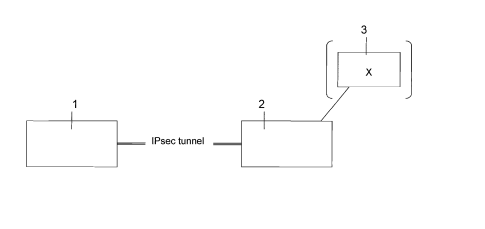
    ′581 patent Fig. 1. Boxes 1, 2, and 3 represent computers, where “computer 1 may be a client computer” and “[c]omputer 2 might be a security gateway for a third computer 3.” Id. at col. 8 ll. 51–56.

    Claim 1 begins with its preamble identifying three devices in a telecommunication network: a mobile terminal, another terminal, and a security gateway between the two terminals. Id. at col. 10 ll. 50–53. Turning to Figure 1, computer 1 is a mobile terminal, computer 2 is a security gateway, and computer 3 is another terminal. Limitation 1.a recites “establishing a secure connection having a first address of the mobile terminal as a first end-point and a gateway address of the security gateway as a second endpoint,” which is depicted in Figure 1 as the IPSec tunnel between computers 1 and 2. Id. at col. 10 ll. 54–56 (emphasis added). Then limitations 1.b–1.d recite “the mobile terminal changing from the first address to a second address,” “the mobile terminal sending a request message to the … security gateway to request the security gateway to change the secure connection to be defined between the second address and the gateway address,” and the security gateway accordingly changing an address definition. Id. at col. 10 ll. 57–67. At this point, computer 1 in Figure 1 has changed addresses, communicated that new address to the security gateway, and the security gateway has changed the secure connection to make computer 1's new address one of its endpoints.

    Then, reaching limitation 1.e at issue, the limitation recites “the mobile terminal sending a secure message in the secure connection from the second address of the mobile terminal to the other terminal via the security gateway.” Id. at col. 11 ll. 1–3 (emphasis added). Turning again to Figure 1, this last step is akin to computer 1, having now changed addresses, sending a secure message to computer 3 by sending the message through the IPSec tunnel between computer 1 and computer 2, i.e., the mobile terminal and the secure gateway, and then the message going from computer 2 to computer 3.

    Having walked through the claim step-by-step, we determine “the secure connection” term in limitation 1.e is not indefinite, as it refers to the “secure connection” as established between the mobile terminal and the security gateway. This plain claim language, read in light of the specification, informs a skilled artisan of its scope. The district court held the claim indefinite because it read the “secure connections” as different between limitations 1.a and 1.e. The district court understood “[t]he first ‘secure connection’ [to be] between ‘a first address of the mobile terminal’ and ‘a gateway address[,]’ [b]ut the second ‘secure connection’ [to be] between ‘the second address of the mobile terminal’ and ‘the other terminal.’” Claim Construction Order, 2024 WL 4603055, at *9 (citations omitted). We disagree that a skilled artisan would read the claim in such a way because, as the district court later noted, “if it is not the same secure connection, then the solution that the new invention is supposed to solve is not really solved.” Amending Order, 2024 WL 4603053, at *5. We similarly disagree with Apple's contention that reading the secure connection in limitation 1.e to be the same as established in limitation 1.a “would just result in a single ‘secure connection’ that has irreconcilably conflicting sets of endpoints.” Appellee's Br. 44. When read in light of the specification, however, the claim informs a skilled artisan that the secure connection remains between the mobile terminal and the security gateway. We accordingly reverse the holding of indefiniteness, vacate the judgment of invalidity of the ′581 patent, and remand for further proceedings consistent with this opinion.

    Conclusion

    We have considered Apple's remaining arguments but find them unpersuasive. For the foregoing reasons, we reverse, vacate, and remand.

    REVERSED, VACATED, AND REMANDED

    Costs

    Costs to Appellant.

    Footnotes

    1

    The ′949 patent is representative of the issues on appeal that pertain to the ′949 patent family, so this opinion will accordingly cite to the claims and specification of the ′949 patent.

    © 2026 CCH Incorporated and its affiliates and licensors. All rights reserved.

    • Manage Cookie Preferences
    • Privacy Statement
    • Terms of Use