

Patent Cases, UGOWEAR, LLC, Plaintiff, v. DAN MARTINSON; and GEAR TIE LLC, doing business as XTRUDEX, Defendants., U.S. District Court, D. Minnesota, (Sept. 30, 2026)
UGOWEAR, LLC, Plaintiff, v. DAN MARTINSON; and GEAR TIE LLC, doing business as XTRUDEX, Defendants.
U.S. District Court, D. Minnesota. Civil No. 25-3845 (JRT/DTS). September 30, 2026.
Jessica E. Fleetham, EVIA LAW PLC, 231 South Old Woodward, Suite 220, Birmingham, MI 48009; and Emily Muirhead McAdam and Sybil L. Dunlop, GREENE ESPEL PLLP, 222 South Ninth Street, Suite 2200, Minneapolis, MN 55402, for Plaintiff.
Spencer Tanner, GUTWEIN LAW, 20 Northwest Third Street, Suite 830, Evansville, IN 47708; and Benjamin Loetscher, FERDINAND F. PETERS LAW FIRM, 711 Smith Avenue South, Saint Paul, MN 55107, for Defendants.
John R. Tunheim, District Judge
John R. Tunheim, District Judge
ORDER GRANTING-IN-PART AND DENYING-IN-PART DEFENDANTS' MOTION FOR JUDGMENT ON THE PLEADINGS
Plaintiff uGOwear, LLC (“uGOwear”) and Defendants Dan Martinson and Gear Tie LLC d/b/a/Xtrudex (“Xtrudex”) make waterproof cases for cell phones. uGOwear brought this action against Defendants, alleging design patent infringement, trade dress infringement, violation of the Lanham Act, and violation of Minnesota's Deceptive Trade Practices Act. (Compl., Oct. 3, 2025, Docket No. 1.) Defendants answered and filed counterclaims seeking (among other things) cancellation of uGOwear's trade dress registration and declaratory judgment of non-infringement, design patent invalidity, trade dress non-infringement, trade dress non-protectability, and that uGOwear's claims are barred by laches, acquiescence, and equitable estoppel. (Ans. & Countercl., Dec. 2, 2025, Docket No. 17.) [1]
Defendants now move for judgment on the pleadings, requesting the Court find in their favor on all of Counts of uGOwear's Complaint and on all of their Counterclaims. uGOwear consents to strike its request for damages under Minnesota's Deceptive Trade Practices Act (“DTPA”) but otherwise opposes Defendants' motion in full.
The Court will deny Defendants' motion for judgment on the pleadings in almost all respects. The Court will deny Defendants' motion with respect to uGOwear's trade dress infringement claims and false designation claim. Construing the complaint in the light most favorable to uGOwear and drawing all inferences in their favor, uGOwear has identified elements of their product that comprise protectable trade dress and has alleged those elements are distinctive and non-functional. The Court will deny-in-part and will grant-in-part Defendants' motion with respect to uGOwear's claim under the DTPA, allowing uGOwear's claim to proceed but only to the extent uGOwear seeks injunctive relief. The Court will also deny Defendants' motion with respect to its argument that uGOwear has not pled sufficient allegations to support a finding of willful infringement to support enhanced patent damages.
BACKGROUND
I. FACTS
A. uGOwear, its Product, and its Design Patent and Trade Dress Registration
uGOwear makes waterproof pouches for phones and other personal items. (Compl. ¶1.) uGOwear launched its pouches in 2015 and represents that it has sold hundreds of thousands of dollars' worth of phone pouches. (Id. ¶10.)
An exemplary uGOwear pouch is shown below:
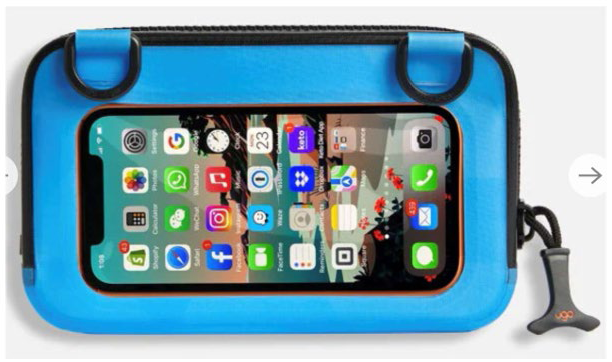
(Id. ¶9.)
uGOwear obtained a design patent in 2017: U.S. Patent No. D799,824. (Compl., Ex. A (the “'824 Patent”)). The ′824 Patent claims the design shown in the included drawings, including:
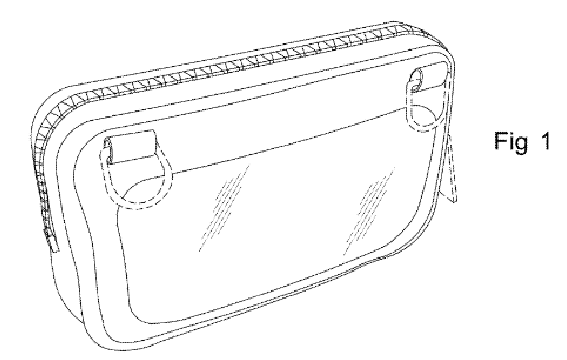
(′824 Patent, Fig. 1.)
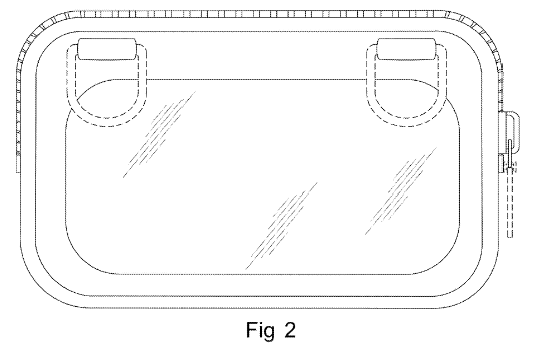
(Id., Fig. 2.)
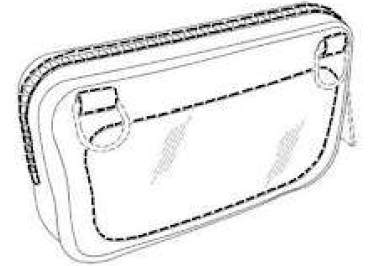
UGOwear filed for trade dress registration in 2023, resulting in Reg. No. 7,708,354 in February 2025. (Compl., Ex. B (the “'534 Reg.”).) The prosecution of this registration is further described in a separate section, below. The registration is directed to
a three-dimensional configuration of a smartphone and tablet case shaped like a rectangle with rounded corners. The case has a zipper over its long side, and the zipper extends to each of the short sides of the rectangular case. The matter depicted in broken or dotted lines is not claimed as part of the mark.
(′534 Reg.)
|
|
(Id.)
In addition to successfully obtaining design patent and trademark/trade dress registration, uGOwear unsuccessfully applied for multiple utility patents (U.S. Pat. Pub. No. 2018/0020791, U.S. Pat. Pub. No. 2018/0228260, and U.S. Pat. Pub. No. 2018/0228261 (collectively, “uGOwear Utility Applications”)); those applications were all abandoned, and none of them ever issued as a utility patent. (Ans. & Countercl. at 38, ¶11; see also Ans. to Defs' Countercl. at ¶¶10–11, Dec. 23, 2025, Docket No. 19).) The specifications of these patent applications did describe certain features of uGOwear's product as functional, however. For example, U.S. Pat. Pub. No. 2018/0020791 states “[t]he one or more windows may function to provide visual access into the carrying case ….” (Ans. & Countercl., Ex. E (the “'791 Pub.”) ¶29.) “The zipper may function to provide and or restrict access into the carrying case.” (Id. ¶34.) “Rings 30 are secured to the first portion … so that one or more straps … can be attached to the carrying case 20' to hang, carry, manipulate, and/or handle the carrying case 20.” (Id. ¶38.)
B. Defendants and Their Product
uGOwear has asserted that “Dan Martinson is an individual who sells infringing waterproof cases under the trademark BOOE” and, on “information and belief, Mr. Martinson is the principal of Xtrudex” and that “Xtrudex manufactures products including the infringing waterproof pouches for Mr. Martinson.” (Compl. ¶¶2–3) Defendants have admitted only that “Dan Martinson is an Individual who owns U.S. Trademark Registration No. 6,040,876 for BOOE.” (See Ans. & Countercl. at 1–2, ¶¶2–3.)
The parties agree that Xtrudex manufactures and sells BOOE-branded waterproof belt bags as depicted on booe.com. (Compl. ¶30; Ans. & Countercl. at 11, ¶30.)
Exemplary BOOE bags are shown in the photos below:
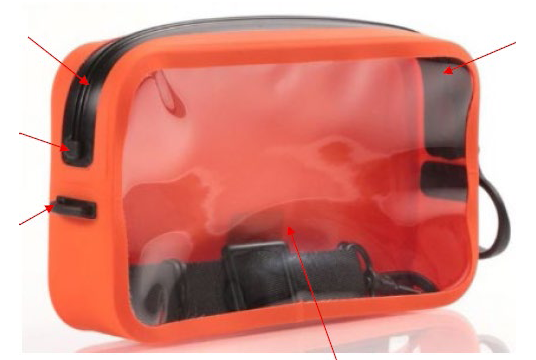
(Ans. & Countercl., Ex. R.)
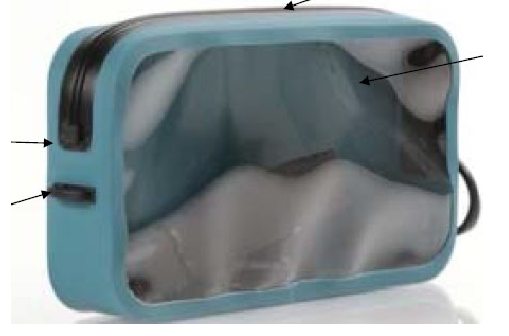
(Id., Ex. B.)
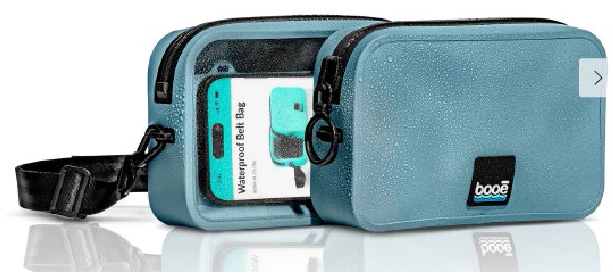
(Id., Ex. Q.)
C. Pre-Suit Interactions Between the Parties
In 2020, uGOwear learned that Martinson planned to launch a waterproof phone pouch. (Compl. ¶27.) On February 21, 2020, uGOwear contacted Mr. Martinson by mail to notify him of the ′824 Patent and other uGOwear intellectual property. (Id.; Ans. & Countercl., Ex. A.) On March 6, 2020, Martinson replied through his counsel. (Ans. & Countercl., Ex. B.) Martinson's counsel explained the reasons that he believed the forthcoming BOOE bag would not infringe uGOwear's IP and closed the letter by stating “[w]e assume that the foregoing satisfactorily addresses your concerns, and we consider this matter closed.” (Id.)
Although not mentioned in uGOwear's Complaint, uGOwear's counsel contacted Martinson's counsel again in November 2022, noting that BOOE waterproof belt bag was now available for purchase and that uGOwear “continue[s] to believe, to the ordinary observer, the [BOOE] Waterproof Phone Wallet – Belt Bag is substantially the same as the ugo phone and tablet designs.” (Ans. & Countercl., Ex. C.) uGOwear's counsel also provided a claim chart. (Id.) Martinson's counsel responded about a week later, reiterating its “previous contentions regarding the lack of similarity between the products.” (Id., Ex. D.)
uGOwear alleges that it contacted Martinson and Xtrudex again “by letter delivered on August 20, 2025,” and that no response was received. (Compl. ¶29.) Defendants deny this allegation. (Ans. & Countercl. at 10, ¶29.)
D. Prosecution History of the ′534 Registration
In their Counterclaim, Defendants provide prosecution records from the U.S. Patent and Trademark office (“PTO”) including both the office actions issued by the office and uGOwear's responses for uGOwear's trademark application that resulted in the issuance of the ′534 Reg. (Ans. & Countercl., Ex. G (Non-Final Office Action, dated Nov. 28, 2023), Ex. H (Resp. to Non-Final Office Action, dated Feb. 28, 2024), Ex. J (Final Office Action, dated March 19, 2024), Ex. K (Resp. to Final Office Action, dated Sept. 19, 2024), Ex. L (Non-Final Office Action, dated October 17, 2024), and Ex. M (Resp. to Non-Final Office Action, dated Jan. 15, 2025)).
In the office actions, the PTO Examiner rejected uGOwear's trademark application on several grounds including—relevant to Defendants' arguments—“Section 2(e)(5) refusal: functional product design” and “Section 2(f) claim of acquired distinctiveness insufficient.” The prosecution history of each of these rejections is further detailed in this section.
In the First Non-Final Office Action, the PTO Examiner rejected the application in part as functional (i.e., under Section 2(e)(5)). (Ans. & Countercl., Ex. G.) The Examiner stated:
In this case, applicant's own advertising extols specific utilitarian advantages of the applied-for product design. For example, the applied-for case is specifically shaped to fit smartphones, it is designed so that a smartphone inside of it can be used without removal from the case, and it has anchors for wearing the case. See, e.g., attached evidence from https://ugowear.com. Such advertising is strong evidence that the matter sought to be registered is functional.
(Id. at 4.) The Examiner also rejected the application as lacking acquired distinctiveness (i.e., under Section 2(f)). (Id. at 5.) The Examiner stated:
Applicant asserted a claim of acquired distinctiveness under Trademark Act Section 2(f) based on use of the mark in commerce with the goods for five years prior to the date on which the claim is made. See 15 U.S.C. §1052(f). However, evidence of five years' use considered alone is generally not sufficient to show acquired distinctiveness for nondistinctive product design marks.
(Id.)
In the Response to the First Non-Final Office Action, uGOwear argued against the functional product design (Section 2(e)) and the acquired distinctiveness (Section 2(f)) refusals. (Ans. & Countercl., Ex. H.)
In the subsequent Final Office Action, the Examiner maintained both rejections. (Id., Ex. J.) With respect to the functional product design rejection, the Examiner indicated that “[r]egistration remains refused because the applied-for mark, which consists of a three-dimensional configuration of the goods, appears to be a functional design for such goods.” (Id. at 3.) The Examiner noted that a utility patent claiming the design features at issue is strong evidence that those features are functional—and noted uGOwear's then-pending utility patent application. (Id. at 4.) With respect to the acquired distinctiveness claim, the Examiner stated that the “applicant's evidence is insufficient to show acquired distinctiveness” concluding that the “applied-for mark is a nondistinctive product design.” (Id. at 7.)
In response, uGOwear again argued against both the functional product design rejection and the Examiner's determination that the product had not acquired distinctiveness. (Ans. & Countercl., Ex. K.)
In the next Office Action, again a Non-Final Office Action, the Examiner did not include a functional product design (Section 2(e)(5)) refusal. (Ans. & Countercl., Ex. L.) Rather, the Examiner rejected the application because of “nondistinctive product design” (id. at 2–3 & 5-6) and some technical objections (see id. at 2–3).
In response, uGOwear stated, “to overcome this [nondistinctive product design] rejection, the Applicant would like to request to amend to the supplemental register as recommended by the Examiner.” (Ans. & Countercl., Ex. M at 3.) As the Trademark Manual of Examining Procedure Explains, “[c]ertain marks that are not eligible for registration on the Principal Register, but are capable of distinguishing an applicant's goods or services, may be registered on the Supplemental Register.” T.P.E.P. §801.02(b) (2026).
II. PROCEDURAL HISTORY
A. uGOwear's Complaint
uGOwear filed its Complaint on October 3, 2025. (See generally Compl.). uGOwear brings seven counts against Defendants: Count I: Patent Infringement (of the ′824 Patent) by Martinson; Count II: Patent Infringement (of the ′824 Patent) by Xtrudex; Count III: Trade Dress Infringement (under 15 U.S.C. §1125(a), the Lanham Act) by Martinson; Count IV: False and Misleading Designations and Descriptions of Origin (in violation of 15 U.S.C. §1125(a)—Section 43(a) of the Lanham Act) by Martinson; Count V: Indirect Trade Dress Infringement by Xtrudex; Count VI: Common Law Trade Dress Infringement by Martinson; and Count VII: Violations of Minnesota's Deceptive Trade Practices Act (Minn. Stat. §325D.44). (Compl. ¶¶31-106.)
uGOwear asks the Court to find that Martinson and Xtrudex have willfully infringed their patent and trade dress and violated Minnesota's Deceptive Trade Practices Act (id. at 21); to award it damages and attorneys' fees, costs, and expenses (id. at 22); and to grant them an injunction enjoining Martinson and Xtrudex from further sale of its product or use of uGOwear's trade dress (id.).
B. Defendants' Answer and Counterclaim
In their Counterclaim, Defendants seek the following: Count I: Declaratory Judgment of Non-Infringement of the ′824 Patent; Count II: Declaratory Judgment of Invalidity/Unenforceability of the ′824 Patent; Count III: Declaratory Judgment of Trade Dress Non-Infringement under 15 U.S.C. §1125(a); Count IV: Declaratory Judgment of Trade Dress Non-Protectability; Count V: Cancellation of the ′534 Reg.; Count VI: Declaratory Judgment that uGOwear's claims are barred, in whole or in part, by laches, acquiescence, and equitable estoppel; Count VII: Declaratory Judgment that uGOwear is judicially estopped from asserting the claims as pleaded; and Count VIII: an award of their reasonable attorneys' fees, expenses, and costs. (Ans. & Countercl. at 48–58.)
Defendants now move for judgment on the pleadings, requesting that the Court find in their favor on all of Counts of uGOwear's Complaint and on all of their Counterclaims. (Mot. J. Pleadings, Jan. 14, 2026, Docket No. 22.)
DISCUSSION
The Court will first address the standard of review for a motion for judgment on the pleadings. The Court will next consider Defendants' motion with respect to each of uGOwear's claims.
I. STANDARD OF REVIEW
Federal Rule of Civil Procedure 12(c) provides that “[a]fter the pleadings are closed—but early enough not to delay trial—a party may move for judgment on the pleadings.” Fed. R. Civ. P. 12(c). A motion for judgment on the pleadings pursuant to Rule 12(c) is reviewed under the same standard as a motion to dismiss pursuant to Rule 12(b)(6). Clemons v. Crawford, 585 F.3d 1119, 1124 (8th Cir. 2009). The Court considers all facts alleged in the complaint as true to determine if the complaint states a claim for “relief that is plausible on its face.” Braden v. Wal-Mart Stores, Inc., 588 F.3d 585, 594 (8th Cir. 2009) (quoting Ashcroft v. Iqbal, 556 U.S. 662, 678 (2009)). The Court construes the complaint in the light most favorable to the non-moving party, drawing all inferences in that party's favor. Ashley Cnty. v. Pfizer, Inc., 552 F.3d 659, 665 (8th Cir. 2009). “A grant of judgment on the pleadings is appropriate where no material issue of fact remains to be resolved and the movant is entitled to judgment as a matter of law.” Magdy v. I.C. Sys., Inc., 47 F.4th 884, 886 (8th Cir. 2022) (cleaned up).
II. DESIGN PATENT INFRINGEMENT
Defendants seek dismissal of uGOwear's claims for design patent infringement against Martinson (Count I) and Xtrudex (Count II).
A. Standard of Review
“[A] design patent, unlike a utility patent, limits protection to the ornamental design of the article.” Richardson v. Stanley Works, Inc., 597 F.3d 1288, 1293 (Fed. Cir. 2010); see also 35 U.S.C. §171 (providing patent protection is available for a “new, original and ornamental design for an article of manufacture”). Thus, while the protected “design may contain both functional and ornamental elements, … the scope of a design patent claim ‘must be limited to the ornamental aspects of the design.’” Sport Dimension, Inc. v. Coleman Co., Inc., 820 F.3d 1316, 1320 (Fed. Cir. 2016) (quoting Ethicon Endo–Surgery, 796 F.3d 1312, 1333 (Fed. Cir. 2015)). “Design patents are typically claimed as shown in drawings ….” Crocs, Inc. v. Int'l Trade Comm'n, 598 F.3d 1294, 1302 (Fed. Cir. 2010).
“Design patent infringement is a question of fact, which a patentee must prove by a preponderance of the evidence.” Richardson, 597 F.3d at 1295. At the pleadings stage, all that is required is “that a complaint for patent infringement contain sufficient factual allegations such that a reasonable court could, assuming the allegations were true, conclude that the defendant infringed.” Addiction & Detoxification Inst. L.L.C. v. Carpenter, 620 Fed. Appx. 934, 936 (Fed. Cir. 2015).
However, if no ordinary observer could determine that the allegedly infringed patent and the allegedly infringing article are substantially the same, dismissal is appropriate. Egyptian Goddess, Inc. v. Swisa, Inc., 543 F.3d 665, 678 (Fed. Cir. 2008) (en banc)). “Thus, while infringement is a question of fact, courts may dismiss claims of design infringement on a Rule 12(b)(6) motion where, as a matter of law, no reasonable factfinder could find infringement.” Luxembourg v. Home Expressions Inc., Civ. No. 17 4079, 2018 WL 340036, at *4 (D.N.J. Jan. 8, 2018), aff'd sub nom. Luxembourg, SARL v. Home Expressions Inc., 938 F.3d 1334 (Fed. Cir. 2019) (citing Vigil v. Walt Disney Co., 232 F.3d 911 (Fed. Cir. 2000)).
“[T]he ‘ordinary observer’ test should be the sole test for determining whether a design patent has been infringed.” Egyptian Goddess., 543 F.3d at 678. That is, the “patentee must establish that an ordinary observer, familiar with the prior art designs, would be deceived into believing that the accused product is the same as the patented design.” Richardson, 597 F.3d at 1295; see also Egyptian Goddess, 543 F.3d at 677 (“An ordinary observer, comparing the claimed and accused designs in light of the prior art, will attach importance to differences between the claimed design and the prior art depending on the overall effect of those differences on the design.”). The ordinary observer test still applies in cases where the patented design incorporates numerous functional elements. Richardson, 597 F.3d at 1295 (citing Amini Innovation Corp. v. Anthony Cal., Inc., 439 F.3d 1365, 1372 (Fed. Cir. 2006)). “In other words, ‘the deception that arises is a result of the similarities in the overall design, not of similarities in ornamental features in isolation.’” Crocs, 598 F.3d at 1303 (quoting Amini Innovation, 439 F.3d at 1371.)
B. Analysis
Because the Court concludes that an ordinary observer could determine that the allegedly infringed patent and the allegedly infringing article are substantially the same, it will deny Defendants' motion on this ground, at least at this stage. See Crocs, 598 F.3d at 1303.
Whether uGOwear will be able to establish “that an ordinary observer, familiar with the prior art designs, would be deceived into believing that the accused product is the same as the patented design” remains a question of fact. Richardson, 597 F.3d at 1295. Furthermore, the Court declines to opine at this stage, prior to claim construction, which aspects are ornamental and which aspects are functional. See id. at 1293 (noting that “the distinction between the functional and ornamental aspects of a design” is a “claim scope issues on which a court's guidance would be useful to the fact finder”).
III. TRADE DRESS AND FALSE DESIGNATION UNDER THE LANHAM ACT
Defendants seek dismissal of uGOwear's trade dress infringement claims against Martinson (Count III and VI) and Xtrudex (Count V), arguing that uGOwear failed to plead a protectable trade dress claim. Defendants also seek dismissal of uGOwear's claim of “false and misleading designations and descriptions of origin, affiliation, connection, association, sponsorship and/or approval in violation of 15 USCA §1125” against Martinson (Count IV).
A. Standard of Review
Trade dress is defined as the “overall appearance and image in the marketplace of a product or a commercial enterprise. For a product, trade dress typically comprises packaging and labeling.” Black's Law Dictionary (12th ed. 2024) “The ‘trade dress’ of a product is essentially its total image and overall appearance. It ‘involves the total image of a product and may include features such as size, shape, color or color combinations, texture, graphics, or even particular sales techniques.’” Two Pesos, Inc. v. Taco Cabana, Inc., 505 U.S. 763, 765 n.1 (1992) (citations omitted).
“A trade dress is entitled to protection under §43(a) of the Lanham Act [15 USCA §1125] if: (1) it is inherently distinctive or has acquired distinctiveness through secondary meaning; (2) it is primarily nonfunctional; and (3) its imitation would result in a likelihood of confusion in consumers' minds as to the source of the product.” Insty*Bit, Inc. v. Poly-Tech Indus., Inc., 95 F.3d 663, 667 (8th Cir. 1996) (citing Two Pesos, 505 U.S. at 769).
“To recover for trade-dress infringement under §43(a) of the Lanham Act, a party must first identify what particular elements or attributes comprise the protectable trade dress.” Jalin Realty Cap. Advisors, LLC v. A Better Wireless, NISP, LLC, 917 F. Supp. 2d 927, 940 (D. Minn. 2013) (citing Tumblebus Inc. v. Cranmer, 399 F.3d 754, 768 (6th Cir. 2005)). “[M]erely including images of products is insufficient to adequately articulate the specific elements which comprise a distinct dress.” Glob. Commodities, Inc. v. Capital Distributors LLC, Civ. No. 24-216, 2024 WL 3823003, at *3 (D. Minn. Aug. 14, 2024) (quoting EBIN N.Y., Inc. v. KISS Nail Prods., Inc., Civ. No. 23-2369, 2024 WL 1328029, at *4 (D.N.J. Mar. 28, 2024)).
B. Elements of uGOwear's Trade Dress
The parties dispute whether uGOwear has sufficiently identified the “particular elements or attributes comprise the protectable trade dress.” Jalin, 917 F. Supp. 2d at 940. uGOwear identifies these attributes as including the rounded corners of its cases; the placement and extent of the zipper; and the placement, size, and shape of the translucent window. (Compl. ¶85.) Defendants argue that these attributes are common components found on belt bags and phone cases in the marketplace or were disclaimed by uGOwear during prosecution. Because the Court concludes that the elements that uGOwear is seeking to assert are sufficiently identified at this pleading stage, it will deny Defendants' motion for judgment on the pleadings.
C. Distinctiveness and Functionality of the Identified Elements
Defendants further argue that, even if uGOwear adequately identified protectable elements, uGOwear either disclaimed those elements or those elements are functional or both.
1. Distinctiveness
Distinctiveness is required for trade dress protection, and it can be either inherent or acquired through secondary meaning. See, e.g., Insty*Bit, 95 F.3d at 667. uGOwear admits that “[a]t issue here is acquired distinctiveness.” (Mem. in Oppos. at 16, Feb. 4, 2026, Docket No. 28.)
“A mark has acquired distinctiveness … if it has developed secondary meaning, which occurs when, in the minds of the public, the primary significance of a mark is to identify the source of the product rather than the product itself.” Wal-Mart Stores, Inc. v. Samara Bros., Inc., 529 U.S. 205, 211 (2000) (cleaned up). “Secondary meaning is a fact-intensive inquiry.” Nat'l Presto Indus., Inc. v. U.S. Merch. Fin. Grp., Inc., 121 F.4th 671, 681 (8th Cir. Nov. 12, 2024). It may be established by either direct or circumstantial evidence. Id. at 681–82. For example, secondary meaning may be established by evidence of the volume of sales and the length of time the design has been in use. See, e.g., Stuart Hall Co., Inc. v. Ampad Corp., 51 F.3d 780, 789–90 (8th Cir. 1995) (“[L]ength and exclusivity of continuous use is a factor bearing on secondary meaning ….”); Bose Corp. v. QSC Audio Prod., Inc., 293 F.3d 1367, 1375 (Fed. Cir. 2002) (“Large market shares of product sales or large percentages of advertising expenditures in a product line would buttress claims to fame.”)
uGOwear provided a variety of circumstantial evidence in its Complaint. For example: uGOwear alleges that it has sold “hundreds of thousands of dollars worth of phone pouches” since 2010 (Compl. ¶10), has used the same design since 2015 (id. ¶10), has spent extensively on trade shows and advertising costs (id. ¶11), and has developed a “strong social medial presence” (id. ¶12).
Construing the pleadings in the light most favorable to uGOwear and drawing all inferences in their favor, the Court concludes that the allegations pled regarding the volume of sales and the length of time the designation has been in use are sufficient at this stage of the litigation to preclude dismissal due to lack of distinctiveness.
2. Functionality
To be protectable by trade dress, an element must be non-functional. See, e.g., TrafFix Devices, Inc. v. Mktg. Displays, Inc., 532 U.S. 23, 32 (2001) (“[T]he party asserting trade dress has the burden to establish the nonfunctionality of alleged trade dress features.”) “A feature or design is functional … if it performs some function other than identifying the source of goods.” Aromatique, Inc. v. Gold Seal, Inc., 28 F.3d 863, 873 (8th Cir. 1994) “Thus, trade dress is nonfunctional ‘if it is an arbitrary embellishment primarily adopted for purposes of identification and individuality.’” Insty*Bit, 95 F.3d at 673 (quoting Aromatique, 28 F.3d at 873 (8th Cir. 1994)).
“Product design, unlike product packaging, almost invariably serves purposes other than source identification. These other purposes are often utilitarian and aesthetic. Such product designs generally are subject to copying absent a patent or copyright.” Pocket Plus, LLC v. Pike Brands, LLC, 53 F.4th 425, 433 (8th Cir. 2022) (internal quotation marks and citations omitted); see also Antioch Co. v. W. Trimming Corp., 347 F.3d 150, 158 (6th Cir. 2003) (“[I]n order to receive trade dress protection for the overall combination of functional features, those features must be configured in an arbitrary, fanciful, or distinctive way.”) (cited by the Eighth Circuit in Pocket Plus).
In Pocket Plus, there was no genuine dispute of material fact that the trade dress is functional. 53 F.4th at 433. Rather, the purpose of the pouch in that case—as here—was to carry objects, including cellphones. Id. But here, there is a dispute with respect to the functionality of particular features of the pouch.
Defendants argue that each of the features identified by uGOwear—rounded corners, placement of the zipper, extent of the zipper, placement of the window, size of the window, and shape of the window—are all functional. But the Court concludes that there remains a factual dispute regarding whether each of these features is functional. For example, while the zipper itself is functional, it is unclear if the zipper's placement and extent are functional. Similarly, while the window is functional, it is unclear whether the placement, size, and extent of the window are functional. Brunswick Corp. v. British Seagull Ltd., 35 F.3d 1527, 1530 (Fed. Cir. 1994) (noting that functionality is both a question of fact and depends upon the totality of the evidence).
The Court concludes that uGOwear's pleadings are sufficient to show sufficient distinctiveness and non-functionality at this stage of the litigation to preclude dismissal.
D. Indirect Infringement
In Count V of its Complaint, uGOwear alleges that Xtrudex has induced trade dress infringement by Martinson. (Compl. ¶74.) Defendants argue that uGOwear's allegations are not sufficient to support indirect infringement because uGOwear did not include facts that show that Defendants (1) intentionally induced another to infringe, or (2) continued to supply a product to one whom it knew or had reason to know was engaging in trademark or trade dress infringement. See Labs., Inc. v. Ives Labs., Inc., 456 U.S. 844, 853–55 (1982)).
But uGOwear has pled—even though Defendants have not admitted—that Martinson is the principal of Xtrudex (Compl. ¶3); Xtrudex manufactures the infringing waterproof pouches, and Martinson sells them under the BOOE brand (id.); uGOwear notified Martinson of the similarities between uGOwear's design and BOOE's design in February 2020, before Martinson launched the infringing pouches (id. at ¶27); uGOwear contacted both Martinson and Xtrudex in August 2025 to notify them of their alleged infringement of the uGOwear's design patent and trade dress (id. ¶29); and Xtrudex continues to manufacture the infringing pouches (see id. ¶30).
Considering all facts alleged in the complaint as true, the Court concludes that uGOwear has pled specifically enough that Xtrudex had knowledge of uGOwear's intellectual property and continued to supply a product to Martinson knowing that uGOwear considered supply or sale of the product to be trade dress infringement.
E. False Designation
Count IV of the Complaint alleges false designation of origin under the Lanham Act. (See Compl. ¶¶63–72.) The parties agree that this claim rises and falls with the trade dress infringement claims.
Because the Court will not dismiss uGOwear's trade dress infringement claim, the Court will also deny Defendants' motion for judgment on the pleadings with respect to the false designation claim.
IV. MINNESOTA'S DECEPTIVE TRADE PRACTICES ACT
uGOwear alleges Martinson violated Minnesota's Deceptive Trade Practices Act (“DTPA”) (Count VII). See Minn. Stat. §325D.44, subd. 1. (See also Compl. ¶102.) Defendants ask the Court to dismiss this claim because, they argue, uGOwear's allegations fall short of Rule 9(b)'s heightened standard. Defendants also argue that that the DPTA provides solely injunctive relief, but uGOwear has claimed it is entitled to compensatory damages. (See Compl. ¶104.)
In its Memorandum, uGOwear consented to strike its request for damages under the DTPA. (Mem. in Oppos. at 26.) But uGOwear continues to seek injunctive relief. (See Compl. ¶106.)
The DPTA states that a “person engages in a deceptive trade practice when, in the course of business, vocation, or occupation, the person: … (2) causes likelihood of confusion or of misunderstanding as to the source, sponsorship, approval, or certification of goods or services; [or] (3) causes likelihood of confusion or of misunderstanding as to affiliation, connection, or association with, or certification by, another[.]” See Minn. Stat. §325D.44, subd. 1. “Claims for deceptive trade practices under Minnesota statute require the same analysis as claims under [the] federal Lanham Act.” Toyota Motor Sales, U.S.A., Inc. v. Allen Interchange LLC, Civ. No. 1681, 2025 WL 2784538, at *15 (D. Minn. Sept. 30, 2025) (quoting Rainbow Play Sys. v. GroundScape Techs., LLC, 364 F. Supp. 2d 1026, 1039 (D. Minn. 2005)); see also DaimlerChrysler AG v. Bloom, 315 F.3d 932, 935 n.3 (8th Cir. 2003) (collecting cases).
Because the Court will allow uGOwear's trade dress claims to proceed, the Court will also allow uGOwear's DTPA claim to proceed—but only to the extent uGOwear seeks injunctive relief.
V. WILLFULNESS
Defendants argue that uGOwear has failed to make allegations of egregious misconduct—not mere knowledge—sufficient to support enhanced patent damages. Section 284 of the Patent Act provides that, in a case of infringement, courts “may increase the damages up to three times the amount found or assessed.” 35 U.S.C. §284. “[T]he question of willful infringement turns on the subjective beliefs and knowledge of the accused infringer.” Willis Elec. Co., Ltd. v. Polygroup Ltd., Civ. No. 15-3443, 2024 WL 118443, at *4 (D. Minn. Jan. 9, 2024) (citing Halo Elecs., Inc. v. Pulse Elecs., Inc., 579 U.S. 93, 105 (2016).
Although uGOwear alleged that Defendants were aware of its design patent (U.S. Patent No. D799,824) since at least 2020 (Compl. ¶¶27–28), Defendants have also presented evidence that they sought the opinion of counsel and believed they had defenses to uGOwear's allegations of patent infringement. (See e.g., Ans. & Countercl., Exs. B, D.)
An infringer having a defense to patent infringement does not preclude a finding of willfulness. See i4i Ltd. P'ship v. Microsoft Corp., 598 F.3d 831, 860 (Fed. Cir. 2010), aff'd, 564 U.S. 91 (2011) (“The fact that Microsoft presented several defenses at trial, including noninfringement and invalidity, does not mean the jury's willfulness finding lacks a sufficient evidentiary basis.”) And the Court concludes that genuine issues of material fact remain with regard to Defendants' defenses.
For example, uGOwear could still attack Defendants' opinions of counsel. See Jurgens v. CBK, Ltd., 80 F.3d 1566, 1572-73 (Fed. Cir. 1996) (vacating denial of enhanced damages, and remanding, in part because, evidence showed that the infringer's opinion of counsel was incompetent). Further, even if the advice of counsel was objectively competent, infringement is still willful if the infringer ignored the advice, or in no way relied upon it. Comark Commc'ns.s, Inc. v. Harris Corp., 156 F.3d 1182, 1191 (Fed. Cir. 1998). Evidence speaking to Defendants' “subjective understanding and analysis of infringement and validity issues” will be “highly probative.” Willis Elec., 2024 WL 118443, at *4.
Accordingly, the Court will deny Defendants' motion to grant judgment on the pleadings because it finds that uGOwear adequately pled the required egregious misconduct to support enhanced patent damages.
CONCLUSION
The Court will deny Defendants' motion for judgment on the pleadings in almost all respects. The Court will deny Defendants' motion with respect to uGOwear's design patent infringement claims, trade dress infringement claims, and false designation claim. The Court will deny-in-part and will grant-in-part Defendants' motion with respect to uGOwear's claim under the DTPA, allowing uGOwear's claim to proceed only to the extent that uGOwear seeks injunctive relief. The Court will also deny Defendants' motion with respect to its argument that uGOwear has not pled sufficient allegations to support a finding of willful infringement to support enhanced patent damages.
ORDER
Based on the foregoing, and all the files, records, and proceedings herein, IT IS HEREBY ORDERED that Defendants Dan Martinson and Gear Tie LLC's Motion for Judgment on the Pleadings (Docket No. [22]) is GRANTED in part and DENIED in part, as follows:
The Motion is GRANTED solely with respect to uGOwear's request for damages under the DTPA;
The Motion is DENIED in all other respects.