

Products Liability Law Daily Wrap Up, DAMAGES—MOTOR VEHICLES—2d Cir.: Denial of BMW’s post-trial motions upheld in vehicle owner’s thumb amputation case, (Nov 12, 2025)
Law Firms Mentioned:A. Cohen Law Firm, P.C. | Biedermann Hoenig Semprevivo P.C.
Organizations Mentioned:BMW (US) Holding Corp. | BMW Group | BMW Manufacturing Co., LLC | BMW of North America, Inc. | BMW of North America, LLC | Bayerische Motoren Werke Aktiengesellschaft | Kiekert AG
By Pankhuri Bhatnagar, B.A. LL.B.
The jury’s awards for lost wages and pain and suffering were reasonable, comparable to other similar injury cases, and supported by the owner’s work contract, pay stubs, and tax records.
In an action brought against a vehicle’s manufacturer, assembler, and distributor by a man whose thumb was amputated when the vehicle’s door automatically closed on his hand, the U.S. Court of Appeals for the Second Circuit affirmed a district court’s denial of the companies’ post-trial motions. The companies were not entitled to a directed verdict on the misleading business practices claim because there was evidence that they failed to disclose the “material information” that their vehicle’s soft-close doors posed an additional risk of injury beyond that posed by standard car doors, and this deceptive omission was a substantial factor in causing the man’s injuries. No new trial was warranted based on the owner’s attorney’s alleged misconduct since any risk of confusion was mitigated by curative instructions (Boateng v. BMW of North America, LLC, No. 24-2976 (2d Cir. Nov. 10, 2025)).
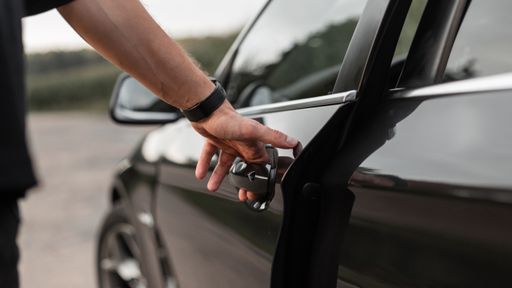
Background. A man parked his 2013 BMW X5 on a narrow residential street, exited, and stood next to a slightly ajar driver’s side door. His fingers were resting on the car door’s exterior handle while his thumb was around the door’s edge. When he stepped back to avoid contact with oncoming traffic, the door automatically closed on his hand, amputating his right thumb. The vehicle contained “soft-close automatic door” (SCAD) technology, which provided “comfortable door closing without making noise.” The vehicle was manufactured by Bayerische Motoren Werke Aktiengesellschaft (BMW AG), assembled by BMW Manufacturing Co., LLC (BMW MC), and distributed by BMW of North America, LLC (BMW NA) (collectively, companies or BMW). The owner brought suit against BMW, alleging claims for design defect, failure to warn, breach of an implied warranty, and misleading business practices in violation of New York General Business Law (GBL) § 349. The jury returned a finding of liability on the GBL claim only and awarded the man $255,360 for past loss of earnings, $800,000 for past pain and suffering, and $850,000 for future pain and suffering. BMW filed post-trial motions (1) renewing its application for a directed verdict on the GBL claim; (2) requesting a new trial on the GBL claim; and (3) moving for remittitur or a new damages trial on the ground that the awards were excessive. The district court denied these motions and this appeal followed.
Deceptive practice. To succeed on a GBL § 349 claim, a plaintiff must prove by a preponderance of the evidence that “(1) the defendant’s deceptive acts were directed at consumers, (2) the acts are misleading in a material way, and (3) the plaintiff has been injured as a result.” Chufen Chen v. Dunkin’ Brands, Inc., 954 F.3d 492, 500 (2d Cir. 2020). BMW did not dispute that its conduct was consumer facing but claimed that there was no deceptive omission since (1) it is common sense that body parts should not be put in the path of closing doors; (2) the owner’s manual adequately warned of the risk of amputation-like injuries; (3) soft-close doors are supposedly statistically no more dangerous than normal doors; (4) customer complaints were few; and (5) the man’s step backwards was the but-for cause of his injury. Each argument failed.
Trial evidence revealed that soft-close doors exert substantially more force (134.885 to 224.809 pounds) than the amount required to fracture a thumb (100 pounds) and do not stop for obstructions like a finger. The owner’s manual only warned of a “danger of pinching,” and common sense would not let a reasonable consumer know about the risk of amputation. Moreover, BMW was aware of 44 incidents of injuries to fingers occurring between 2001 and 2016 that resulted from the accidental activation of the soft-close mechanism. Thus, its argument that it did not possess and hence omitted material information fell short since it knew that its doors posed an “additional risk of injury above and beyond that posed by a standard car door.” The owner averred that had he known of this danger, he would have either avoided purchasing the premium package which included the SCAD technology or taken additional care to avoid any injury. BMW’s contention that the injury occurred due to his self-preserving act did not detract from the reasonableness of the jury’s conclusion—that BMW’s deceptive omission of the doors’ risks was a substantial factor in causing the man’s injuries. As such, the Rule 50 motion was properly denied.
New trial. BMW’s argument that the jury verdict was against the weight of the evidence for the same reasons it was entitled to judgment as a matter of law was rejected since a denial on this ground is not reviewable on appeal. Ferreira v. City of Binghamton, 975 F.3d 255, 265 (2d Cir. 2020). During discovery, the companies provided three accountings based on different sample sizes of the soft-close-related accidents they had notice of, and the owner’s counsel aggressively questioned BMW’s witnesses about those discrepancies at trial. BMW believed this swayed and confused the jury to think that “some kind of deception had occurred,” but the lower court properly found that the man was entitled to probe the differing responses. This court explained that any risk of confusion was mitigated by the district court’s curative instructions and that a new trial was not warranted.
Lost wages. The owner was awarded $255,360 in lost wages based on (1) an hourly rate of $114 which he was earning at the time of the accident; (2) a 40-hour workweek; and (3) a 56-week period of lost work. This was supported by his own testimony, work contract, pay stubs, and tax records. The companies contended that as an independent contractor, the man’s rates would have fluctuated and that the new contract started at $110. But the operative contract talked about continuing work at the then-existing rate, there were no employment gaps since the ultimate client remained the same, and the man could have had a stronger negotiating position had he not taken breaks due to the thumb surgery—all of which meant that the lost wages award satisfied the reasonable certainty standard.
Pain and suffering. Under New York law, a damages award is excessive “if it deviates materially from what would be reasonable compensation,” as assessed by looking at cases involving comparable injuries. N.Y. C.P.L.R. § 5501(c) and Albanese v. Przybylowicz, 985 N.Y.S.2d 163, 164 (3d Dep’t 2014). The man’s award fell within the range of awards for crush injuries to fingers in New York, such as the $1,500,000 awarded to a teenager whose finger was amputated by a cargo door. Class v. Steering Wheel Rentals, Inc., JVR No. 378343, 2000 WL 1515708 (N.Y. Kings County Sup. Ct. 2000). BMW pointed to lesser sums awarded to plaintiffs who suffered partial amputation, but those cases involved “sharp” injuries—in which the finger is sliced and nerves may be sewn back together—as opposed to “crush” injuries like the one here, where reattachment was impossible and nerve repair required surgeries. As such, the challenge to this award was also rejected.
The case is No. 24-2976.
Judge: Per curiam.
Attorneys: Avinoam Cohen (A. Cohen Law Firm, P.C.) for Godwin Boateng. Joseph Kim (Biedermann Hoenig Semprevivo P.C.) for BMW of North America, LLC, BMW Manufacturing Co., LLC and Bayerische Motoren Werke Aktiengesellschaft, BMW of North America, Inc., BMW [US] Holding Corp. and BMW Group.
Companies: BMW of North America, LLC; BMW Manufacturing Co., LLC; Bayerische Motoren Werke Aktiengesellschaft; BMW of North America, Inc.; BMW (US) Holding Corp.; BMW Group; Kiekert AG
MainStory: TopStory DamagesNews MotorVehiclesNews WarningsNews DesignManufacturingNews EvidentiaryNews ConnecticutNews NewYorkNews VermontNews