

Products Liability Law Daily Wrap Up, TOP STORY—SUPREME COURT—U.S.: Supreme Court passes on preemption issue vis-a-vis Medical Device Amendments in breast implant products liability suit, (Nov 9, 2021)
Law Firms Mentioned:Dogali Law Group, P.A. | Tucker Ellis LLP
Organizations Mentioned:Mentor Worldwide LLC
By Leah S. Poniatowski, J.D.
The Tenth Circuit’s affirmation of federal preemption on issues of defective warnings and manufacture for Class III medical devices approved by the Food and Drug Administration was undisturbed by the High Court.
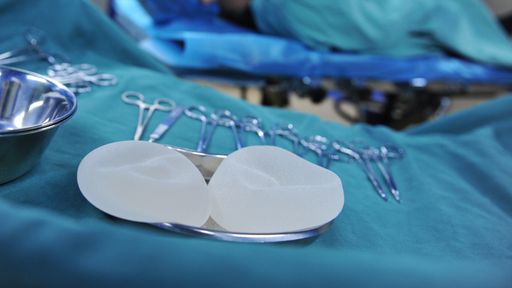
The U.S. Supreme Court declined to answer a question presented by two patients as to whether preemption under the Medical Device Amendments to the Food, Drug, and Cosmetic Act supports Rule 12(b)(6) dismissal of state common law claims alleging failure to warn by virtue of inaccurate public reporting of adverse events, and claims alleging defective manufacture of medical devices. The patients’ products liability claims against the manufacturer of silicone breast implants that allegedly had caused multiple physical ailments were dismissed by a federal district court on the basis that federal law preempted their state law-based claims, and the U.S. Court of Appeals for the Tenth Circuit upheld the dismissal (Brooks v. Mentor Worldwide LLC, Docket No. 20-1822, petition filed July 1, 2021; cert. denied November 8, 2021).
Motion to dismiss. Two patients who were implanted with the "MemoryGel" silicone breast implants filed a multi-count products liability lawsuit in federal court against the manufacturer, Mentor Worldwide LLC. They experienced several negative health effects after the implanted devices leaked, and some issues remained even after the devices were removed. The manufacturer filed a motion to dismiss, which the federal district court granted on the basis that the crux of the tort claims was expressly preempted by federal law.
Tenth Circuit ruling. The patients filed an appeal, but the Tenth Circuit affirmed the lower court [see Products Liability Law Daily’s January 27, 2021 analysis]. The appellate court explained that the manufacture and sale of medical devices is governed by two federal statutes: the federal Food, Drug, and Cosmetic Act (FDCA) and the Medical Device Amendments (MDA) thereto. Under the MDA, medical devices subject to the strictest controls, Class III devices, must pass the pre-market approval process, which is administered by the Food and Drug Administration (FDA).
Both statutes preempt certain state laws, with the FDCA provision expressly preempting state tort laws that impose a requirement that relates to the safety or effectiveness of the implants and differs from or adds to the federal requirements. The MDA provision is easier to interpret and apply than the first, the appellate court explained, characterizing the challenge of successfully pleading a tort claim for the failure of a medical device as a "legal quagmire.” The Tenth Circuit determined that only the federal government can enforce the requirements of the MDA, and that state law did not support the patients’ negligence per se claims. Thus, the lower court’s dismissal of the claims was not in error.
Moreover, the appellate court concluded that the patients’ claim that the manufacturer breached its duty to warn patients, physicians, and the FDA about the health risks associated with the implants was preempted. The pleading did not demonstrate that there was a federal requirement that the manufacturer provide a direct warning to patients, and federal law expressly preempted the addition of a state-law duty to do so. Similarly, the patients did not identify a federal requirement that the manufacturer warn physicians. The final prong of their assertion, that the manufacturer did not properly conduct the post-approval FDA-mandated testing and report negative results, which would have indirectly warned physicians of the device’s dangers, failed because the patients did not assert a state-law duty that the manufacturer comply with federal requirements, and the federal government is the only body that can enforce those requirements. Therefore, the lower court properly dismissed the failure-to-warn claims. Finally, the appellate court determined that the manufacturing defect claim was unsupported with adequate facts and that the patients did not successfully preserve leave to amend their claims.
Petition for certiorari. The patients filed a petition for certiorari with the U.S. Supreme Court, presenting the question of whether preemption under the MDA supports Rule 12(b)(6) dismissal of state common law claims alleging failure to warn by virtue of inaccurate public reporting of adverse events, and claims alleging defective manufacture of medical devices.
The patients presented four reasons to grant their petition. First, they asserted that there is a circuit split over what state law-based claims parallel a federal counterpart, even in the wake of High Court rulings on the issue. Second, they claimed that the dismissal was premature because it was based on an affirmative defense, which is “an unfortunate nationwide trend.” Third, the patients contended that the appellate court over-simplified the failure-to-warn analysis. Finally, they maintained that the case presented an issue of “national importance” in light of the prevalence of breast implants and the increase in breast implant illness. However, the High Court denied the petition.
The case is Docket No. 20-1822.
Attorneys: Anthony Anderson Benton Dogali (Dogali Law Group, P.A.) for Amber Brooks and Jamie Gale. Dustin Bradley Rawlin (Tucker Ellis LLP) for Mentor Worldwide LLC.
Companies: Mentor Worldwide LLC
MainStory: TopStory SupremeCtNews PreemptionNews WarningsNews MedicalDevicesNews