

Products Liability Law Daily Wrap Up, JURISDICTION—CLOTHING AND ACCESSORIES—7th Cir.: American Airlines employees salvage jurisdiction on fourth amended complaint, (Jun 18, 2026)
Law Firms Mentioned:Burns Charest LLP | Greenberg Traurig, LLP | O'Melveny & Myers LLP
Organizations Mentioned:American Airlines Group Inc. | American Airlines, Inc. | American Airlines, Inc. | Envoy Air Inc. | PSA Airlines, Inc. | Twin Hill Acquisition, Inc.
By Leah S. Poniatowski, J.D.
A recent Supreme Court ruling on jurisdiction was reflected in amended filing; however, res ipsa loquitur fails to salvage substance of defective uniforms lawsuit.
A products liability lawsuit filed against American Airlines and the manufacturer of employee uniforms was properly dismissed for lack of evidence of causation, the U.S. Court of Appeals for the Seventh Circuit ruled, affirming the lower court. The appellate court clarified that the group of employees had heeded the U.S. Supreme Court’s recent ruling in Royal Canin U.S.A., Inc. v. Wullschleger and were able to secure federal jurisdiction over review of the lawsuit by re-asserting their pursuit of a class action in the fourth amended complaint. However, the evidence submitted was not sufficient to sustain a strict liability or res ipsa loquitur theory of defect, thus the dismissal was upheld (Zurbriggen v. Twin Hill Acquisition, Inc., No. 25-1963 (7th Cir. June 16, 2026)).
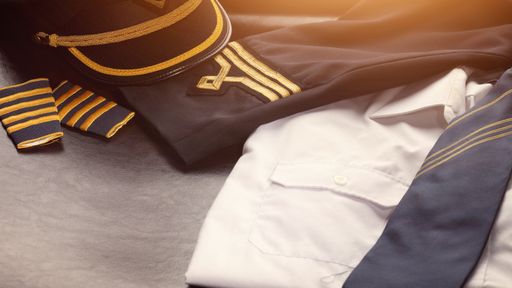
Background. In 2016, American Airlines debuted new uniforms for the “above the wing” employees, namely flight attendants and pilots. Soon after the airline received hundreds of complaints from employees that the uniforms were causing a variety of health-related issues, ranging from irritated skin, eyes, and throats to rashes, hives, and more serious allergic reactions. The airline permitted wearing the older uniform or substitutes, but some employees complained that they were having “proximity reactions” to the new uniforms worn by co-workers. These uniforms were completely phased out by 2020, when the airline partnered with a different company.
The airline had undertaken testing before and after introducing the new uniforms. Although a pre-release test had yielded reports that the uniforms caused irritation, a third-party lab evaluation concluded that the doses of chemicals that could cause allergic reactions were too low to be an issue. A second test on unworn uniforms showed similar results. The airline also had the National Institute for Occupational Safety and Health (NIOSH) test the uniforms. NIOSH similarly determined that individuals sensitive to the chemicals could have an allergic reaction, but there was no pattern of contamination that would support it as being the cause of the reported symptoms or the proximity reactions.
Procedural history. In 2017, a group of 74 employees filed a lawsuit against the manufacturer, American Airlines, and others premised in the federal Class Action Fairness Act of 2005. After several motions to dismiss and amended complaint filings, the employees pared down their claims in their third amended complaint to strict and negligent products liability against the manufacturer, and battery and intentional infliction of emotional distress against the manufacturer and the airline. Notably, the employees dropped the class certification claims “in order to proceed to bellwether trials.”
In response, the manufacturer and the airline sought summary judgment against the first flight of bellwether plaintiffs, including motions to exclude the expert testimony offered by the employees. In response to these motions, the employees asserted res ipsa loquitur on the theory that the circumstantial evidence would be sufficient to establish causation and shift the burden of proof to the manufacturer and airline. Ultimately, this strategy was not successful. The federal district court held that the employees had the burden to show the uniforms were defective and caused their injuries. Because their experts had used an unreliable methodology, their testimony could not be used [see Product Liability Law Daily’s Apr. 15, 2025, analysis]. The employees filed the present appeal.
Subject matter jurisdiction. As an initial matter, the Seventh Circuit provided an independent analysis to ensure that subject matter jurisdiction was proper. Under the Class Action Fairness Act, a district court has jurisdiction if the amount in controversy exceeds $5 million, minimal diversity requirements are met, and the lawsuit is a class action.
Although the U.S. Supreme Court’s decision in Royal Canin did not discuss this Act, the Seventh Circuit found the reasoning relevant to the case at bar to hold that an amended complaint “effectively remake[s] the suit.” The lower court observed this issue as the third amended complaint may have lost jurisdiction, prompting the court to order supplemental briefing on the issue. The employees filed a fourth amended complaint in addition to the briefing response, removing the language about not seeking class certification and clearly pleading all of the Act’s jurisdictional prerequisites. The district court held that jurisdiction was retained by virtue of the pleadings in the fourth amended complaint. The Seventh Circuit agreed, holding that the revised complaint “saved” federal jurisdiction.
Evidence of defect. However, on the substantive claims, the Seventh Circuit was not persuaded by the employees’ arguments. The appellate court incorporated the exclusion of the expert witnesses for the employees and their intentional tort theories by reference. Accordingly, in the absence of direct evidence, the employees had to rely on the res ipsa loquitur doctrine to establish liability against the manufacturer. The employees provided two argument threads: first, they asked the court to apply Illinois precedent which applies in strict liability; and second, they asked to apply a “traditional variant” of the theory vis-a-vis the negligent manufacturing claim.
Strict liability. Under applicable law, the employees need to establish three elements in order to plead a prima facie strict products liability claim: (1) the injury resulted from a condition of the product; (2) the condition was unreasonably dangerous; and (3) the condition existed at the time it left the manufacturer’s control. Generally, expert testimony would satisfy these elements, but Illinois has recognized that if an injured party can show that a “product failed to perform in the manner reasonably to be expected in light of [its] nature and intended function,” and there is no evidence of “abnormal use or reasonable secondary causes,” then the injured party can establish that the product was defective.
However, that doctrine was not applicable to the case at bar, the appellate court held. The present case is factually distinct from the case law because “it does not follow” that wearing the new uniforms would cause the issues reported. Further, the uniforms did not “fail to perform as expected,” namely, they did not break or otherwise malfunction, and the employees could not exclude reasonable secondary causes for the failure in light of the several theories raised by the bellwether plaintiffs. Because a defect is not the most obvious answer to the injuries to the employees, the strict liability claim failed.
Negligence. The traditional res ipsa loquitur assertion also failed. The Seventh Circuit explained that this burden is even higher on a negligence claim. The lower court determined—correctly—that there was no evidence to support the claim that there was an occurrence that ordinarily does not happen in the absence of negligence. Additionally, the control element of the claim was not supported by evidence in the record in light of the multiple locations of manufacture and the multiple global intermediaries involved in shipping the uniforms. Therefore, summary judgement was properly granted to the airline and manufacturer.
The case is No. 25-1963.
Judge: Brennan, M.
Attorneys: Martin Barrie (Burns Charest LLP) for Thor Zurbriggen, Dena Catan, Haley Johnson, Lynnette Chester and Joseph Catan. Francis Anthony Citera (Greenberg Traurig, LLP) for Twin Hill Acquisition, Inc., American Airlines, Inc. Allison Bader (O'Melveny & Myers LLP) for American Airlines, Inc., American Airlines Group Inc., PSA Airlines, Inc. and Envoy Air Inc.
Companies: Twin Hill Acquisition, Inc.; American Airlines, Inc.; American Airlines, Inc.; American Airlines Group Inc.; PSA Airlines, Inc.; Envoy Air Inc.
MainStory: TopStory JurisdictionNews ClothingAccessoriesNews GCNNews IllinoisNews IndianaNews WisconsinNews