

Products Liability Law Daily Wrap Up, EXPERT EVIDENCE—MOTOR VEHICLE EQUIPMENT—E.D. Ky.: Kawasaki wins summary judgment in occupant’s rollover injury suit, (Sep 18, 2026)
Law Firms Mentioned:David O. Smith, Attorneys at Law | Kramer, Rayson, LLP
Organizations Mentioned:Kawasaki Tennessee Inc.
By Pankhuri Bhatnagar, B.A. LL.B.
The occupants could not establish a manufacturing defect without expert testimony and their only relevant expert’s deficient report, untimely affidavit, and unreliable opinions were excluded.
In an action arising from a side-by-side rollover that injured three occupants, a federal district court in Kentucky granted a vehicle manufacturer’s motions to exclude the occupants’ expert affidavit and testimony and for summary judgment. The court found that the affidavit improperly introduced new information and opinions after the expert-discovery deadline and that the original report failed to satisfy Rule 26. The expert also lacked mechanical-engineering and metallurgical experience, performed no testing, identified no specific defect, and based his conclusions largely on his own belief. Without the expert testimony, the occupants’ evidence that “something broke” could not establish a manufacturing defect under Kentucky law (M.L.D. v. Kawasaki Motors Corp., U.S.A., No. 6:23-CV-207-CHB (E.D. Ky. Sept. 14, 2026)).
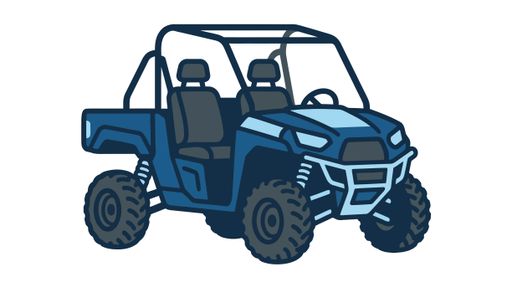
Background. A man purchased a new Kawasaki Teryx side-by-side in March 2020 for his three children. Although a permanent warning stated that operators must be at least 16 with a valid driver’s license and warned against operation on public roads, the children primarily drove the vehicle on roads near their Kentucky home. In February 2021, the teenagers were driving when the driver, a 14-year-old girl, felt the vehicle “steering to the right,” after which it flipped. All three were wearing seatbelts but suffered various injuries, including a fractured humerus and concussion. Post-rollover inspection revealed significant damage to the rear-left wheel assembly, including the knuckle, bearing assembly, and wheel. The occupants alleged that the knuckle fractured because of a manufacturing defect, making the vehicle uncontrollable and causing the rollover. The manufacturer, Kawasaki Motors Corp., U.S.A., maintained that the damage resulted from misuse or the rollover itself. The occupants asserted manufacturing-defect, design-defect, and failure-to-warn theories. Kawasaki removed the action based on diversity jurisdiction and moved to exclude the manufacturing-defect expert, exclude his affidavit, and obtain summary judgment.
Expert affidavit. The occupants’ proposed expert was a side-by-side and motorcycle repair technician who had inspected the vehicle and concluded that its rear-left knuckle had a manufacturing defect. His initial report was a one-paragraph service ticket stating that the knuckle appeared defective and that its fracture made the vehicle uncontrollable. After the expert-discovery deadline and after Kawasaki moved to exclude his testimony, the expert submitted an affidavit introducing new information and opinions. He described additional damage to the rear A-arm, asserted for the first time that the rollover had not caused the rear damage, performed another inspection, and reported online research concerning alleged Teryx axle, bearing, and knuckle problems and recalls. The court held that Rule 26(e) permits supplementation when an earlier disclosure becomes materially incomplete or incorrect but does not permit wholly missing information or new opinions after the discovery deadline. Eiben v. Gorilla Ladder Co., 2013 WL 1721677, at *5 (E.D. Mich. Apr. 22, 2013). Under Rule 37(c)(1), an untimely disclosure must be excluded unless the failure was substantially justified or harmless. Parton v. Johnson & Johnson, 2021 WL 3921339, at *4 (E.D. Tenn. Sept. 1, 2021). As the occupants neither opposed the motion nor established justification or harmlessness, the court excluded the affidavit.
Expert testimony. Kawasaki also challenged the original report and testimony under Rule 702. The proposed expert had worked as a mechanic since 2007 and primarily worked on off-road vehicles, but had no mechanical-engineering or metallurgical training or experience. He had never conducted stress or finite-element analysis, metallurgical testing, microscopy, or similar examinations and was unfamiliar with the standards and tolerances used to design and test the vehicle’s components. His inspection consisted primarily of visual examination and photographs; he did not examine the undercarriage, disassemble the vehicle, or conduct testing. Rule 26(a)(2)(B) requires a retained expert report to provide the opinions, supporting facts and data, exhibits, and reasoning underlying the conclusions. R.C. Olmstead, Inc. v. CU Interface, LLC, 606 F.3d 262, 270-72 (6th Cir. 2010).
The report did not explain what the inspection involved, what facts or data were considered, or how the conclusions were reached. It therefore independently failed Rule 26. The testimony also failed Rule 702’s reliability requirement as he could not reliably identify a specific manufacturing defect in the knuckle. He did not observe evidence of a bad casting or hairline fracture and acknowledged that he was not a metal professional. He speculated that the defect could have resulted from a bad casting or excessive pressure when the bearing was installed, but performed no testing to support either theory. The court found that his conclusion rested on little more than subjective belief and excluded his report and testimony.
Summary judgment. The occupants conceded that they were no longer pursuing their design-defect and failure-to-warn theories. Their remaining manufacturing-defect theory depended on the excluded testimony and the driver’s statement that she was operating the vehicle properly when “something broke.” Under Kentucky law, a claimant must establish a defect and legal causation, and expert testimony is generally necessary unless the defect is so obvious that an ordinary person could understand it. Bardin v. Nissan Motor Co., Ltd., 2023 WL 6392743, at *11 (W.D. Ky. Sept. 29, 2023)).
The court found that a manufacturing defect in a side-by-side’s rear knuckle was not within ordinary knowledge and therefore required expert testimony. The circumstantial evidence also failed to establish the required probability of a defect. Under Siegel v. Dynamic Cooking Systems, Inc., 501 F. App’x 397, 401 (6th Cir. 2012), a claimant must show a malfunction and eliminate causes for which the manufacturer is not liable. Evidence must move the defect from possibility to probability.
The court distinguished Perkins v. Trailco Manufacturing and Sales Co., 613 S.W.2d 855, 856-58 (Ky. 1981), where a brand-new trailer failed on its maiden voyage while properly loaded and used, allowing other causes to be eliminated. Here, the vehicle had been used for about 11 months, and the only non-expert evidence was the driver’s unsupported belief that “something” broke. Unlike Gentry v. General Motors Corp., 839 S.W.2d 576, 578-79 (Ky. Ct. App. 1992), where expert testimony identified a specific axle defect and connected it to the crash, the occupants’ evidence required speculation about whether the vehicle malfunctioned, what caused it, and whether it had been properly operated and maintained. Because the only relevant expert testimony was excluded and the remaining evidence could not establish a defect, the court granted Kawasaki summary judgment.
The case is No. 6:23-CV-207-CHB.
Judge: Boom, C.H.
Attorneys: David O. Smith (David O. Smith, Attorneys at Law) for M.L.D. George R. Arrants (Kramer, Rayson, LLP) for Kawasaki Tennessee Inc.
Companies: Kawasaki Tennessee Inc.
MainStory: TopStory MotorEquipmentNews ExpertEvidenceNews DesignManufacturingNews KentuckyNews GCNNews