

Products Liability Law Daily Wrap Up, DEFENSES TO LIABILITY—HOUSEHOLD PRODUCTS—D. Neb.: Pressure cooker distributor denied summary judgment, evidence exclusion in consumer’s injury case, (Oct 21, 2025)
Law Firms Mentioned:Atwood, Holsten Law Firm | Baylor, Evnen, Wolfe Law Firm | Goldberg Segalla Law Firm
Organizations Mentioned:Tristar Products, Inc.
By Pankhuri Bhatnagar, B.A. LL.B.
A genuine dispute existed as to whether the cooker at issue was pressurized at the time of the consumer’s injury, which precluded summary judgment.
In an action brought against a cooker distributor by a woman who sustained burn injuries when the cooker’s contents exploded onto her, a federal district court in Nebraska denied the distributor’s motions for summary judgment and exclusion of the consumer’s expert evidence. The court found that the distributor waived its right to arbitration by failing to promptly seek arbitration and engaging in extensive discovery. The woman’s expert opinions were admissible since they were based on reliable methodology and tested the efficiency of the cooker’s safety mechanism, a material issue that would be helpful to a jury. The consumer’s admission that the cooker was not pressurized did not amount to a judicial admission since it was not made “deliberately, clearly, and unambiguously” (Clary v. Tristar Products, Inc., No. 4:22-cv-3230-SMB-JMD (D. Neb. Oct. 17, 2025)).
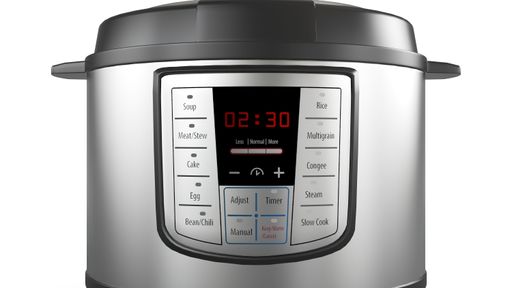
Background. A woman was using a Power Quick Pot Model Y6D-36 pressure cooker. She opened the cooker’s steam release valve twice after cooking and, seeing no further steam, attempted to open the lid, which blew off. The cooker’s contents exploded onto her, causing severe facial and upper-body burns. She brought suit against the product’s marketer and distributor, Tristar Products, Inc., alleging claims for strict product liability, negligence, breach of warranties, and failure to warn. Tristar moved for summary judgment and filed a Daubert motion, arguing that (1) an enforceable arbitration clause in the product’s manual barred this litigation; (2) the consumer’s expert evidence failed to satisfy Rule 702 and Daubert; and (3) her admissions established that the cooker was depressurized when she incurred her injuries, leaving no genuine factual dispute as to causation.
Arbitration. The cooker’s packaging contained an owner’s manual and an arbitration agreement which stated that “by purchasing a Tristar product, you agree that…any dispute…shall be resolved by binding individual arbitration” and gave purchasers 30 days to opt out of the agreement by contacting Tristan. The court noted that a party waives its right to arbitration if it knew of its existing right to arbitration but acted “inconsistently with” that right. In re Pawn Am. Consumer Data Breach Litig., 108 F.4th at 614. An inconsistent act includes “substantially invok[ing] the litigation machinery” such as by “engag[ing] in extensive discovery” or “fail[ing] to move to compel arbitration and stay litigation in a timely manner.” Donelson v. Ameriprise Fin. Servs., Inc., 999 F.3d 1080, 1087 (8th Cir. 2021). The instant suit commenced in October 2022. Tristar filed its answer asserting its right to arbitration in January 2023, but waited until May 2025—after two years of discovery, depositions, expert designations, and multiple procedural motions—to move to compel arbitration.
Tristar argued that extensive discovery was necessary for it to ascertain the existence of its arbitration right since it was unclear whether the woman had actually received the agreement. It was also disputed whether she was the one who purchased the subject cooker, so the distributor waited for the complaint amendment deadline to expire in November 2024 and filed the motion to compel arbitration six months later. The court disagreed, pointing out that while answering the complaint, Tristar had sufficient evidence to establish an arbitration agreement by showing the existence of an offer (the agreement), acceptance (through purchase), mutual assent (presumed receipt of the agreement without any subsequent opt-out request), and mutuality of obligation (as per the agreement’s terms). It would then have been the consumer’s burden to dispel these elements. Engaging in the discovery process for two years and deposing the consumer twice to determine its right to arbitration was hardly necessary, and this “substantial invocation of the litigation machinery” resulted in a waiver of its right to arbitration.
Expert evidence. Tristan contended that the consumer’s expert’s opinions about the cooker’s defects and causation were unreliable and irrelevant because he did not use “the scientific method” required by Fed. R. Evid. 702 in his testing or attempt to recreate the pressure cooker explosion. It maintained that the expert’s visual inspection of the steam valve before testing was “antithetical to the scientific method” because it involved making conclusions prior to conducting testing. The distributor cited Claar v. Burlington N. R.R. Co., 29 F.3d 499 (9th Cir. 1994) for the proposition that opinions formed prior to testing are categorically unreliable, but this court found Claar inapposite, reasoning that the expert’s 55 years of engineering experience and extensive testing of pressure cookers distinguished him from the inexperienced experts in that case. Moreover, he did not solely rely on visual inspection. He also conducted the “Lid Removal Under Pressure Test” and “Lid Safety Locking Mechanism Test” and found that the cooker’s lid could open and its float valve safety lock could be defeated with menial force when pressurized, indicating a defect. The expert’s use of the Forensic Engineering Method was also acceptable, as it was based on accepted engineering principles, was subjected to peer review, and was accepted by the forensic engineering community. The tests were capable of being replicated and tested, and had been employed in several other litigations. Further, Rule 702 and Daubert do not require that scientific testing underlying expert testimony replicate alleged events for testimony to be admissible. Rather, expert testimony should have a sufficient nexus to the facts of the case to “aid the jury in resolving the factual dispute.” Lauzon v. Senco Prods., Inc., 270 F.3d 681, 694 (8th Cir. 2001). The two tests tested the pressure cooker’s safety mechanism’s efficacy while the unit was pressurized and were accordingly helpful to a jury in resolving the factual issues of this case. Accordingly, the expert’s opinions were reliable and helpful, and summary judgment could not be granted based on its exclusion.
Admissions. Tristar finally argued that the consumer’s admission that the float valve had “dropped” before she opened the cooker constituted a judicial admission that no pressure remained and dispelled any genuine factual dispute about a product defect. The court explained that judicial admissions must be “deliberate, clear, and unambiguous,” Grandoe Corp. v. Gander Mountain Co., 761 F.3d 876 (8th Cir. 2014), and that “carelessly worded” stipulations cannot be treated as conclusive. Acciona Windpower N. Am., LLC v. City of West Branch, 847 F.3d 963 (8th Cir. 2017). Here, the consumer did not intend to concede that the appliance was depressurized. She later clarified that she misunderstood the question and did not know what the float valve was. Given her consistent position throughout the case that the cooker remained pressurized when the lid blew off, the court deemed the response ambiguous and refused to treat it as a binding admission. A genuine dispute of material fact remained as to whether the cooker was pressurized, precluding summary judgment on that basis.
The case is No. 4:22-cv-3230-SMB-JMD.
Judge: Bazis, S.
Attorneys: Corey L. Stull (Atwood, Holsten Law Firm) for Dawn M. Clary. Christopher M. Schmidt (Baylor, Evnen, Wolfe Law Firm) and David S. Osterman (Goldberg Segalla Law Firm) for Tristar Products, Inc.
Companies: Tristar Products, Inc.
MainStory: TopStory DefensesLiabilityNews HouseholdProductsNews ExpertEvidenceNews DesignManufacturingNews NebraskaNews