

Products Liability Law Daily Wrap Up, DEFENSES TO LIABILITY—DRUGS—D.N.J.: Claims against eye drop suppliers and Amazon largely dismissed in consumer injury action, (Jun 3, 2024)
Law Firms Mentioned:Aylstock, Witkin, Kreis & Overholtz PLLC | Shook, Hardy & Bacon L.L.P. | Sills Cummis & Gross P.C.
Organizations Mentioned:Amazon.com, Inc. | EzriCare, LLC | EzriRx, LLC | Global Pharma Healthcare Private Ltd.
By Pankhuri Bhatnagar, B.A. LL.B.
The court lacked specific personal jurisdiction over the online marketplace which provided only storage and logistics support, but the injury was plausibly connected to the suppliers’ conduct.
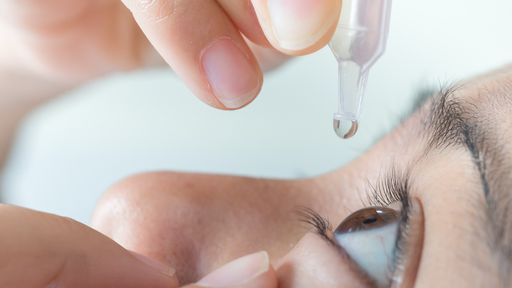
In a case brought against an artificial tears product’s seller, supplier, and an online marketplace by a woman who suffered an eye infection due to the alleged presence of bacteria in the product, the federal district court in New Jersey largely granted the companies’ motions to dismiss. Twelve of the consumer’s claims were subsumed by the state’s product liability act, while the remaining breach of express warranty claim was dismissed because labels representing a product’s safety are not express warranties. However, the manufacturing and design defect claims survived for being adequately pleaded (Hartwell v. EzriCare, LLC, No. 23-01647 (GC) (RLS) (D.N.J. May 31, 2024)).
Background. A woman claimed that her eye became infected with Pseudomonas aeruginosa bacteria after she used EzriCare artificial tears purchased from EzriCare on Amazon.com. She accordingly sued: (1) EzriCare, LLC (EzriCare or seller), a New Jersey-based company that sold her the product; (2) EzriRx, LLC (EzriRx or supplier), another New Jersey company which allegedly participated in the supply chain; (3) Global Pharma Healthcare Private Ltd., an Indian corporation that designed, manufactured, and packaged the product; and (4) Amazon, the online marketplace from where she purchased the product. Her complaint asserted 14 counts, namely: (1) strict liability failure to warn; (2) strict liability for design or manufacturing defect; (3) negligence; (4) negligent failure to warn; (5) negligent design or manufacturing defect; (6) negligent misrepresentation; (7) fraud; (8) fraudulent concealment; (9) breach of express warranty; (10) breach of express warranty; (11) negligent failure to timely recall; (12) punitive damages; (13) violations of New Jersey’s Consumer Fraud Act (NJCFA); and (14) violations of the New Jersey Products Liability Act (NJPLA). Amazon, EzriCare, and EzriRx each moved to dismiss.
Amazon’s motion. The online platform submitted that it was not subject to specific personal jurisdiction in New Jersey. The consumer alleged that Amazon entered into agreements to purchase the subject product from New Jersey entities for resale to consumers. Amazon’s risk and policy manager testified that EzriCare sourced and held title to the artificial tears and sold them directly to the consumer, while Amazon simply provided storage and logistics services. The woman countered that this declaration showed three ways in which the platform directed its activities towards the forum. First, the seller was in New Jersey when it entered the Amazon Services Business Solutions Agreement (BSA) to use Amazon’s logistics services. Whether a contract establishes personal jurisdiction depends on the parties’ “prior negotiations and contemplated future consequences,” Budget Blinds, Inc. v. White, 536 F.3d 244, 261 (3d Cir. 2008). Amazon responded that it did not negotiate with or contemplate the future consequences of EzriCare’s use of its services. The court observed that the BSA is an electronic, click-through agreement that sellers accept to set up a seller account on Amazon and that EzriCare’s assent to this BSA did not result in jurisdiction over Amazon.
The woman next asserted that EzriCare’s payment for the seller services and shipments of its inventory to Amazon’s fulfillment centers came from New Jersey. However, a third party’s unilateral activity cannot alone establish personal jurisdiction over a defendant, Helicopteros Nacionales de Colombia, S.A. v. Hall, 466 U.S. 408, 417 (1984). Finally, the consumer pointed out that the seller granted the platform a worldwide right and license to use EzriCare’s materials for the services. The court agreed with Amazon that this only reflected the seller’s unilateral choice to assent to the BSA, not any deliberate targeting of New Jersey by Amazon. The consumer requested jurisdictional discovery to investigate which Amazon office contracted with the seller, whether Amazon possessed and stored EzriCare products in New Jersey, and whether any New Jersey-based third parties were involved in the transfer of the product to Amazon. The court found her allegations insufficient to justify discovery, and the complaint against the platform was accordingly dismissed.
Supplier’s motion. EzriRx claimed that the complaint did not allege enough facts to establish Article III standing; specifically, that there was no causal connection between the woman’s injury and EzriRx, because the supplier operated a business-to-business sales portal—it did not sell to consumers, as evidenced by the affidavit of its founder. The consumer asserted that the affidavit did not address EzriRx’s involvement in the development, manufacture, importation, marketing, labeling, and distribution (including to Walmart) of the artificial tears product. She also alleged an alter-ego theory—that EzriRx and EzriCare were a single entity with respect to the EzriCare product—which the court rejected because sharing leadership, contact information, and counsel did not alone justify disregarding their corporate separateness. Nevertheless, the complaint contained sufficient allegations as to causation since EzriRx allegedly advertised and distributed the artificial tears and EzriCare was a trademark registered and licensed to EzriRx. The supplier’s objection that the complaint did not provide “fair notice of the claim and the grounds upon which it rests” was also rejected, leading to the denial of its motion to dismiss.
Seller’s motion. EzriCare contended that the woman’s claims were subsumed by the NJPLA. A claim is subsumed by the NJPLA if “(1) it is brought by a claimant for harm caused by a product, regardless of the theory underlying the claim; and (2) the harm suffered is of a type listed in the definitional section,” Barrett v. Tri-Coast Pharmacy, Inc., 518 F. Supp. 3d 810, 824 (D. N.J. 2021). Here, the woman’s common-law and NJCFA claims were based on the same allegations of harm underlying her NJPLA claim—that she sustained physical injuries from her use of the contaminated eye drops. Although she later alleged a new theory of negligence not based on the underlying harm, a theory described for the first time in her opposition papers could not help to defeat a motion to dismiss. As such, counts one through eight and 10 through 14 of her complaint were subsumed by the NJPLA claim under count 14. As for the permitted breach of express warranty claim, she argued that the product’s label described it as a “protectant against irritation” and “for temporary relief of [eye] discomfort.” However, the label qualified itself by warning users to “[s]top use and ask a doctor if you experience” “eye pain,” “changes in vision,” or continuation of the condition. Moreover, courts in the Third Circuit do not consider user instructions or labels representing that a product is “safe and effective” as express warranties, In re Avandia Mktg. Sales Pracs. & Prod. Liab. Litig., 588 F. App’x 171, 176-78 (3d Cir. 2014), leading to the dismissal of this claim as well.
NJPLA. The woman properly alleged a design defect by attributing the contamination to the lack of appropriate microbial testing, formulation issues, and tamper-proof packaging. Her proposed alternative designs included adding preservatives which prevent bacterial growth or using “phage therapies” to treat antibiotic-resistant bacteria. Addressing the risk-utility element, she claimed that the product was an inessential over-the-counter product that did not treat or cure any serious disease. She added that the product deviated from the manufacturer’s specifications or standards as it was contaminated by the time she received it. The court found these allegations sufficient for her manufacturing and design defect claims to survive. The seller sought immunity under the NJPLA since the identity of the actual manufacturer was known, but the court agreed that discovery was required to clarify EzriCare’s role in bringing the product to the market, and rejected the immunity claim at this juncture.
The case is No. 23-01647 (GC) (RLS).
Judge: Castner, G.
Attorneys: Mary E. Putnick (Aylstock, Witkin, Kreis & Overholtz PLLC) for Deborah Hartwell. Maureen Doerner Fogel (Shook, Hardy & Bacon L.L.P.) for EzriCare, LLC and EzriRx, LLC. Andrew W. Schwartz (Sills Cummis & Gross P.C.) for Amazon.com, Inc.
Companies: EzriCare, LLC; EzriRx, LLC; Amazon.com, Inc.; Global Pharma Healthcare Private Ltd.
MainStory: TopStory DefensesLiabilityNews DrugsNews JurisdictionNews SCLIssuesNews DesignManufacturingNews CausationNews NewJerseyNews