

Cybersecurity Policy Report, Bipartisan House Bill Aims to Limit Use of License Plate Readers, (Sep 15, 2026)
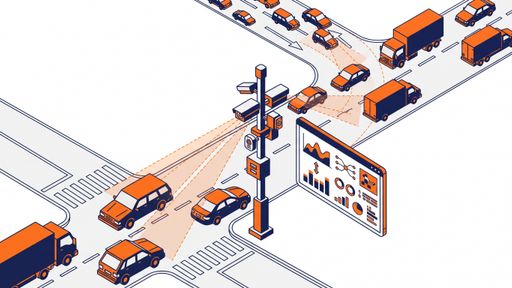
State governments would have to limit the use of automated license plate recognition (ALPR) technology or face reductions in federal funding under a bipartisan House bill announced today.
The No Federal License-Plate Observation and Camera Keeping (FLOCK) Act (H.R. 10366, 119th Cong. (2026)) was introduced by Reps. Raja Krishnamoorthi (D., Ill.) and Michael Cloud (R., Texas). Flock Safety is a leading provider of ALPR systems.
“Under the legislation, states would be required to enact laws limiting automated license plate readers to specific public safety and toll-enforcement purposes. After a two-fiscal-year implementation period, states that fail to have those restrictions in effect would have 10 percent of the federal surface transportation funding apportioned to them under Section 104(b) of Title 23 withheld each fiscal year,” the lawmakers explained in a news release.
States would be allowed under the bill to use ALPR technology for highway toll collection, identifying stolen vehicles, locating missing or endangered people, identifying vehicles registered to individuals with warrants for felony offenses, and investigating vehicles involved in felony offenses. Any other uses would run afoul of the provisions of the bill, the text of which was not immediately available.
Reps. Krishnamoorthi and Cloud cited reports and their own findings that ALPR technology had been misused for stalking and illegal surveillance.
“Automated license plate readers can be powerful tools for law enforcement to investigate serious crimes and protect our communities, but they must not become tools for officers to stalk ex-partners or spy on people for personal reasons,” Rep. Krishnamoorthi said. “Our investigation into Flock exposed serious gaps in oversight, and this bipartisan bill would put clear limits in place to prevent abuse while preserving legitimate public safety uses.”
“Taxpayers shouldn’t be forced to fund the shredding of their own civil liberties or the growth of a surveillance state,” Rep. Cloud said. “Flock cameras are enabling mass surveillance of Americans, infringing on the Fourth Amendment. This bill is a first step toward reining in unchecked surveillance. We can protect public safety without sacrificing the privacy of Americans.”
MainStory: TopStory FederalLegislation DataPrivacy