

Cybersecurity Policy Report, Anthropic Seeks AI Regulation After White House Unshackles Cyber-Capable AI Models, (Jul 1, 2026)
Organizations Mentioned:Amazon
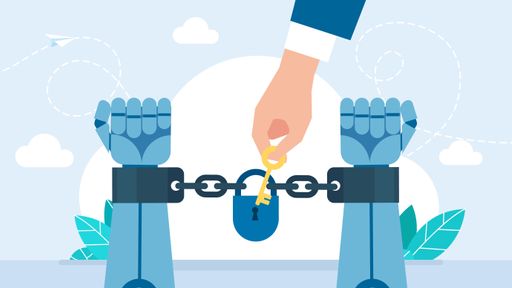
The Trump administration has eased restrictions that had prevented Anthropic from publicly releasing Claude Fable 5, an AI (artificial intelligence) model that the administration was concerned could be used by foreign adversaries for cyber attacks and other malicious activities, Anthropic announced yesterday.
Anthropic welcomed the administration’s reversal on Fable 5 but called for regulations to give AI developers more clarity about when their models might be subject to government-imposed restrictions. The Trump administration has been relying on developers voluntarily submitting “frontier” models for pre-release testing.
The Commerce Department last month imposed export controls on Fable 5 and another model capable of identifying cybersecurity vulnerabilities, Mythos 5, amid worries that the models could be misused by hackers. Anthropic canceled public releases of the models to comply with the export restrictions, which were lifted last week on Mythos 5 (CPR, June 29).
Mythos 5 will be available to a select group of users, while Fable 5 is approved for general release, Anthropic said in a news release. Both models are based on Anthropic’s Claude Mythos2 Preview, which proved to be so adept at finding and exploiting cyber vulnerabilities that Anthropic limited its release to a small number of participants in what Anthropic calls Project Glasswing.
New guardrails added to Mythos 5 and Fable 5 make it unlikely that they could be used for malicious purposes, the company said. Although it “reached a constructive resolution” regarding the release of Fable 5 and Mythos 5, “these events have made clear that the industry needs a consistent way to assess and fix potential ‘jailbreaks’ of AI models (techniques that bypass a model’s safeguards),” it said.
“A shared standard for judging the severity of a given jailbreak would help AI developers triage new findings as they arise, launch highly capable models with greater safety, and communicate the level of risk consistently to government and industry partners. Together with Amazon, Microsoft, Google, and other Glasswing partners, we’ve started to develop such a framework.”
“There’s currently no consensus in the AI industry on how to describe, in objective terms, the severity of an AI jailbreak. This adds a great deal of uncertainty whenever a new jailbreak technique is discovered: developers have no agreed-upon standard for which findings to focus on most urgently, and governments have no agreed-upon standard for when to act,” it said.
“This problem will become more acute in the coming months, as more models with powerful cybersecurity (and other) capabilities are trained, assessed, and released. A common standard for assessing AI jailbreaks would help us and other companies launch new models safely, as well as allow our users to make the most of their advanced capabilities,” Anthropic said.
“These rules should be codified in strong regulation and applied equally across frontier model developers,” it added. “Government involvement in AI releases requires a durable, transparent process that gives cyber defenders and others the certainty they need about access to powerful models.”
MainStory: TopStory FederalLegislation DataSecurity AINews