

Labor & Employment Law Daily Wrap Up, AGENCY NEWS—DOJ tells EEOC that its Title VII disparate impact liability guidelines are unconstitutional, (Jun 10, 2026)
Organizations Mentioned:BAH Brazilian Steakhouse | Office of Legal Counsel
By Brandi O. Brown, J.D.
This seems to beg the question, how will the legal system now address issues of algorithmic bias?
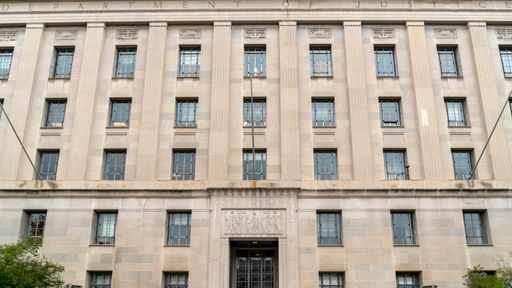
Driven by the White House’s rejection of the disparate-impact legal theory of discrimination liability, as set out in Executive Order 14281, yesterday the Department of Justice issued a non-binding opinion to the EEOC arguing, for the first time, that the latter agency’s guidelines about disparate-impact liability under Title VII are unconstitutional. DOJ’s Office of Legal Counsel claims that the EEOC’s guidelines pressure employers to engage in racial discrimination and that, under those guidelines, employers could be held liable for unequal outcomes among different groups, without regard to the employer’s likely intent.
The disparate-impact theory of liability under Title VII was first applied by the U.S. Supreme Court in 1971 in Griggs v. Duke Power Co. There, the Court concluded that a power company used job criteria that disproportionately eliminated Black applicants but were not “significantly related to successful job performance” and did not advance the company’s asserted goal of facilitating promotions within the company. It held that the policy violated the statute, explaining that Title VII “proscribes not only overt discrimination but also practices that are fair in form, but discriminatory in operation.” In 1991, Congress amended Title VII, codifying this theory and laying out the burden-shifting framework that applied.
Executive order and Title VI. Last April, in Executive Order 14281, however, the Trump administration explicitly rejected disparate-impact liability, contending "it creates a near insurmountable presumption [that] unlawful discrimination exists where there are any differences in outcomes in certain circumstances among different races, sexes, or similar groups."
In December 2025, the Justice Department issued a final rule updating its regulations under Title VI of the Civil Rights Act of 1964, removing disparate impact discrimination provisions, which it contended violate Equal Protection. And now, it has issued this opinion to the EEOC regarding disparate impact liability under Title VII. In the meantime, reports were made that the EEOC had already instructed office directors that it would discharge complaints that were based on disparate impact liability.
DOJ’s stance. "Despite trying to promote equality, EEOC's disparate impact liability interpretation under Title VII actually fosters the very discrimination its guidelines seek to address," said Acting Attorney General Todd Blanche. "This opinion will now allow businesses to hire based on performance, restoring equal opportunities in the American workplace."
New standard. People bringing a disparate-impact claim must meet two requirements, according to DOJ’s new formulation. They must show that the specific hiring practice directly caused the unequal outcomes in question, and they must identify an alternative approach that would be equally effective for employers but would result in fewer unequal outcomes.
Tests allowed. According to the DOJ’s opinion, which is not binding law, businesses can use hiring practices that are generally related to job performance—such as aptitude tests, knowledge-based tests, criminal-background checks, and SAT scores—without fear of violating Title VII where those practices result in different outcomes for different demographic groups. According to DOJ, to justify using such tools, employers only need to show that the practice is reasonable, useful, or helps serve a valid business purpose.
Lowering the bar. Weaving within the opinion is a notable lowering of the bar of how employers can justify hiring practices. DOJ states that employers “only need to show that the practice is reasonable, useful, or helps serve a valid business purpose,” a formulation that appears to soften the traditional business-necessity standard into something closer to a reasonableness standard.
Ricci’s “thumb.” “The fundamental problem is that disparate-impact liability tends to incent—and even coerce—employers to make race-based decisions to avoid liability or the threat of liability,” the DOJ’s opinion argues, pointing to the U.S. Supreme Court’s decision in Ricci v. DeStefano. It was in Ricci in 2009 that Scalia famously argued that disparate impact liability “place[s] a racial thumb on the scales, often requiring employers to evaluate the racial outcomes of their policies, and to make decisions based on (because of) those racial outcomes.”
In assessing the constitutionality of disparate impact liability in its memo, DOJ leans heavily on Scalia’s concurrence in Ricci. In Ricci, DOJ writes, the Court declined to decide whether “the strong-basis-in-evidence standard would satisfy the Equal Protection Clause” or “whether a legitimate fear of disparate impact is ever sufficient to justify discriminatory treatment under the Constitution.” However, DOJ agrees with Scalia, who explained in concurring that Ricci had “merely postpone[d] the evil day on which the Court will have to confront the question: Whether, or to what extent, are the disparate-impact provisions of Title VII of the Civil Rights Act of 1964 consistent with the Constitution’s guarantee of equal protection?” It notes that Scalia had predicted in Ricci that “the war between disparate impact and equal protection [would] be waged sooner or later.”
DOJ examined the intervening decisions and decided that “[r]eading Griggs in context and together with the Supreme Court’s more recent precedent requires “updat[ing] the framework” for disparate-impact liability “to ensure a constitutional reading and application of” Title VII.”
What about AI bias? Even before this memo by DOJ, commenters had voiced concerns that ditching disparate-impact liability would weaken an effective legal tool that could be used to help address algorithmic bias in hiring practices making use of AI. In a Congressional Research Service report in July 2025, for example, the report writer noted that the changes made by the Trump administration’s approach to this theory of liability “could be particularly salient in regulating decisionmaking algorithms or artificial intelligence (AI).”
Indeed, the Leadership Conference on Civil and Human Rights published a report in January explaining how the disparate impact doctrine could help surface and root out sources of bias, particularly because AI bias rarely involves intent and, in fact, both employers and applicants have an obstructed view into how the AI systems work. Now, however, it seems that the legal tool believed to be best suited to uncover AI bias is being weakened by federal civil rights agencies at the same moment AI is expanding in hiring.
State law challenge. In fact, in April, the DOJ intervened in an xAI lawsuit challenging a Colorado law that sought to prohibit algorithmic discrimination, arguing there, also, that the new law violates the Equal Protection Clause “by requiring AI companies to prevent unintentional disparate impact that their products could have based on protected characteristics like race and sex, and by exempting liability for certain forms of discrimination designed to advance ‘diversity.’”
“Laws that require AI companies to infect their products with woke DEI ideology are illegal,” said Assistant Attorney General Harmeet K. Dhillon of the Justice Department’s Civil Rights Division.
MainStory: TopStory AgencyNews Discrimination LitigationNewsTrends AINews ESGNews GCNNews