

IP Law Daily, TRADEMARK—N.D. Ill.: Chicago Cubs can block rooftop business from selling tickets to watch Wrigley Field games, (Oct 1, 2026)
Law Firms Mentioned:Carroll, Hartigan & Cerney Ltd. | Kirkland & Ellis LLP
Organizations Mentioned:Chicago Cubs Baseball Club, LLC
By Saurabh Kashyap, B.A., M.A., LL.B., LL.M.
The Cubs established that an unlicensed neighboring rooftop was misappropriating the live-game experience and infringing team trademarks, although its false advertising claim failed.
The Chicago Cubs won summary judgment on trademark infringement, misappropriation, unjust enrichment, and state-law unfair competition claims against a neighboring rooftop business that continued selling tickets to watch games at Wrigley Field after a 20-year licensing arrangement expired. A federal district court in Illinois also permanently barred the rooftop from selling tickets to provide views of Cubs games and other Wrigley Field events without the team’s consent. However, the Cubs lost their Lanham Act false advertising claim because they failed to show that the rooftop’s false claim that it remained an “Official Partner of the Cubs” was material to customers’ purchasing decisions (Chicago Cubs Baseball Club, LLC v. Dunican, No. 1:24-cv-05086 (N.D. Ill. Sep. 30, 2026)).
Rooftop business. The Cubs own and operate the Major League Baseball team and Wrigley Field and own federal registrations for CHICAGO CUBS, CUBS, and the team’s “C” logo.
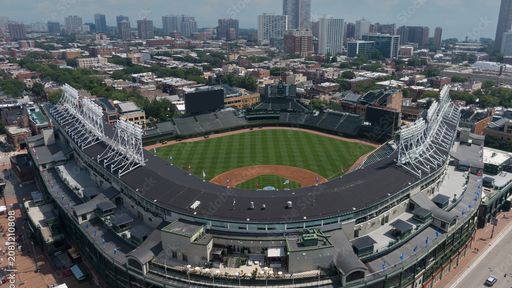
Immediately adjacent to Wrigley Field is Wrigley View Rooftop, operated by Rooftop by the Firehouse, Inc. and its sole owner and officer, Aidan Dunican. The rooftop has stadium-style bleacher seating, and a skydeck accommodating up to 200 guests, with sight lines into Wrigley Field. It opens only for games and other events at the ballpark and derives its revenue from admission packages generally costing $125 to $150 per person.
In 2004, the Cubs’ predecessor entered into a settlement agreement with several surrounding rooftop businesses, including Wrigley View’s predecessor. The agreement required the rooftops to pay the Cubs 17 percent of gross revenues and 11 percent of billboard revenue. In return, Wrigley View could sell tickets to watch Cubs games, use specified Cubs trademarks, and advertise itself as endorsed by the team.
The agreement expired on December 31, 2023. Although the Cubs proposed another agreement that would increase royalties but eliminate trademark rights, Wrigley View did not accept it. Nevertheless, the rooftop continued selling admission to watch games and other Wrigley Field events without paying royalties.
After the Cubs sued, the business directed employees to remove Cubs marks and changed ticket descriptions to “Chicago vs. [the opposing team].” However, its website continued to contain a brochure displaying a Cubs logo, and marketing materials described Wrigley View as an “Official Partner of the Cubs” through 2025.
Live-game experience. The court sided with the Cubs on their Illinois misappropriation claim, rejecting the rooftop’s argument that the team was asking it to create a new property right in the visibility of sporting events from neighboring private property.
The court relied heavily on Pittsburgh Athletic Co. v. KQV Broadcasting Co., 24 F. Supp. 490 (W.D. Pa. 1938), involving observers who watched Pittsburgh Pirates games from outside the stadium and supplied unauthorized play-by-play descriptions to a radio station. That decision recognized the sports club’s property interest in games produced through its expenditures.
The court also cited Right Field Rooftops, LLC v. Chicago Baseball Holdings, LLC, 87 F. Supp. 3d 874 (N.D. Ill. 2015), which recognized the Cubs’ ability to control distribution of their own product—live Cubs games.
The Cubs incurred substantial costs to operate Wrigley Field and stage games, while Wrigley View sold access to those games without bearing their production costs. Cubs games were essential to the rooftop’s business: it opened only when events occurred at Wrigley Field, listed the Cubs’ schedule and sold tickets tied to particular games.
The arrangement also caused commercial harm because customers could buy Wrigley View tickets instead of tickets to Wrigley Field or licensed rooftops paying royalties. The court therefore granted the Cubs summary judgment on misappropriation and unjust enrichment.
Continued trademark use. The court also granted summary judgment on federal trademark infringement. The validity of the registered CHICAGO CUBS, CUBS and Cubs logo marks was undisputed.
Relying on In re XMH Corp., 647 F.3d 690 (7th Cir. 2011), the court explained that continued use of a trademark after a license terminates establishes a likelihood of confusion. Wrigley View continued using marks identical to the Cubs’ marks after its contractual authorization expired.
The rooftop’s efforts to instruct employees to remove the marks did not shield it from liability. The Lanham Act imposed strict liability, and the marks were being used in connection with the same type of entertainment services. The resulting risk was that consumers would believe the rooftop remained sponsored or approved by the Cubs. Wrigley View’s own representative acknowledged receiving customer communications expressing confusion over whether it was part of Wrigley Field.
The same findings supported summary judgment for the Cubs on their Illinois deceptive trade practices and common-law unfair competition claims.
“Official Partner” claim. The Cubs did not prevail on their false advertising claim. Wrigley View admitted that it no longer had the right to call itself an “Official Partner of the Cubs,” making the statement literally false and allowing deception to be presumed.
Materiality, however, required separate proof. The Cubs had to show that the representation was likely to influence consumers’ decisions to purchase rooftop tickets. They offered insufficient evidence that customers were more likely to patronize an officially endorsed rooftop.
The court found that an official Cubs partnership was not an inherent characteristic of the rooftop experience in the way, for example, the quality of its view might be. With no testimony, surveys, or comparable evidence demonstrating that official affiliation mattered to customers, the court entered summary judgment for the rooftop on false advertising.
Permanent injunction. The court nevertheless granted the Cubs substantial permanent relief. Trademark infringement threatened the team’s goodwill, and damages could not readily compensate for indefinite misappropriation of the live-game experience.
The rooftop’s discontinuation of some trademark use did not eliminate the need for an injunction because it did not ensure that the conduct would not resume. The balance of hardships also favored the Cubs. Although the order affected Wrigley View’s existing business model, it did not prevent the defendants from using their property for another lawful business.
Accordingly, without the Cubs’ express written consent, the court permanently barred Wrigley View and Dunican from using the Cubs marks in a manner indicating association, endorsement, or approval and from selling tickets to provide the experience of viewing live Cubs games and other events at Wrigley Field. The court did not impose a separate advertising prohibition beyond conduct otherwise covered by the injunction because the Cubs had lost their false advertising claim.
The Case is No. 1:24-cv-05086.
Judge: Coleman, S.
Attorneys: Martin L. Roth (Kirkland & Ellis LLP) for Chicago Cubs Baseball Club, LLC. J. Timothy Cerney (Carroll, Hartigan & Cerney Ltd.) for Aidan Dunican.
Companies: Chicago Cubs Baseball Club, LLC
MainStory: TopStory Trademark IllinoisNews GCNNews