

Products Liability Law Daily Wrap Up, SUPPLY CHAIN LIABILITY ISSUES—CHEMICAL PRODUCTS—Wash. Sup. Ct.: Negligence claim can proceed against Amazon in sodium nitrite suicide lawsuits, (Feb 20, 2026)
Law Firms Mentioned:Corrie Yackulic Law Firm PLLC | Morrison Foerster LLP
Organizations Mentioned:Amazon.com, Inc.
By Leah S. Poniatowski, J.D.
Trial court’s ruling reinstated, jury to determine foreseeability of harm under the state’s product liability act.
Washington state’s high court reversed the appellate court and reinstated the trial court’s ruling denying Amazon’s motion to dismiss liability lawsuits filed by several families of individuals who died by suicide from taking nearly pure sodium nitrite that had been purchased on the company website. Although the state high court did not conclude that suicide was a superseding cause to preclude product liability claims, as a matter of law, it did determine that the families had stated claims of seller negligence under the Washington Product Liability Act, thus returning the task to a jury to decide if suicide was a foreseeable consequence of selling high-concentrate sodium nitrite (Scott v. Amazon.com Inc., No. 103730-9 (Wash. Sup. Ct. Feb. 19, 2026)).
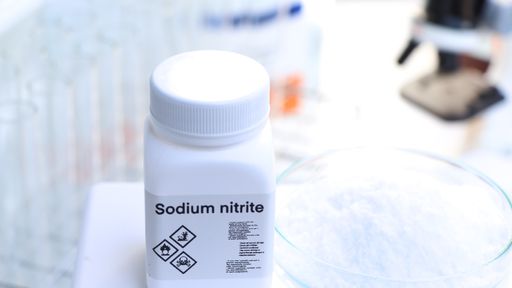
Background. Amazon makes available for purchase on its website, with no restriction, several brands of sodium nitrite. This chemical is used for medical and lab research purposes, and, in low concentrations, for meat preservation. Curing salts use a 6.0 percent purity. HiMedia Sodium Nitrite was sold at 98.0 percent purity and Loudwolf Sodium Nitrite at 99.6 percent purity. If ingested, the chemical produces methemoglobin, which impairs oxygen transport in the blood, causing hypoxia in minutes. Additionally, if the Tagamet brand acid reducer is ingested with the sodium nitrite, it suppresses the body’s preservation response to vomit the toxic sodium nitrite. Four individuals had purchased the HiMedia and Loudwolf brands of sodium nitrite from Amazon and committed suicide.
Negligence lawsuits. The surviving families of the decedents filed liability lawsuits against Amazon. They alleged that in addition to these nearly pure products—which had no household purpose—being available for purchase, Amazon’s website also recommended other products to assist suicide, including Tagamet, a small scale, and a suicide instruction book that included a chapter on legal inorganic salts. The families alleged that Amazon also sent reminder e-mails advertising these products to customers who viewed sodium nitrite. They also contended that Amazon deleted one-star reviews posted by families of others who had committed suicide using the sodium nitrite products.
Additionally, the families asserted that Amazon has been aware of the use of sodium nitrite for suicide since 2018. The USDA notified Loudwolf and Amazon in 2021 that the product had been mislabeled and used in suicides. Loudwolf removed its product from Amazon.com and its own website, but Amazon continues to sell HiMedia’s product.
Moreover, the families asserted that the labels on the products failed to notify consumers of the lethality of the product or how to reverse the effects if ingested. All four of the individuals who ingested the sodium nitrite communicated in some form or other that they wanted help or believed that vomiting would protect them. In one case, the paramedics who tried to save the young man had no resource as the bottle did not provide instructions on how to reverse the effects from ingestion. The families filed lawsuits against Amazon, alleging products liability and negligence under the Washington Product Liability Act (WPLA), among other claims. Amazon moved to dismiss under CR 12(b)(6), disclaiming liability for the purchasers’ intentional misuse of the product to commit suicide.
Procedural history. The trial court denied Amazon’s motion. Amazon filed an appeal, and the appellate court ruled in its favor. The appellate court found that the estates’ negligence claims were preempted by the state’s product liability act, while the consumer protection claims improperly sought redress for personal injuries as opposed to business or property injuries. The product liability counts also failed because a seller’s duty does not extend to protecting against intentional misuse of a product for self-harm, and the decedents’ voluntary choices to commit suicide superseded any seller liability, the appeals court held.
The families appealed to the Washington Supreme Court, asking (1) whether the act of suicide, as a matter of law, is a superseding cause in a negligence claim under the WPLA; and (2) whether the families had stated a claim for relief under the WPLA and RCW 7.72.040(1)(a), which defines a “product seller.” The state high court accepted those questions.
Superseding cause. In response to the first question presented, the high court answered in the negative. The high court explained that, based on controlling precedent, WPLA subsumes negligence claims, but does not abrogate the common law. Thus, if a term is not defined in the WPLA, courts may turn to the common law, and the common law principles of negligence and proximate cause control in seller liability claims under the WPLA.
The parties disagreed as to what body of common law applied. Amazon asserted that the common law predating the WPLA applied, which would require the court to apply a case from almost a century prior, which would favor Amazon. The high court stated that it has interpreted the WPLA using common law established after the passing of the statute, and that the case on which Amazon relied does not control. The high court explained that presuming the alleged facts to be true, it could not “say, as a matter of law, beyond a reasonable doubt, that the decedents’ deaths were not proximately caused by Amazon’s alleged tortious sales practices of the sodium nitrite.” The high court held that “the act of suicide, as a matter of law, is not a superseding cause that precludes [the families’] WPLA claims.”
Valid negligence claim. The court clarified that the existence of a legal duty is a question of law that the court decides, and if there is a duty, then the foreseeability issue is one of fact for a jury. In the case at bar, the appellate court was correct in finding that Amazon owed a duty to exercise reasonable care. The high court added that the appellate court erred in finding that the families could not establish proximate cause because the lower court relied on the case that the high court had distinguished.
Under the “forgiving” motion standard, the high court held that the families had alleged sufficient facts to avoid dismissal of their product seller negligence claims under the WPLA. The high court highlighted the families’ allegations that: Amazon’s algorithm featured other products for sale that could assist with suicide via sodium nitrite; Amazon was aware of sodium nitrite being used in suicides; and Amazon had actual knowledge from parents and Congress about the risk of selling sodium nitrite. Whether the harm of suicide was within the scope of Amazon’s duty to the families was a question of foreseeability and, thus, a question for the fact-finder.
Further, Amazon’s argument that it had no duty to exercise reasonable care because sodium nitrite’s danger is “obvious or known” was not persuasive, especially at this stage of the litigation. The high court stated that Amazon—as a product seller—had a legal duty to exercise reasonable care to avoid the foreseeable consequences and harm of selling sodium nitrite. The high court added that Amazon also had the duty to avoid exposing consumers to harm from the foreseeable conduct of a third party. Critically, the high court explained that foreseeability “does not eliminate the duty owed, it just limits the scope of the duty.” Consequently, at this stage of the litigation, the families stated a valid cause of action against Amazon under the WPLA. Therefore, the appellate court’s ruling was reversed and the trial court’s ruling reinstated, denying Amazon’s motion to dismiss.
The case is No. 103730-9.
Judge: Whitener, G.
Attorneys: Corrie Johnson Yackulic (Corrie Yackulic Law Firm PLLC) for Ruth Scott, Jeff Muhleman and Cindy Cruz. Gregory Franklin Miller (Morrison Foerster LLP) for Amazon.com, Inc.
Companies: Amazon.com, Inc.
MainStory: TopStory SCLIssuesNews ChemicalNews GCNNews WarningsNews CausationNews WashingtonNews