

Products Liability Law Daily Wrap Up, STATUTORY AUTHORITY—CHEMICAL PRODUCTS—D. Minn.: CPSC exceeded authority in fuel container safety regulation, (Sep 19, 2025)
Law Firms Mentioned:Fredrikson & Byron, P.A.
Organizations Mentioned:Auto-Mark, Inc. d/b/a Sea Foam Sales Co.
By Wendy Biddle, J.D.
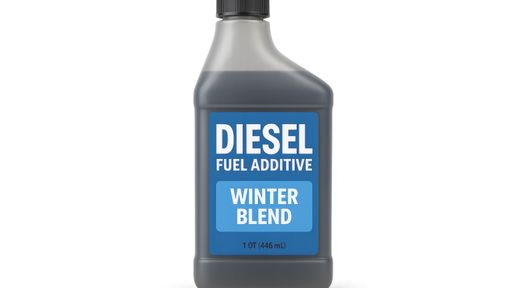
A Minnesota fuel additive manufacturer succeeded in challenging the agency's interpretation of "fuel" under the Portable Fuel Container Safety Act.
The federal district court in Minnesota has ruled that the Consumer Product Safety Commission exceeded its statutory authority when it attempted to regulate fuel additive containers under the Portable Fuel Container Safety Act of 2020. The court granted summary judgment for Sea Foam, finding that the agency's broad interpretation of "fuel" improperly extended regulatory reach beyond congressional intent (Auto-Mark, Inc. v. Consumer Product Safety Commission, No. 24-CV-04442 (JMB/EMB) (D. Minn. Sept. 18, 2025)).
Background. Sea Foam, a Minnesota-based company founded in 1942, manufactures fuel additives and lubricants designed to improve engine efficiency and longevity. The company's flagship product, Sea Foam Motor Treatment, is added to fuel tanks or oil reservoirs to clean engine deposits and improve performance. Unlike actual fuels, these products cannot substitute for gasoline or diesel and are not used to produce heat or power directly.
The dispute arose from the Portable Fuel Container Safety Act of 2020, which Congress enacted to address flame jetting incidents that had caused at least 11 deaths and 1,200 emergency room visits between 1998 and 2013. The Act directed the CPSC to establish standards requiring flame mitigation devices in portable fuel containers to prevent flame propagation that could cause container explosions.
The Act specifically applies to containers "intended for flammable liquid fuels with a flash point of less than 140 degrees Fahrenheit, including gasoline, kerosene, diesel, ethanol, methanol, denatured alcohol, or biofuels." The legislation allowed the CPSC to adopt existing voluntary standards developed by ASTM International if they met the Act's requirements, thereby avoiding traditional notice-and-comment rulemaking procedures.
CPSC’s interpretation. In January 2023, the CPSC published its "Determinations Regarding Portable Fuel Container Voluntary Standards," adopting the ASTM F3429 standard as the mandatory requirement. Within this determination, the Commission addressed public comments, including one from a diesel fuel additive manufacturer questioning whether additives would be considered "fuel" under the Act.
The CPSC's response to that comment stated that "when a liquid with a flash point less than 140 degrees Fahrenheit is intended to be used as, or in, a fuel mixture to support combustion, it is a fuel under the definition of 'portable fuel containers' as indicated in the [Act]." This interpretation significantly expanded the regulatory scope beyond the statutory language, which referred only to "flammable liquid fuels."
Following Sea Foam's inquiry about the rule's applicability to fuel additives, the CPSC's Compliance Office issued guidance letters in May 2023 and July 2024 confirming that the rule covered "fuel additives and engine cleaners" along with traditional fuels. The letters warned of potential civil and criminal penalties for non-compliance while extending enforcement discretion through July 2025.
Jurisdictional analysis. Before addressing the merits, the court resolved two threshold jurisdictional challenges raised by the CPSC. First, the Commission argued that Sea Foam should have filed a petition for direct appellate review under 15 U.S.C. § 2060(a) within 60 days of the rule's promulgation, rather than bringing an Administrative Procedure Act challenge in district court.
The court rejected this argument, finding that Section 2060(a) contains a savings clause stating that direct appellate review remedies "shall be in addition to and not in lieu of any other remedies provided by law." Additionally, the statute uses permissive language stating that aggrieved parties "may file a petition" for direct appellate review, rather than mandatory language like "shall" or "must." This permissive phrasing indicated that Congress intended direct appellate review to be optional, not exclusive, thereby preserving other judicial review options such as APA challenges in district court.
Second, the court addressed whether Sea Foam challenged final agency action, a jurisdictional prerequisite for APA claims. Applying the test from Bennett v. Spear, 520 U.S. 154 (1997), the court concluded that the CPSC's definition of "fuel" in Section III of the Determination constituted final agency action because it marked the consummation of the agency's decision-making process and had clear legal consequences. However, the court found that subsequent enforcement letters from the Compliance Office were not final agency actions, as this subordinate office lacked rulemaking authority and could not bind the Commission as a whole.
Statutory authority. The court's central holding focused on whether the CPSC's interpretation of "fuel" exceeded statutory authority. The court applied traditional statutory interpretation principles, emphasizing that courts must presume legislatures "say in a statute what [they] mean and mean in a statute what [they] say there."
The court identified three critical flaws in the agency's interpretation. First, the Commission's definition was "so broad that it includes liquids that are not themselves fuel" by incorporating the undefined term "fuel mixture."
This expansion allowed regulation of any liquid containing fuel and at least one other substance, regardless of proportions, effectively extending agency authority from regulating fuel containers to containers of non-fuel substances that might be mixed with fuel.
Second, the statutory authority to regulate "fuel" does not encompass fuel-additive products. Both parties agreed that dictionary definitions consistently define fuel as "material used to produce heat or power by burning." The court found that Sea Foam's products do not meet this definition because they are used to clean fuel system components rather than create heat or power independently, and cannot substitute for actual fuels like gasoline or diesel.
Third, the court noted that other regulatory frameworks maintain clear distinctions between fuels and fuel additives. The Environmental Protection Agency maintains separate registries for fuels and fuel additives, with Sea Foam's products registered only as additives, never as fuels.
Statutory construction and congressional intent. The court emphasized that the Commission's interpretation conflicted with fundamental principles of statutory construction. Congress specifically listed covered substances—"gasoline, kerosene, diesel, ethanol, methanol, denatured alcohol, or biofuels"—without mentioning fuel additives or fuel mixtures. The court found no indication that Congress intended to regulate containers for substances that merely might be mixed with fuel, as opposed to substances that are themselves fuel.
The court rejected the CPSC's argument that Sea Foam's products qualify as fuel simply because they have flash points below 140 degrees Fahrenheit and are flammable. The statute requires regulation of containers for "flammable liquid fuels," not all flammable liquids, creating a more narrow category than the agency's interpretation suggested.
Conclusion. Having determined that the CPSC exceeded its statutory authority, the court granted Sea Foam's motion for summary judgment on Count I and denied the Commission's cross-motion entirely. The court found the remaining claims regarding arbitrary and capricious rulemaking and constitutional vagueness to be moot given its authority ruling.
The case is No. 24-CV-04442 (JMB/EMB).
Judge: Bryan, J.
Attorneys: Alethea M. Huyser (Fredrikson & Byron, P.A.) for Auto-Mark, Inc. d/b/a Sea Foam Sales Co. Isaac Belfer, U.S. Department of Justice, for Consumer Product Safety Commission.
Companies: Auto-Mark, Inc. d/b/a Sea Foam Sales Co.
MainStory: TopStory ChemicalNews HouseholdProductsNews LawsPendingLegNews MinnesotaNews GCNNews