

Products Liability Law Daily Wrap Up, NOTICES—TEMPORARY EXEMPTIONS—NHTSA grants Zoox temporary exemption to deploy robotaxis, (Jul 31, 2026)
By WK Editorial Staff
This is the first exemption the agency has granted for a passenger-carrying ADS-equipped vehicle.
The National Highway Traffic Safety Administration has granted Zoox, Inc. a temporary exemption from certain requirements in eight Federal Motor Vehicle Safety Standards (FMVSS) for its automated driving system (ADS)-equipped passenger vehicle, known as the Zoox robotaxi. The exemption allows commercial deployment of the vehicle for two years, with a limit of 2,500 exempted vehicles introduced into interstate commerce during any 12-month period. NHTSA determined that compliance with the specified FMVSS requirements would prevent Zoox from deploying a vehicle that provides an overall safety level at least equal to that of a comparable, fully compliant vehicle. The exemption is effective from July 31, 2026, through July 31, 2028 (NHTSA Grant of application for temporary exemption, 91 Fed. Reg. 48494 (July 31, 2026)).
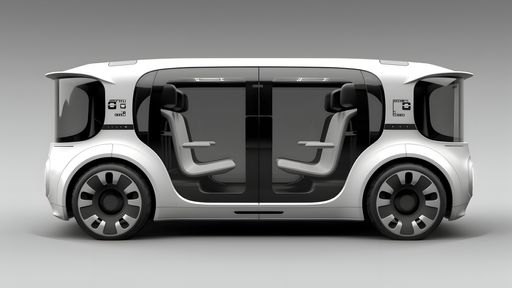
Zoox robotaxi. The Zoox robotaxi is a purpose-built autonomous ride-hailing vehicle that lacks manually operated driving controls and is designed to be operated exclusively by an automated driving system. The vehicle has a symmetrical design with identical front and rear ends and features inward-facing seating arranged in a carriage-style configuration. Zoox will retain ownership of the vehicles and manage fleet operations, maintenance, routing, remote support, and customer service rather than selling the vehicles to consumers. Limited remote assistance and low-speed remote driving capabilities are available under specific conditions.
Exemption. The exemption covers portions of FMVSS Nos. 103, 104, 108, 111, 135, 201, 205, and 208. These include requirements related to windshield wiping and defrosting systems, mirrors, rearview displays, manual brake controls, turn-signal controls, headlamp beam switching devices, and sun visors. NHTSA concluded that many of the exempted requirements are intended to assist a human driver and therefore do not provide a safety benefit in a vehicle designed never to be driven by a human occupant. For other exempted provisions, NHTSA found that the Zoox vehicle's unique design made compliance unnecessary or impractical while maintaining an equivalent level of safety.
Safety analysis. NHTSA’s safety-equivalence analysis compared the robotaxi with a hypothetical compliant version of the same vehicle and focused only on the specific requirements from which Zoox sought exemption. The agency stated that it did not make findings regarding compliance with other FMVSS requirements, which remain the manufacturer's responsibility. NHTSA also considered the safety and maturity of Zoox's automated driving system when evaluating whether the exemption was in the public interest and consistent with the objectives of the National Traffic and Motor Vehicle Safety Act.
Enhanced oversight. As a condition of the exemption, NHTSA established enhanced operational oversight through Operational Authorizations that can be modified as the technology evolves. The agency said this flexible oversight framework is intended to provide greater transparency, enable ongoing monitoring of operations, and allow conditions to be updated as Zoox expands or modifies its automated driving capabilities.
Robomart, Inc. Separately, NHTSA is reviewing an application from Robomart, Inc. for a temporary exemption from several requirements of FMVSS No. 500 for a low-speed vehicle operated by an ADS without a human driver on board (NHTSA Notice of receipt of application for temporary exemption, 91 Fed. Reg. 48485 (July 31, 2026)). The agency will publish a subsequent notice seeking public comment on the merits of the application once the initial evaluation is complete.
MainStory: TopStory NoticesFR TempExemptionsNews MotorVehiclesNews MotorEquipmentNews AINews GCNNews