

Products Liability Law Daily Wrap Up, JURISDICTION—WEAPONS AND FIREARMS—E.D. Pa.: Gun manufacturer fails to dismiss product liability claims for violations of Due Process, Dormant Commerce Clauses, (Mar 9, 2026)
Law Firms Mentioned:Littleton Joyce Ughetta & Kelly LLP | Saltz Mongeluzzi Bendesky P.C.
Organizations Mentioned:Sig Sauer, Inc.
By Susan L. Smith, JD, MA
The manufacturer had registered for and consented to the Pennsylvania law that applies to out-of-state companies doing business in Pennsylvania.
A federal district court in Pennsylvania denied a New Hampshire gun manufacturer’s request to dismiss product liability claims brought by two Pennsylvanians and others who alleged that the manufacturer’s gun harmed them. According to the court, the Pennsylvania law the manufacturer registered for 24 years ago did not violate the Due Process Clause or Dormant Commerce Clause. The two Pennsylvanians claimed that the manufacturer’s gun harmed them and sued the gun manufacturer in Pennsylvania. Several non-Pennsylvanian injured persons also sought relief in the same case. The manufacturer, Sig Sauer, Inc., took advantage of the Pennsylvania law that applies to out-of-state companies doing business in Pennsylvania by registering to do business in Pennsylvania as an out-of-state corporation in 2002 and consenting to personal jurisdiction in Pennsylvania. Further, the court was not persuaded by Sig Saurer’s arguments and found the venue proper given personal jurisdiction over the manufacturer. The court also denied Sig Sauer’s alternative motions to sever and transfer these early-stage claims to other judges (Blade v. Sig Sauer, Inc., No. 25-6645 (E.D. Pa. Mar. 5, 2026)).
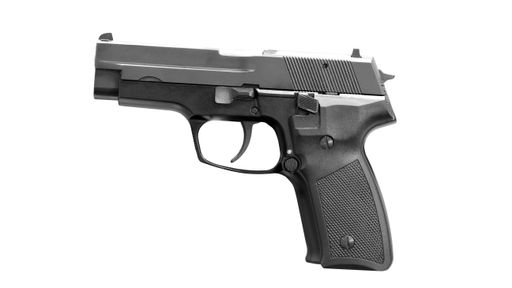
Background. Sig Sauer designs and manufactures firearms for sale to military and commercial markets throughout the U.S. and internationally and markets and distributes its products through direct sales and dealers including in Pennsylvania. Sig Sauer manufactures the P320 pistol, a single-action pistol and, according to the plaintiffs, the most dangerous pistol sold in the U.S. market. The P320 is susceptible to unintended discharges. The two Pennsylvania residents who had Sig Sauer’s P320 pistol were each injured when the pistol suddenly and unexpectedly discharged while being holstered and the bullet struck their right thigh. The two Pennsylvanians and 29 other allegedly injured persons sued Sig Sauer for negligence and product liability related to Sig Sauer’s alleged misrepresentation and failures in the design, manufacturing, marketing, and sale of the P320 pistol. Four of the 31 individuals also brought a breach of implied warranty claim, and 20 additional individuals pleaded other causes of action. Fifty-one individuals brought 86 separate claims in total.
Pennsylvania’s jurisdiction consent law. Years ago, the Pennsylvania General Assembly granted out-of-state companies doing business in the Commonwealth the privilege to sue others in Pennsylvania courts if they registered and consented to Pennsylvania jurisdiction. Conversely, the General Assembly did not grant this privilege to companies doing business here but who chose not to register. According to the court, Sig Sauer chose to register in Pennsylvania as an out-of-state corporation 24 years ago apparently believing it did business in Pennsylvania, consented to jurisdiction in Pennsylvania, and gained the benefit of being able to sue others in Pennsylvania courts.
Court’s analysis. The court found that Sig Sauer consented to jurisdiction by registration available to companies believing they are doing business in Pennsylvania, and had not withdrawn its registration even though it contended it had no operation in Pennsylvania, owned no property, leased no property, had no corporate offices, and did not engage in systematic corporate or business activity in Pennsylvania. Nor did it have a history of affirmatively filing lawsuits in Pennsylvania courts.
Due process rights. The court stated that both parties relied on the U.S. Supreme Court’s guidance in Mallory v. Norfolk Southern Railway Company, 600 U.S. 122 (2023). The Pennsylvania Supreme Court recognized registration as consent but found the registration statute unconstitutional under the Due Process Clause. The U.S. Supreme Court reversed and remanded, finding that Pennsylvania’s registration statute did not violate the Due Process Clause. The Court relied on its decision in Pennsylvania Fire Insurance Company v. Gold Issue Mining and Milling, 243 U.S. 93, 94–95 (1917), as controlling precedent. In that case, the High Court upheld a Missouri statute requiring out-of-state companies to consent to service as a condition of doing business in the state, and found such consent did not violate due process. The unanimous Court in Pennsylvania Fire explained there was “no doubt defendant Pennsylvania Fire could be sued in Missouri by an out-of-state plaintiff on an out-of-state contract because it had agreed to accept service of process in Missouri on any suit as a condition of doing business there.” The majority of justices in Mallory examined Pennsylvania’s registration statute and found it largely indistinguishable from the Missouri statute at issue in Pennsylvania Fire. The instant court stated that the Pennsylvania statute was clear that registration carried the consequence of general personal jurisdiction. Sig Sauer had complied with this law for many years and had agreed to be found in Pennsylvania and answer any suit in Pennsylvania for more than 20 years. Thus, exercising general personal jurisdiction over Sig Sauer did not violate the Due Process Clause.
Dormant Commerce Clause. Sig Sauer argued that Justice Alito’s solo concurrence in Mallory signaled some potential constitutional doubt about conditioning the right to do business on submission to general jurisdiction in suits with no connection to the forum. Specifically, it rested its entire argument on Justice Alito’s thought that “there is a good prospect that Pennsylvania’s assertion of jurisdiction here—over an out-of-state company in a suit brought by an out-of-state plaintiff on claims wholly unrelated to Pennsylvania—violates the Commerce Clause.” It argued that the facts in this case were the same as in Mallory: the plaintiffs were non-Pennsylvania residents suing a non-Pennsylvania corporation for alleged damages resulting from incidents which occurred outside of Pennsylvania. Sig Sauer asserted the registration statute imposed an undue burden on interstate commerce without serving any countervailing local interest and otherwise discriminated against out-of-state corporations.
The Pennsylvanian plaintiffs rejected Sig Sauer’s Dormant Commerce Clause challenge and argued that it rested on non-binding dicta. They further contended that the Dormant Commerce Clause was inapplicable because the registration statute neither regulates interstate commerce nor discriminates against or unduly burdens it. The court found that the registration statute did not violate the Dormant Commerce Clause in this case and that based on Sig Sauer’s registration as an out-of-state corporation in a case brought by at least two Pennsylvanians, did not offend the Dormant Commerce Clause. The court noted that Justice Alito recognized a state may have an interest in providing its residents with a convenient forum for redressing injuries inflicted by out-of-state actors.
Hobson’s choice. The court was not persuaded by Sig Sauer’s argument that companies such as it that do not have extensive operations within the Commonwealth faced a Hobson’s choice, whether to register to do business and submit to jurisdiction or instead decline to do business in the Commonwealth. The General Assembly did not impose the categorical or coercive choice Sig Sauer described, nor did the General Assembly force Sig Sauer to choose between lawful business activity and submission to jurisdiction based on the record before the court.
Venue. Sig Sauer moved to dismiss for improper venue, contending that the alleged unconstitutionality of Pennsylvania’s registration statute as applied to it meant it lacked proper venue. The Pennsylvania plaintiffs asserted that venue was proper because Sig Sauer was a Pennsylvania resident for venue purposes given that it consented to the court’s personal jurisdiction through Pennsylvania’s registration statute and Federal Rule of Civil Procedure 4(k). The court stated that the issue of proper venue as argued by Sig Sauer rose and fell with personal jurisdiction. The court found that the registration statute was constitutional as applied to Sig Sauer and did not violate either the Due Process or the Dormant Commerce Clause. Thus, Sig Sauer was subject to the personal jurisdiction of Pennsylvania courts and was therefore subject to the court’s personal jurisdiction as well. The ability to exercise personal jurisdiction over Sig Sauer made it a resident of the district; therefore, venue was proper.
Manufacturer’s alternative dismissal requests. Alternatively, Sig Sauer asked the court to (1) dismiss the case because the two Pennsylvanians who filed the case filed in the wrong venue; and (2) sever the Pennsylvanians’ claims from the non-Pennsylvanians, and then transfer the non-Pennsylvanians’ claims to their home states so a variety of judges could address the same core issues at this early stage. The court denied Sig Sauer’s alternative requests for dismissal. In this case, two Pennsylvanians were seeking a remedy in a convenient forum for redressing injuries allegedly inflicted by a defect in a gun manufactured by a New Hampshire citizen who agreed it was doing business here and further consented to being sued here through the registration statute.
The case is No. 25-6645.
Judge: Kearney, M.
Attorneys: Lily Winter (Saltz Mongeluzzi Bendesky P.C.) for Gregory Blade, Damone Bowles, Jeremy Bluto and Lydell Boanes. Justine Lara Shullick (Littleton Joyce Ughetta & Kelly LLP) for Sig Sauer, Inc.
Companies: Sig Sauer, Inc.
MainStory: TopStory JurisdictionNews WeaponsFirearmsNews PennsylvaniaNews GCNNews