

Cybersecurity Policy Report, House Adopts Bill to Ban TikTok Unless It Severs Ties to China, (Mar 13, 2024)
Organizations Mentioned:Electronic Frontier Foundation | U.S. Cyber Command
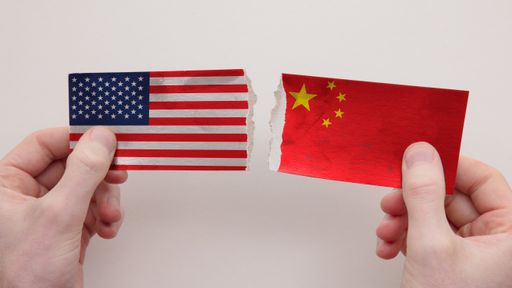
The House today overwhelmingly passed a bill that would ban the TikTok app in the U.S. unless TikTok severed ties with its Beijing-based parent company, ByteDance, and the Chinese government.
By a vote of 352-65, the House approved the Protecting Americans from Foreign Adversary Controlled Applications Act (HR 7521), which cleared the House Energy and Commerce Committee last week by a vote of 50-0 (CPR, March 7).
The bill now goes to the Senate, where its passage is uncertain. Biden administration officials have expressed tentative support for the measure based on their national security concerns about TikTok’s ties to Beijing.
The courts are also likely to become involved. TikTok and its cadre of “creators” whose livelihoods depend on the app have had some success in challenging previous efforts to restrict the app’s U.S. presence. Legal experts cite the possibility that courts could find that the bill runs afoul of the First Amendment or the Constitution’s prohibition on “bills of attainder,” laws that target a specific individual or organization for punishment.
Supporters insist the legislation would not “ban” TikTok in the U.S. but would force ByteDance to sever ties with TikTok within 180 days of the bill becoming law. The bill calls for a “qualified divestiture” of TikTok that, if approved by the White House, would enable the app to continue to operate in the U.S.
“Let me be clear: this legislation is not a ban on TikTok,” former House Speaker Nancy Pelosi (D., Calif.) said in a statement. “Instead, this legislation would strengthen TikTok: keeping Americans’ data and control of the algorithm out of the hands of a foreign adversary. In doing so, we protect against surveillance and influence operations that are hallmarks of the Chinese Communist Party.”
Rep. Mike Gallagher (R., Wis.), chairman of the House Select Committee on the Chinese Communist Party (CCP) and the bill’s sponsor, noted that national security officials had testified repeatedly to Congress about the threat posed by TikTok’s popularity in the U.S.
Like many online platforms, TikTok collects vast amounts of user data. But in TikTok’s case, national security officials worry that the data is available to the Chinese government to use for surveillance and for training artificial intelligence systems. In addition, they suspect that Chinese authorities can tweak TikTok’s algorithms to shape public opinion in the U.S. to Beijing’s advantage.
“Today, a bipartisan group of members came together to address the grave national security risk posed by TikTok,” Reps. Gallagher and Raja Krishnamoorthi (D., Ill.), the CCP committee’s ranking member, said in a statement.
“We speak with one voice and carry the same message as the Directors of the DIA, FBI, CIA, NSA, and the head of U.S. Cyber Command—TikTok cannot continue to operate in the United States under its current ownership structure. We look forward to working with our colleagues in the Senate to pass this critical, bipartisan legislation and deliver it to the President’s desk,” they said.
TikTok opposes the bill for obvious reasons and encouraged its user community to lobby against it. “This process was secret and the bill was jammed through for one reason: it's a ban. We are hopeful that the Senate will consider the facts, listen to their constituents, and realize the impact on the economy, 7 million small businesses, and the 170 million Americans who use our service,” a TikTok spokesperson told CPR via e-mail.
The Chinese Foreign Ministry also weighed in. “In recent years, though the US has never found any evidence of TikTok posing a threat to the US’s national security, it has never stopped going after TikTok,” Wang Wenbin, a ministry spokesperson, told reporters today, according to a transcript of his remarks.
“Such practice of resorting to hegemonic moves when one could not succeed in fair competition disrupts the normal operation of businesses, undermines the confidence of international investors in the investment environment, sabotages the normal economic and trade order in the world and will eventually backfire on the US itself,” Mr. Wang added.
House Majority Leader Chuck Schumer was non-committal about the bill’s chances in the Senate. “The Senate will review the legislation when it comes over from the House,” he said.
But the remarks of a few key senators suggested it might find enough Senate support to pass in some form.
“We are united in our concern about the national security threat posed by TikTok—a platform with enormous power to influence and divide Americans whose parent company ByteDance remains legally required to do the bidding of the Chinese Communist Party,” said a joint statement from Sens. Mark Warner (D., Va.) and Marco Rubio (R., Fla.), chairman and vice chairman, respectively, of the Senate Intelligence Committee.
“We were encouraged by today’s strong bipartisan vote in the House of Representatives, and look forward to working together to get this bill passed through the Senate and signed into law,” Sens. Warner and Rubio added.
Sen. Maria Cantwell (D., Wash.), chair of the Senate Commerce, Science, and Transportation Committee, said she was “very concerned about foreign adversaries’ exploitation of Americans’ sensitive data and their attempts to build backdoors in our information communication technology and services supply chains.”
“These are national security threats and it is good members in both chambers are taking them seriously. Following today’s House vote, I will be talking to my Senate and House colleagues to try to find a path forward that is constitutional and protects civil liberties,” Sen. Cantwell added.
President Biden expressed support for the legislation in brief remarks to reporters last Friday as he was boarding Air Force One. “If they pass it, I’ll sign it,” he said. But the administration’s official position was more nuanced.
The “ultimate objective of the bill is about a question of ownership,” Jake Sullivan, the White House national security adviser, told reporters yesterday at a press briefing. “Do we want TikTok, as a platform, to be owned by an American company or owned by China? Do we want the data from TikTok—children’s data, adults’ data ... to be staying here in America or going to China?”
“That is the fundamental question at issue here. And the President is clear where he stands on that fundamental issue,” Mr. Sullivan said. “In terms of how that gets implemented precisely, that’s something that we have continued to stay in touch with the Congress on.”
Supporters of the bill noted that U.S. law has long constrained the ability of foreign providers of communications services to do business in the U.S., pointing to the foreign-ownership restrictions in the Communications Act of 1934.
“These foreign ownership restrictions were originally adopted to protect national security interests during wartime by preventing the airing of foreign propaganda on broadcast stations,” according to a report from the House Energy and Commerce Committee that accompanied the bill.
“Today, applications like TikTok operate in similar manner as other media companies in the United States, and therefore they should be subject to foreign ownership scrutiny too,” the report said.
The legislation would prevent TikTok from operating in the U.S.—unless it finds new ownership—by making it unlawful for U.S.-based app stores to offer the app or web-hosting businesses to provide the services it needs to function.
Violations would be punished by civil fines “in an amount not to exceed the amount that results from multiplying $5,000 by the number of users within the land or maritime borders of the United States determined to have accessed, maintained, or updated a foreign adversary controlled application as a result of such violation,” according to the bill’s text.
And the bill would not apply only to TikTok. It would empower the president to identify other apps or online services that pose a national security threat and require them to divest from their foreign ownership.
TikTok and ByteDance are already engaged with the Committee on Foreign Investment in the United States (CFIUS), an interagency executive branch committee led by the Treasury Department, to allay concerns about national security threats posed by TikTok’s U.S. presence and its ties to China.
Its solution, dubbed “Project Texas,” would involve, among other things, the storage of TikTok’s U.S. user data in the U.S. on secure servers provided by Oracle Corp. (CPR, June 21, 2023).
But that solution is inadequate, according to the Energy and Commerce Committee’s report, which points out that Project Texas “would allow TikTok to continue to rely on the engineers and back-end support in China to update its algorithms and the source code needed to run the TikTok application in the U.S.”
“[A]llowing code development in and access to U.S. user data from China potentially exposes U.S. users to malicious code, backdoor vulnerabilities, surreptitious surveillance, and other problematic activities tied to source code development,” the report says.
The executive branch efforts to mitigate the risks posed by TikTok have “proven unsuccessful, and therefore Congress must act to provide congressional authority to protect U.S. national security,” it adds.
Blair Levin, a policy adviser for New Street Research LLP, today said it was likelier than not that the bill would pass but that TikTok would avoid a ban by finding new ownership.
“The bipartisan nature and size of the House vote make Senate passage more likely than not,” Mr. Levin said in a research note. “If it passes, it will go to the President. He has already said he will sign it.”
But the legislation could hit a snag in the courts, where TikTok and other social media platforms “have been successful in getting courts to overturn other state and federal efforts to constrain current practices on First Amendment grounds,” he said. “Bottom Line: While we think TikTok avoids a ban, ... the risk is much higher than it has ever been.”
Free speech and privacy advocates, meanwhile, expressed opposition to the bill, which they suggested would not actually solve the underlying problem of social media platforms collecting user data and selling it to data brokers that resell it to China and other adversarial foreign nations.
“Banning a single platform will not address the problem at the root of the entire tech landscape,” Free Press Action Policy Counsel Jenna Ruddock said in a statement.
“At any given time, dozens of corporations are tracking us, analyzing our behavior and profiting off of our private information. An entire industry is dedicated to harvesting our sensitive data, selling it both in the United States and abroad,” Ms. Ruddock noted.
“And all of this information is available to governments—to United States law enforcement and foreign intelligence agencies alike—on the open market for brokers and other intermediaries who sell data to interested buyers. It’s ridiculous for Congress to single out one app while failing to act on this huge problem that’s prevalent across all social media,” she said.
Lilian Coral, head of New America’s Open Technology Institute, said OTI shared “the House’s concerns about Americans’ data privacy; the ability for data brokers to sell sensitive data to foreign and U.S. government agencies; and how foreign governments may use a range of social media applications, including TikTok, to run online influence operations and spread disinformation.”
“But due to the rise of social media platforms, many of these concerns aren’t unique to TikTok, and this bill won’t address them,” Ms. Coral said in a statement. Instead, she said, Congress should adopt privacy legislation that protects Americans’ data from misuse by platforms and data brokers.
“Ultimately, foreign adversaries will still be able to obtain our data from social media companies unless those companies are forbidden from collecting, retaining, and selling it, full stop,” Jason Kelley, activism director for the Electronic Frontier Foundation, said in a statement. “And to be clear, under our current data privacy laws, there are many domestic adversaries engaged in manipulative and invasive data collection as well.”
“Instead of passing this overreaching and misguided bill, Congress should prevent any company—regardless of where it is based—from collecting massive amounts of our detailed personal data, which is then made available to data brokers, U.S. government agencies, and even foreign adversaries, China included,” Mr. Kelley added. “We shouldn’t waste time arguing over a law that will get thrown out for silencing the speech of millions of Americans. Instead, Congress should solve the real problem of out-of-control privacy invasions by enacting comprehensive consumer data privacy legislation.”
MainStory: TopStory DataPrivacy DataSecurity FederalLegislation