

Securities Regulation Daily Wrap Up, FRAUD AND MANIPULATION—House passes government insider trading bill mostly on party lines, (Jul 23, 2026)
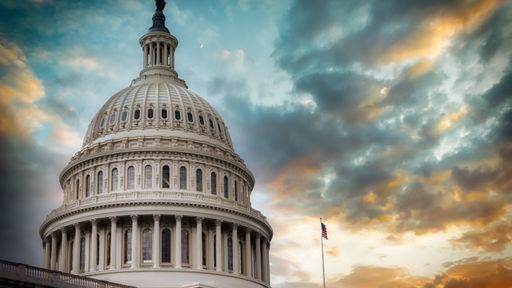
Many Democrats argued that the bill lacked tougher limits, was laden with loopholes, and included a controversial federal elections provision.
The House advanced the Stop Insider Trading Act (H.R. 7008) by a mostly party line vote of 232-198, although the bill’s attempt to clean up government insider trading carries along with it a controversial provision on federal elections and voter identification that drove a sharp split on the floor. A Republican floor manager characterized the bill as aiding financial “transparency” and promoting “a commonsense proposal” on voting, to which the Democratic manager replied that the bill constituted “a remarkable display of cynicism, even for this institution, even for this Republican leadership team.” The bill is the latest effort by lawmakers to curb Congressional members’ trading of individual stocks, but the bill may face even stronger headwinds in the Senate, despite having garnered “Yes” votes from 13 Democrats and one Independent in the House.
Stock trading ban. The insider trading sections in the bill would bar members of Congress and their spouses and dependent children from purchasing “covered investments,” which would consist of public company securities and their “synthetic” equivalents such as derivatives, options, or warrants. Persons subject to the bill also would have to provide advance public notice of any sale of a covered investment.
The bill would carve out several exceptions for trading and for certain types of gains from covered investments. For example, a member’s spouse or dependent child could trade covered investments provided that neither the member nor his or her spouse or dependent child owned the covered investment and the trade is made as part of the member’s spouse’s or the member’s dependent child’s occupation. Another exception would allow persons subject to the bill to receive dividends from covered investments.
The bill also would provide for a fee to be paid by any member who is noncompliant. The fee would consist of the greater of $2,000 or 10 percent of the transaction value of a trade plus the net gain earned from the trade. The bill also would limit the sources from which members could pay the fee.
Questions over achieving goals of bill. Aside from the obvious party-line divide over the bill’s voting provision, Republicans and Democrats debating the bill on the House floor could not agree on whether the bill would achieve the anti-insider trading goals both parties suggested should be addressed.
“Under current law, Members of Congress are required to publicly disclose their stock trades,” said Rep. Bryan Steil (R-Wis), the Republican floor manager. “The disclosures lack details and are often filed months after a transaction.”
Representative Steil added: “This lack of transparency and the continued practice of Members purchasing stock is fueling public frustration. It is time we ban Members of Congress from being able to buy individual companies’ shares of stock. Doing so removes even the appearance of impropriety.”
Most Democrats, however, panned the bill as laden with loopholes and destined to enable continued insider trading by members of Congress, if enacted into law.
“This bill, quite simply, is a sham,” said Rep. Joseph Morelle (D-NY), the Democrats’ floor manager. “The bill allows Members of the Congress to continue owning and trading stocks. That is right. The so-called Stop Insider Trading Act actually allows Members of Congress to own and trade stocks.”
Representative Chris Pappas (D-NH), one of the 13 Democrats to vote for the bill and also a member of the Problem Solvers Caucus, suggested via press release that the bill represents some progress toward ending insider trading in Congress. “While not perfect, this legislation takes a crucial first step forward to take on those who abuse their public office for personal gain and end self-dealing in Washington,” said Rep. Pappas.
A slight majority of Democrats voting for the bill are members of the Problem Solvers Caucus, as is Rep. Steil.
Representative Susie Lee (D-Nev), a member of the Problem Solvers Caucus, also voted for the bill while criticizing both its failure to address the executive branch of the federal government and its inclusion of a voter identification requirement that differs from similar state requirements she supports in Nevada.
“Today, I voted for the Stop Insider Trading Act–which prevents Members of Congress from purchasing stock and puts restrictions on their ability to sell stock,” said Rep. Lee in a press release. “While it doesn’t address the President and Vice President—and isn’t as powerful as legislation I support, like the Restore Trust in Government Act—it is a step in the right direction.”
Representative Lee added: “As is nearly always the case, I have to vote on the legislation in front of me, not the legislation I wish I had. I’ll continue fighting to ensure all eligible voters can exercise their right to vote and have their vote counted.”
“Poison pill” voting provision. With respect to the voting measure added on to the bill, and which may ultimately bring about the bill’s end, Republicans and Democrats predictably diverged.
Representative Steil argued that voter identification is no different than other uses of personal identification. According to Steil: “Voter ID strengthens election integrity and is nonpartisan and common sense. In this country, you have to show a photo ID to fly, to open a bank account, to buy a beer, and, more recently, to enjoy a never-ending pasta bowl at Olive Garden.”
But according to Rep. Morelle, the bill’s voting provision demonstrates Republicans’ “obsession” about President Biden’s win in the 2020 election and would function as a “poison pill” regarding potential enactment. “This isn’t just a voter ID bill,” said Rep. Morelle. “It is a bill to destroy vote by mail, something the President [referring to President Trump] routinely rails against, despite the fact that the President routinely uses mail-in voting himself, the kind of double standard Americans have come to particularly enjoy from this President.”
MainStory: TopStory BeneficialOwnership ExchangesMarketRegulation FedTracker Securities FinancialIntermediaries FraudManipulation InvestorEducation IPOs MergersAcquisitions RiskManagement SecuritiesOfferings