

Labor & Employment Law Daily Wrap Up, DISCRIMINATION—SEX—S.D.N.Y.: Firefighter applicant not entitled to summary judgment on disparate impact claim based on testing policies, (Sep 29, 2025)
Law Firms Mentioned:Filippatos | Kennedys CMK | Osman Law Group
Organizations Mentioned:City of Mount Vermon, New York | Major League Baseball
By Kathleen Kapusta, J.D.
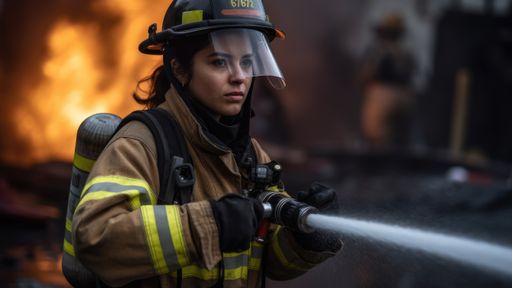
Although the applicant was the highest scoring female on the required agility test, she was never interviewed for a position because she was not a top ranked candidate on the eligibility list.
Denying summary judgment to a female applicant for a firefighter position with the City of Mount Vernon, New York, who alleged that the city’s hiring practices, and specifically its testing policies, disproportionately impact female applicants, a federal court explained that her reliance on the city’s failure to hire a single woman in nearly 25 years, while troubling, was not enough to allow it to find those practices alone violated Title VII and the NYSHRL as a matter of law. She was, in effect, asking it to grant summary judgment in her favor based on the assumption the city’s testing regime caused the hiring disparity, but the Second Circuit, said the court, has made clear her burden is higher (Montana v. City of Mount Vernon, No. 21-CV-260 (KMK) (S.D.N.Y. Sept. 26, 2025)).
When the plaintiff applied for a firefighter position in 2014, applicants were required to first pass a written exam, which was pass/fail, and, if they passed that, a physical agility test, which was composed of some pass/fail tasks and some timed tasks. The Civil Service Commission interviewed applicants for open positions from an eligibility list in rank order.
Ranking. The plaintiff passed both tests and was ranked 119th on the eligibility list. Although she was the highest scoring female on the exam, she was not interviewed for a position because she was not a top ranked candidate on the eligibility list, which remained in use until 2019. Not only was no female firefighter hired from that list, the city had not hired a female firefighter in 25 years.
Disparate impact. The plaintiff subsequently sued, asserting various claims under Title VII and the NYSHRL and then moved for summary judgment on her disparate impact claim. Rather than demonstrating a statistically significant disparity in the hiring of women versus men based on the testing regime, she argued that the city’s failure to hire a single woman in nearly 25 years was “a fact that by itself is sufficient to support an inference of discrimination.” Despite being “troubled by the lack of women hired by” the city, “this fact, alone,” said the court, “demonstrates nothing more than a ‘bottom line [gender] imbalance,’” which was not enough to grant her motion.
Inexorable zero. The plaintiff, the court observed, relied on the “inexorable zero” theory of liability, which arose in the context of International Brotherhood of Teamsters v. United States, in which the Supreme Court, addressing a disparate treatment claim, rejected the defendant’s attacks on the rigorousness of the plaintiff’s statistical evidence of a pattern-and-practice of racial discrimination, noting that the “fine tuning of the statistics could not have obscured the glaring absence of minority line drivers.”
While the Court did not limit the reach of this theory to disparate treatment cases, the court here pointed out that the High Court’s decision was in some tension with its subsequent 1989 decision in Wards Cove Packing Co. v. Atonio. In that case, the Court held that evidence of bottom line underrepresentation alone could not suffice to make out a prima facie case of disparate impact because such a rule could “result in employers being potentially liable for the myriad of innocent causes that may lead to statistical imbalances in the composition of their work forces.”
Second Circuit. Nine years prior to Wards Cove, the Second Circuit, in Grant v. Bethlehem Steel Corp., held that despite the “evidence of some weaknesses in the statistics,” a disparate impact theory could nonetheless be maintained in a Title VII case based on the “inexorable zero” theory. In 2023, the Second Circuit, in Hernandez v. Office of Commissioner of Baseball, a summary order, addressed its decisions in Grant and Wards Cove. In Hernandez, the appeals court rejected the plaintiff’s argument that Major League Baseball’s promotion practices for crew chiefs resulted in a disparate impact on minority applicants.
While the Hernandez plaintiff relied on the “inexorable zero” theory as support for his prima facie case, and did not provide other statistical proof of causation, the appeals court found he failed to meet his burden of demonstrating the causal nexus between the challenged employment practice and the bottom line racial disparities at issue, as required by Wards Cove. The appeals court also reaffirmed the centrality of statistical analysis in the ordinary disparate impact case, the court here observed, noting that it explained that its more permissive causal analysis in Grant was justified because “the employer based its promotion decisions ‘solely on foreman experience’ in the wake of ‘past discriminatory hiring practices’ that had excluded minority employees from the population of foremen,” which “unquestionably served to perpetuate discrimination.” “That is,” observed the court here, “the defendant’s discriminatory past practices made it nearly certain that its facially neutral policies would result in a disparate impact on minority applicants, and therefore the Grant court was justified in excusing the kind of statistical analysis ordinarily required of plaintiffs.”
Finding the situation here more analogous to Hernanez, the court pointed out that rather than argue that a past discriminatory practice made the city’s facially neutral practices certain to have a discriminatory impact, the plaintiff instead alleged that its recent physical testing regime, along with its method of prioritizing applicants based on those testing scores, systematically disadvantages women. “This claim,” the court stated, “falls squarely within the ordinary universe of disparate impact cases, which require plaintiffs to ‘present statistical evidence of a kind and degree sufficient to show that the practice in question has caused the exclusion of applicants.’”
Because the plaintiff failed to proffer the required evidence, the court found it could not grant summary judgment in her favor.
The case is No. 21-CV-260 (KMK).
Judge: Karas, K.
Attorneys: Daniel J. Chavez (Kennedys CMK) and Erica T. Kagan (Filippatos) for Brittany Montana. Marc S. Oxman (Osman Law Group) and Anthony Odorisi, City of Mount Vernon Law Department, for City of Mount Vernon, New York.
Companies: City of Mount Vermon, New York
MainStory: TopStory SexDiscrimination Discrimination PublicEmployees EvidenceDiscovery NewYorkNews GCNNews