

Products Liability Law Daily Wrap Up, DESIGN AND MANUFACTURING NEWS—CHEMICAL PRODUCTS—M.D. Fla.: Injured consumer’s claims against herbicide and pump sprayer makers largely survive in Roundup exposure case, (Jun 11, 2026)
Law Firms Mentioned:McCoy & Ford, PA
Organizations Mentioned:Orgill, Inc.
By Pankhuri Bhatnagar, B.A. LL.B.
The consumer sufficiently established that Roundup’s formulation was unreasonably dangerous, and the sprayer contained several defects which rendered it susceptible to rupture.
In an action brought against an herbicide manufacturer and a pump sprayer manufacturer by a customer allegedly injured when a pump sprayer exploded while he was applying the herbicide, a federal district court in Florida largely denied the manufacturers’ motions to dismiss. The court found that the consumer plausibly alleged that the herbicide’s formulation was defectively designed and manufactured due to its alleged neurotoxicity, that Florida law did not require him at the pleading stage to identify the precise source of the defect, and that his pump sprayer allegations sufficiently identified multiple design and manufacturing defects. The court dismissed only the failure-to-warn theories based on inadequate warnings and allowed amendment (Hogarty v. Orgill, Inc., No. 5:25-cv-122 (M.D. Fla. June 5, 2026)).
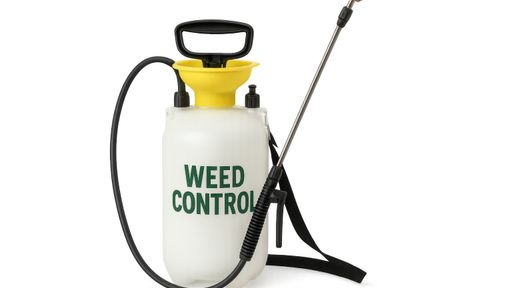
Background. A man was applying a mixture of water and Roundup Weed & Grass Killer Concentrate Plus to weeds at a property in Ocala, Florida, using a two-gallon Landscapers Select pump sprayer manufactured by Orgill Inc. During the application, the sprayer exploded approximately twelve inches from his face, causing blunt-force injuries and exposing him to pressurized Roundup. He suffered continuing vision problems, headaches, and other neurological symptoms. The consumer sued Orgill, the herbicide manufacturer Monsanto Company, its parent company Bayer CropScience LP, and another subsidiary called Bayer Corporation. The complaint asserted claims for strict liability, negligence, and misrepresentation. Bayer Corporation separately moved to dismiss for lack of personal jurisdiction, while the remaining manufacturers challenged the sufficiency of the pleadings.
Legal standard. A successful strict liability claim under Florida law requires: “(1) a relationship between the defendant and the product; (2) a defect which caused the product to be unreasonably dangerous; (3) causation between the defect and the harm suffered by the user.” Bailey v. Janssen Pharmaceutica, Inc., 288 F. App’x 597, 607 (11th Cir. 2008). Defects can be a design defect, manufacturing defect, or a failure to warn. The consumer here alleged all three.
Roundup’s design. Monsanto and Bayer CropScience (suppliers) argued that the complaint failed to plausibly allege that Roundup was defectively designed or unreasonably dangerous or that it caused the man’s injuries. The court disagreed, noting that he sufficiently argued that Roundup contained glyphosate together with adjuvants and surfactants that increased its toxicity, rendering the product more neurotoxic than an ordinary consumer would expect and more dangerous than feasible alternative formulations. Aubin v. Union Carbide Corp., 177 So. 3d 489 (Fla. 2015). At this stage, the customer was not required to identify the precise chemical mechanism causing the injury, Godelia v. Doe 1, 881 F.3d 1309 (11th Cir. 2018), especially since he alleged that the product’s formulation was a trade secret and placed the suppliers on notice of the harm (his neurological and eye injuries) caused by the alleged design defects. Thus, the design defect theory survived under the consumer expectations test.
Roundup’s manufacture. The suppliers next argued that the man did not allege that the specific Roundup product deviated from its intended design. Relying on Bailey v. Janssen Pharmaceutica, Inc., 288 F. App’x 597, 607 (11th Cir. 2008), the court noted that Florida law does not rigidly require a claimant at the pleading stage to distinguish between design and manufacturing defects where the precise source of the defect remains unknown; it is enough to state that a defect made the product unreasonably dangerous. Hence, the manufacturing defect theory survived.
Roundup’s warnings. The court reached a different conclusion regarding the warning-based theory. Under Griffin v. Kia Motors Corp., 843 So. 2d 336 (Fla. 4th DCA 2003), a failure-to-warn claim requires allegations showing that the warnings were inadequate and that the inadequacy caused the injury. The complaint generally alleged that Roundup’s risks “could have been reduced or avoided by providing reasonable instructions or warnings, yet no such instructions or warnings were given.” His allegations did not identify the contents of any warning label, explain how the warnings were inadequate, or establish that the customer would have acted differently had different warnings been given. The failure-to-warn theory was therefore dismissed without prejudice.
Pump sprayer’s defects. Orgill contended that the consumer did not identify any actionable defect in the pump sprayer. But his complaint alleged numerous defects, including the absence of an automatic pressure-relief valve, tank walls being too thin or irregularly manufactured, and the use of brittle materials that rendered the sprayer susceptible to rupture. Further, the consumer was using the sprayer in its intended manner when it exploded. Orgill's arguments that the complaint failed to identify the internal pressure at the time of the incident or explain precisely how the sprayer failed imposed a level of detail not required at the pleading stage. Because the complaint plausibly alleged that defects in the sprayer caused it to explode during ordinary use, the design and manufacturing defect claims survived.
Pump sprayer’s warnings. The consumer asserted both a complete failure-to-warn theory and an inadequate-warning theory against Orgill. The court allowed the complete failure-to-warn theory to proceed because the complaint alleged that the manufacturer never warned consumers that pump sprayers were known to burst or explode during ordinary use and that he relied on the absence of such warnings. However, the inadequate-warning theory was dismissed without prejudice because the complaint never described the product’s warnings or explained how they were deficient.
Other rulings. The court dismissed Bayer Corporation for lack of personal jurisdiction after finding that unrebutted evidence showed it was merely a non-operating holding company with no involvement in Roundup’s development, manufacture, distribution, or sale. The court also dismissed the fraudulent and negligent misrepresentation claims against Monsanto and Bayer CropScience because the complaint failed to satisfy Rule 9(b)’s heightened pleading requirements about where or when the allegedly fraudulent statements or misrepresentations were made or how the man relied on them. Finally, the court denied Orgill’s request to strike the customer’s punitive damages allegations, finding that the complaint sufficiently alleged conduct that could support punitive damages if proven.
The case is No. 5:25-cv-122.
Judge: Mizelle, K.
Attorneys: Robert Hogarty, pro se. Peter Bartoszek (McCoy & Ford, PA) for Orgill, Inc.
Companies: Orgill, Inc.
MainStory: TopStory DesignManufacturingNews ChemicalNews JurisdictionNews WarningsNews DamagesNews FloridaNews