

Products Liability Law Daily Wrap Up, DESIGN AND MANUFACTURING DEFECTS—MOTOR VEHICLES—E.D. Ark.: Court tosses injured auto technician’s strict liability, warranty claims as negligence case proceeds to trial, (Jan 12, 2026)
Law Firms Mentioned:Friday, Eldredge & Clark, LLP | J.G. Gerry Schulze, P.A. | Paul Byrd Law Firm, PLLC | Shook, Hardy & Bacon, LLP
Organizations Mentioned:Kia America Inc. f/k/a Kia Motors America Inc. | Kia Corp. f/k/a Kia Motors Corp.
By Molly Platnick
The technician was not protected by UCC warranty provisions and had too much specialized knowledge for strict liability.
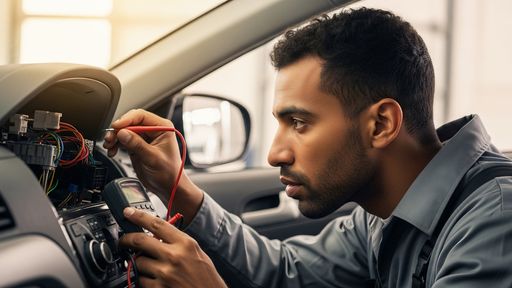
The federal district court for the Eastern District of Arkansas granted in part and denied in part a car manufacturer’s motion for summary judgment in a case brought by a technician who was injured while working inside a dashboard. The technician alleged strict liability, breach of implied warranties of fitness and merchantability, and negligent failure to warn, manufacturing defect, and design defect against the manufacturer. The court denied the manufacturer’s claim that the suit was barred by the Workers’ Compensation statute’s exclusive remedy provision. The auto technician’s warranty claims failed because he was not a consumer within the meaning of the UCC. His strict liability claims failed as a matter of law because his specialized knowledge meant the sharp car edge was not unreasonably dangerous. The court denied summary judgment on the technician’s negligence claims, finding many factual questions that should be resolved at trial (Sansom v. Kia Corp., No. 4:23-cv-567-DPM (E.D. Ark. Jan. 7, 2026)).
Background. The plaintiff was an experienced automotive technician who cut his wrist while working on the dashboard of a 2012 Kia Soul. The cut was three centimeters deep, and the technician needed surgery to repair a damaged tendon. A trustee for the technician’s estate joined this action as a plaintiff after the technician and his wife filed for Chapter 7 bankruptcy.
The court denied Kia’s motion for summary judgment based on the Workers’ Compensation statute’s exclusive remedy provision. The statute gives injured employee’s the right to sue third parties, and the court called suits like this “commonplace.”
The court granted Kia’s motion for summary judgment on the technician’s claims for breach of the implied warranties of fitness and merchantability. The UCC’s warranty obligations are applicable to transactions, and the Arkansas Model Civil Instructions extend warranty protections to buyers’ family members and guests. Here, the technician was not engaged in a transaction, nor was he related to a buyer. The court was unpersuaded by the technician’s contention he was “similarly situated” to a buyer because the car was “sold at some point,” finding his injuries were “too far removed from that transaction.”
The auto technician’s strict liability claim failed as a matter of law. The issue was whether the technician was a “user” of the car. A manufacturer is strictly liable if it supplies a product in a defective condition that rendered it unreasonably dangerous. Under Arkansas law, an ordinary user’s reasonable expectations determine a product’s dangerousness.
The car manufacturer argued the auto technician was not a user under Elk Corp. of Arkansas v. Jackson, in which the state supreme court found for a truck driver who was injured by improperly packaged shingles. The court rejected Elk Corp. as not dispositive and found that whether injured repairmen may pursue strict liability claims was an “undecided issue” under Arkansas law.
Even if the technician was a “user” of the car, he was not an ordinary user and knew or should have known about the risks involved in working under the dashboard of the 2012 Kia Soul. The Arkansas Civil Code states that “special knowledge, training, or experience” triggers a heightened standard for “unreasonably dangerous.” Here, the plaintiff was a Kia “master certified” technician who had worked at a Kia autobody shop for about two decades. The record stated he had done the same repair over 20 times on cars of the same model and issue and, a year before the accident at issue, cut his hand while working under the dashboard. During deposition, the technician admitted he knew there were sharp edges on “these parts of the vehicle.” On these facts, the court found the technician had enough specialized knowledge that the sharp edge in the dashboard was not unreasonably dangerous.
Failure to warn, manufacturing defect, and design defect claims go forward. The court recognized the auto technician’s negligence claims were “not particularly strong,” but still found enough material facts that must be resolved at trial. The car manufacturer’s repair protocol failed to warn technicians to wear gloves during the relevant task, and more evidence was needed to resolve whether gloves would have prevented the plaintiff’s injury. The issue for the technician’s manufacturing defect claim was whether the part that injured him had an unusually sharp bracket that would suggest the manufacturer’s negligence. Experts for the car manufacturer and technician offered “conflicting proof” whether there was a feasible alternative design that would have made the bracket less dangerous.
The case is No. 4:23-cv-567-DPM.
Judge: Marshall, D.P.
Attorneys: James Gerard Schulze (J.G. Gerry Schulze, P.A.) and John Paul Byrd (Paul Byrd Law Firm, PLLC) for Joseph Sansom and Stanley Bond. Connor W. Smith (Shook, Hardy & Bacon, LLP) and Jamie Jones Walsworth (Friday, Eldredge & Clark, LLP) for Kia Corp. f/k/a Kia Motors Corp. and Kia America Inc. f/k/a Kia Motors America Inc.
Companies: Kia Corp. f/k/a Kia Motors Corp.; Kia America Inc. f/k/a Kia Motors America Inc.
MainStory: TopStory DesignManufacturingNews MotorVehiclesNews WarningsNews ArkansasNews