

IP Law Daily, COPYRIGHT—4th Cir.: Case-by-case theory of sovereign immunity will have to wait another day, (Jan 26, 2026)
Law Firms Mentioned:Reichman Jorgensen Lehman & Feldberg LLP
By Matthew Hersh, J.D.
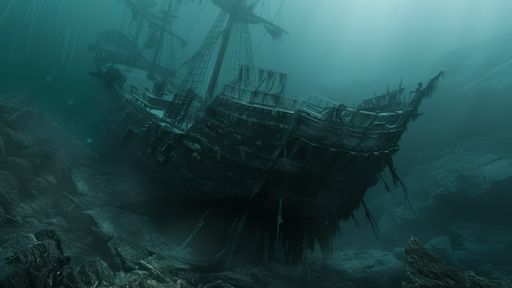
A videographer waited too long to argue that a copyright violation, involving rights to videos of a sunken vessel once operated by the pirate Blackbeard, constituted an unconstitutional taking.
A federal district court improperly gave a videographer a “do-over” in his copyright infringement case against the State of North Carolina by allowing him to file an amended complaint asserting a new ground for abrogating the state sovereignty doctrine after the Supreme Court rejected his original state sovereignty argument in the same case, the United States Court of Appeals for the Fourth Circuit has held. The court, in finding that the videographer raised his new theory too late, thus sidestepped a budding argument over whether an act of copyright infringement by a State official could become actionable under the Copyright Act if it rose to the level of an unconstitutional taking of private property (Allen v. Stein, No. 24-1954 (4th Cir. Jan. 23, 2026)).
The opinion is the latest in a long-running dispute between a private photographer and the State of North Carolina over the rights to videos of the sunken vessel once operated by the famous pirate Blackbeard. Frederick Allen was hired by a private salvage company to document the multi-year recovery of the vessel from beneath the coastal waters of North Carolina. But in 2013, the year that the salvage operation was concluded, Allen discovered that his work had been uploaded to a state-operated YouTube channel and onto other social media platforms. Two years later, the State formally commandeered the footage for itself by enacting a statute, widely referred to as Blackbeard’s Law, that declared all photographs or video recordings of any “derelict vessel or shipwreck” to be considered public records.
Allen sued then-Governor Patrick Lloyd McCrory and a host of other State officials in 2015 for copyright infringement and unconstitutional taking of his property, among other claims. The district court found the takings claims against the state officials to be barred on jurisdictional grounds by the Eleventh Amendment. As to the copyright claims, the question was whether they could survive the sovereign immunity doctrine. The district court, pointing to a 1990 statute called the Copyright Remedy Clarification Act, or CCRA, held that Congress had abrogated State sovereign immunity for all copyright claims. On an interlocutory appeal, however, the Fourth Circuit reversed and found that Congress exceeded its lawful powers by enacting the CCRA. The Supreme Court, in Allen v. Cooper, 589 U.S. 248 (2020), affirmed the Fourth Circuit.
But that did not end the matter for Allen. The videographer, returning to the district court, asked the court to reopen the case to allow him to file an amended copyright infringement complaint on a different theory for abrogation of sovereign immunity. This doctrine was based on the Supreme Court’s holding in a 2006 case, United States v. Georgia, 546 U.S. 151 (2006), that a federal statute’s abrogation of state sovereign immunity is valid insofar as the statute creates a private right of action for damages against states for conduct that violates the Fourteenth Amendment. Under a proper reading of that case, the videographer argued, even if a court could not find sovereign immunity abrogated in all cases for copyright claim based on the CCRA, a court could still find abrogation on a case-by-case basis if an individual act of infringement were found severe enough to constitute a constitutional taking of property.
The district court, in a 2021 order that accepted the videographer’s argument in principle, allowed the amended complaint to be filed. Three years later, the district court denied the State officials’ motion to dismiss that amended complaint, leading to this decision.
Motion to dismiss. The court of appeals reversed the district court and remanded with orders to grant the motion to dismiss. The district court’s decision in 2021 to reopen the case was “fatally flawed for multiple reasons,” the court noted. Most critically, the court noted, the United States v. Georgia decision had been on the books since 2006—“10 years before Allen had even filed his 2016 Complaint.” That was fatal to the renewed claim, the court reasoned. “Allen had never alleged a Georgia theory, and he had neither raised nor pursued a Georgia-based contention before this Court in the 2018 appeal,” the court noted. Moreover, the court noted, “Allen did not argue a Georgia theory in the Supreme Court after our Court disposed of his prophylactic abrogation theory.” Under that circumstance, the court noted, “it is difficult to imagine how the restart of this litigation is anything other than a ‘do-over.’” The Georgia claim would proceed no further.
Commentary. The “takings” theory of state sovereignty abrogation that the videographer advanced in this case is one that has raised considerable interest among commentators in the wake of the Allen v. Cooper opinion. In a 2021 study, the Copyright Office acknowledged the district court’s (now moot) decision to allow Allen to make the argument, but noted that “the likelihood that a copyright owner could successfully argue that infringement of its copyright constituted a taking remains uncertain under current case law.”
The Case is No. 24-1954.
Judge: King, R.
Attorneys: Adam Adler (Reichman Jorgensen Lehman & Feldberg LLP) for Frederick L. Allen. Nicholas Scott Brod, North Carolina Department of Justice, for Joshua H. Stein.
MainStory: TopStory Copyright NorthCarolinaNews GCNNews