

Securities Regulation Daily Wrap Up, WHISTLEBLOWER NEWS—D.C. Cir.: Appeals court affirms CFTC denial of whistleblower award, (Jun 8, 2026)
Law Firms Mentioned:Motley Rice LLC
Organizations Mentioned:Motley Rice, LLC
By R. Jason Howard, J.D.
The successful enforcement actions were not based on conduct about which the alleged whistleblower provided specific credible and timely information.
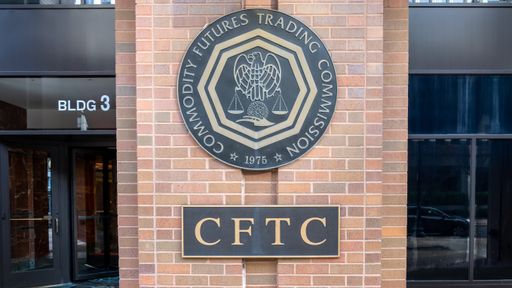
On appeal, the District of Columbia has affirmed the final orders of the CFTC which denied a whistleblower award after determining that despite the appellant’s argument that the denial of his application was arbitrary and capricious, the successful enforcement actions were not based on conduct about which he provided specific credible and timely information (Kitchen v. CFTC, No. 25-1098 (D.D.C. June 5, 2026)).
FX trading. The appellant traded within the foreign currency exchange (FX) market for many years. The most common type of FX instrument is “spot” trading, which involves “immediate delivery of and payment for the product.” The exchange rate at any given moment is the “spot price.” In addition to setting the rate for real-time transactions, spot prices are used to determine (or “fix”) “benchmarks” on which traders base the valuation of other instruments in the FX market.
Whistleblower information. From 2008 to 2011, the appellant used an FX trading platform operated by the Oanda Corporation (Oanda) to conduct his transactions. Through his account, the appellant traded the USD, GBP and euro (EUR) against the Swiss franc (CHF) thousands of times. In August 2011, the appellant allegedly “observed a precipitous drop in the values of the GBP, USD, and EUR relative to the CHF” and thought “that the size of the drop in the affected currencies could only have been the result of collusion among market makers.” The appellant then notified a variety of regulators, including the CFTC, via email.
The CFTC determined that the appellants “complaints were generalized unsupported claims that, beside the specific complaints about Oanda, were not actionable.” Focusing on the Oanda-related claims, the CFTC determined “there was nothing in the account records to support the appellant’s generalized allegations of market abuse and manipulation.” Thereafter, the investigation was closed with no action.
Two years later, Bloomberg published an article alleging that traders at several large banks were rigging the rates by colluding online to share information about client orders which enabled trades on their banks’ accounts to soar in value.
Investigation. The CFTC stated that it was the Bloomberg article that caused it to open an investigation into five banks allegedly involved in the scheme. In November 2013, during the CFTC’s ongoing investigation, the appellant submitted a formal Tip, Complaint or Referral (TCR) Form in which he claimed to have observed “unprecedented currency manipulation through his personal trading activity and subsequent research and analysis.” In February and March 2014, the appellant submitted supplements with further allegations. The CFTC team investigating the FX benchmark manipulation was not aware of the information the appellant had previously submitted to the CFTC in 2011 until they saw his TCR. None of the information he provided—via email or TCR—was ever used by the benchmark investigation team.
Orders. The CFTC ultimately issued orders announcing settlements with five banks that totaled $1.475 billion. The CFTC then posted notice on its website for each of the covered actions inviting individuals to apply for whistleblower awards, and the appellant applied. The CFTC then notified the appellant of its intent to recommend denial of his application but offered the opportunity to submit additional information. The appellant accepted the offer, but the CFTC Claims Review Staff made a preliminary decision to deny the award claim.
Appeal. The appellant claimed that he was the direct source of the original information which led to the covered actions and pointed to his 2011 emails and 2013 TCR as the relevant original information. Here, the court explained that the record did not support the appellant’s assertion that his submissions to the CFTC contained original information that prompted the investigation. Although his original information did prompt an investigation, that investigation was of Oanda and was unconnected to the covered actions.
The appellant’s allegations were sufficiently specific, credible and timely to cause the CFTC to investigate Oanda’s alleged conduct but the scheme he alleged was not the same as the one described in the covered actions which focused on benchmark, not spot price manipulations. The appellant argued that his allegations regarding the manipulation of FX rates necessarily encompassed manipulation of benchmarks. The court explained, however, that those measures have different meanings. Spot prices are a “real-time reflection of an exchange rate whereas benchmarks are reference rates set only periodically.” Regardless of that, the court stated that a mere implication of manipulation fails to meet the requirements under the whistleblower rules.
The appellant argued in the alternative that he was entitled to a whistleblower award as the original source of information on which the CFTC did rely for the covered actions under the derivative source rule, but the court noted that the information in the appellant’s emails “differed markedly from the scheme on which the Bloomberg article reported.” The CFTC’s conclusion that the appellant was not a derivative source of the article did not “run counter to the evidence,” the court concluded.
Conclusion. The court affirmed the CFTC’s five final orders.
The case is No. 25-1098.
Judge: Henderson, K.
Attorneys: F. Franklin Amanat (Motley Rice LLC) for Trevor Kitchen. Raagnee Beri, Office of the General Counsel, for the CFTC.
MainStory: TopStory CFTCNews CommodityFutures Enforcement ExchangesMarketRegulation FraudManipulation GCNNews InvestorEducation WhistleblowerNews DistrictofColumbiaNews