

IP Law Daily, TRADEMARK NEWS: Supreme Court takes case asking if ‘trademark strength’ is question of law or fact, (Jul 6, 2026)
Law Firms Mentioned:Alston & Bird LLP | Kirkland & Ellis LLP
Organizations Mentioned:PepsiCo, Inc. | RiseandShine Corp.
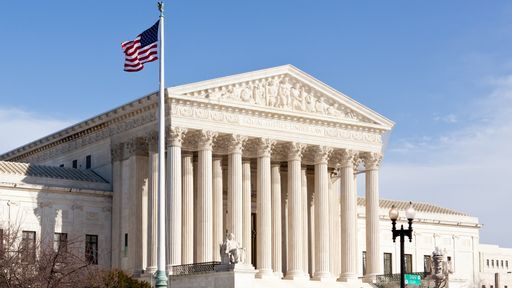
Infringement dispute over beverages branded with “RISE” trademarks gives Court a rare opportunity to resolve a circuit split over a key likelihood-of-confusion factor.
The U.S. Supreme Court has agreed to provide rare guidance regarding the factors courts use in determining whether a likelihood of confusion exists in a trademark infringement dispute. Specifically, the Court has taken on a case for its upcoming 2026-2027 term raising the question of whether the strength of the plaintiff’s mark—that is, how powerfully the plaintiff’s mark identifies a single commercial source—is a legal issue to be decided by the court or a factual issue for the jury. The case is a trademark infringement action brought by a seller of cold-brew canned coffee, RiseandShine Corp. (doing business as RISE Brewing), which asserted that PepsiCo, Inc., infringed its “RISE” trademarks by introducing a breakfast-focused energy drink under the name “Mtn Dew Rise Energy.” A panel of the U.S. Court of Appeals for the Second Circuit affirmed a district court’s decision that RiseandShine’s marks were inherently weak, making consumer confusion unlikely. RiseandShine contends that the appellate and district courts incorrectly analyzed the mark strength factor as a purely legal question, whereas all other circuits view it as a question of fact. The multifactor likelihood-of-confusion tests used by the various courts of appeals have largely been circuit-developed, with little input by the Supreme Court, but the Court, in accepting this case, is poised to resolve a circuit split on this specific aspect of the analysis (RiseandShine Corp. v. PepsiCo, Inc., No. 24-1016 (U.S. cert. granted Jun. 29, 2026)).
Trademark dispute. RiseandShine sold nitro-brewed canned coffee drinks under the name “RISE.” It held federal registrations for the word mark “Rise Brewing Co.” and for a design mark featuring the same textual component. It asserted that PepsiCo’s marketing of a canned energy drink under the mark “MTN DEW RISE ENERGY” infringed its marks, and it filed suit in the federal district court in New York City in June 2021.
Preliminary injunction; first appeal. The district court initially granted a preliminary injunction to RiseandShine in November 2021, but the U.S. Court of Appeals for the Second Circuit vacated the injunction in July 2022, holding that RiseandShine’s marks were weak because they strongly suggested the qualities of the product. Additionally, there was extensive third-party usage of the same or similar marks. The weakness of the mark meant that it was entitled to only a narrow scope of protection. Because this key factor in the likelihood of confusion analysis disfavored RiseandShine, the Second Circuit reasoned that RiseandShine was not likely to succeed on the merits of its claims. “To the extent that Defendant’s use of its marks caused any likelihood of confusion, this was because Plaintiff chose a weak mark in a crowded field,” the Second Circuit said.
Summary judgment. On remand, the district court granted summary judgment in favor of PepsiCo on RiseandShine’s trademark infringement and unfair competition claims. The district court concluded that PepsiCo’s mark, as a matter of law, was not likely to cause confusion with RiseandShine’s marks. In the court’s view, RiseandShine’s “RISE” marks were inherently weak as a matter of law per the Second Circuit’s binding conclusion.
Second appeal. RiseandShine took the case to the Second Circuit again but fared no better. The appellate court held in December 2024 that the district court properly analyzed the strength-of-mark factor as a question of law. RiseandShine argued that the district court impermissibly analyzed the strength-of-mark factor as a question of law and disregarded material facts regarding the mark’s acquired strength, but the Second Circuit was not persuaded.
Petition for review. RiseandShine filed its petition for a writ of certiorari on March 19, 2025 (see Supreme Court asked whether mark strength is question of fact (Mar. 25, 2025) ). The question presented is, “Whether trademark strength is a question of fact in a likelihood-of-confusion analysis under 15 U.S.C. § 1114.” The petition points out that 12 circuits consider trademark strength to be a factual issue for the jury, with only the Second Circuit deeming it a question of law.
View of the United States. The Supreme Court invited the Solicitor General to file a brief expressing the views of the United States on October 6, 2025. In its amicus curiae brief, filed May 20, 2026, the government told the Court that the petition for a writ of certiorari should be denied. The government characterized the issue in the case as revolving around “inherent” strength (as opposed to “acquired” strength). The brief asserts that the Second Circuit is incorrect in treating inherent strength as a pure question of law to be decided by the court. “Where an inquiry ‘operates from the perspective of an ordinary purchaser or consumer,’ it is ordinarily entrusted to a jury,” stated the brief, citing Hana Financial, Inc. v. Hana Bank, 574 U.S. 418, 420 (2015). “The assessment of a mark’s inherent strength involves such an inquiry because inherent strength depends on the consuming public’s perception of a mark’s source-identifying power,” the government said.
However, further review was not warranted, in the government’s view. “Although the court of appeals erred in characterizing inherent strength as a question of law, and its decision conflicts with rulings of other circuits, it is far from clear whether the court’s error was outcome-determinative in this case,” the government reasoned. The brief noted that other likelihood of confusion factors went against RiseandShine, meaning that the Second Circuit’s error was “unlikely to have a significant effect on the litigation and disposition of infringement cases more generally.”
Grant of review. After its June 25 conference, the Supreme Court decided to take on the case anyway, granting the petition on its June 29 order list. The case is likely to be heard early in the October 2026 term.
The Case is No. 24-1016.
Attorneys: Kirk Timothy Bradley (Alston & Bird LLP) for RiseandShine Corp. Dale M. Cendali (Kirkland & Ellis LLP) for PepsiCo, Inc.
Companies: RiseandShine Corp.; PepsiCo, Inc.
MainStory: TopStory Trademark GCNNews