

IP Law Daily, TOP STORY: Senate subcommittee hears views on PTAB reform legislation, (Jun 24, 2022)
Organizations Mentioned:American University
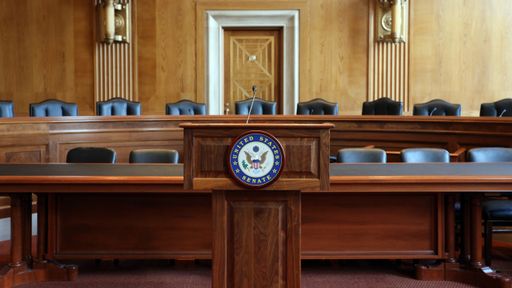
Witnesses told Senate Judiciary Committee, Subcommittee on Intellectual Property of the need to adjust PTAB procedures to promote a strong patent system, but not all agreed on which approach to take.
At a Senate subcommittee hearing on recently proposed legislation to reform the procedures used by the Patent Trial and Appeal Board (PTAB) to decide whether to institute inter partes review (IPR) proceedings pursuant to the America Invents Act (AIA), witnesses presented differing views as to the effectiveness and wisdom of the proposal. Held Wednesday, June 22, the hearing before the U.S. Senate Judiciary Committee, Subcommittee on Intellectual Property, was titled “The Patent Trial and Appeal Board: Examining Proposals to Address Predictability, Certainty, and Fairness.” Some witnesses supported passage of the legislation under discussion, while one witness asserted that a different bill would provide better results.
The primary point of discussion was a much-criticized analytical framework used by the PTAB in assessing IPR petitions. Known as the NHK-Fintiv doctrine, or simply the Fintiv doctrine, the framework guides the PTAB in exercising its discretion whether to institute review when a parallel civil suit has been filed regarding the same patent or patents.
Fintiv doctrine. In NHK Spring Co., Ltd. v. Intri-Plex Techs., Inc., No. IPR2018-00752 (2018, designated as precedential), the PTAB determined that it would defer to court proceedings that were in an “advanced state.” Two years later, in Apple Inc. v. Fintiv, Inc., No. IPR2020-00019 (2020, designated as precedential), the PTAB clarified its earlier decision by setting out six factors it would consider in determining whether to defer to ongoing court proceedings, among them the investment of the parties in the parallel proceeding and the proximity of the trial date. Those factors were:
whether the court granted a stay or evidence exists that one may be granted if a proceeding is instituted;
proximity of the court’s trial date to the Board’s projected statutory deadline for a final written decision;
investment in the parallel proceeding by the court and the parties;
overlap between issues raised in the petition and in the parallel proceeding;
whether the petitioner and the defendant in the parallel proceeding are the same party; and
other circumstances that impact the Board’s exercise of discretion, including the merits.
PTAB Reform Act of 2022. A bill introduced in the Senate on June 16—the Patent Trial and Appeal Board (PTAB) Reform Act of 2022” (S. 4417)—would, among other things, eliminate the Fintiv doctrine. Sponsored by Senators Patrick Leahy (D-Vt.), John Cornyn (R-Tex.), and Thom Tillis (R-N.C.), the measure would prohibit the USPTO from basing IPR institution decisions on ongoing civil actions or proceedings before the ITC, other than the time bars already laid out in the Patent Act. Section 315(b) of the Patent Act prohibits the PTAB from instituting an IPR based on a petition “filed more than 1 year after the date on which the petitioner … is served with a complaint alleging infringement.” Along with other critics, Sen. Tillis has contended that the Fintiv doctrine provides an incentive for judges to set “unrealistic trial schedules” that encourage forum shopping.
Senator Leahy’s remarks. Judiciary Committee Chair Patrick Leahy (D-Vt.) opened the hearing by recounting the history of the AIA and its role in reforming the patent system by providing for an array of post-grant review proceedings. In particular, he noted the AIA’s creation of the PTAB, an adjudicative board aimed at resolving patent validity disputes faster and less expensively than civil court actions. He also pointed out that PTAB proceedings achieve more “accurate” results than lawsuits because the PTAB’s administrative law judges are trained patent professionals. Leahy recognized, however, that the AIA was enacted in 2011, and adjustments to the instrumentalities it created are now needed. That need, Sen. Leahy said, prompted him and the other sponsors to draft and introduce the PTAB Reform Act. In particular, he stated that it was necessary to examine whether the PTAB should discretionarily decline to consider meritorious challenges of patents when a parallel civil suit for infringement or declaratory judgment has been initiated. He called the PTAB Reform Act a result of compromise between differing positions among senators and stakeholders, which attempts to strike a balance between those who support instituting review of all meritorious petitions and those who want to limit duplicative institutions of multiple IPRs over the same patents.
Senator Tillis’ remarks. Ranking minority member of the subcommittee, Sen. Thom Tillis (R-N.C.) also made remarks in support of the bill he co-sponsored. The legislation, he said, “ensures that inter partes disputes remain an alternative to litigation while affording predictability, certainty, and fairness to the process for both the petitioners and the respective patent owners.”
Witness testimony—David Cain. The subcommittee first heard from David A. Cain, Director of Intellectual Property for semiconductor manufacturer GlobalFoundries, Inc., expressed support for the PTAB Reform Act. In his written testimony, Cain said, “By passing the America Invents Act over a decade ago, Congress made huge progress in curtailing the abusive patent practices hurting American industry. Allowing for efficient patent review by the technically trained and patent savvy judges of the PTAB provides an efficient and effective tool to defend against poor-quality patents.”
“The recent Fintiv-factor discretionary denial practice has limited the availability of IPR review and inserted unfairness into the system,” Cain said. “For example, defendants can be prevented from challenging a poor-quality patent at the PTAB merely because the district court sets an unrealistically early trial date. Faced with potential denial, defendants must rush to prepare a petition and may not have sufficient time to properly search for prior art, causing them to be estopped from relying on other relevant prior art later.”
According to Cain, “The PTAB Reform Act resolves these issues by solidifying the one-year window for bringing IPR petitions, while also ensuring that petitioners are not allowed to bring serial patent challenges. These commonsense proposals provide fairness for both patent owners and petitioners.”
Timothy Wilson. Next up was Timothy K. Wilson, Head of Patents and Intellectual Property Litigation at software developer SAS Institute, Inc. In his written testimony, Wilson emphasized the importance of patent quality and said that he believed the patent system was “greatly improved by the operation of the PTAB as intended by the AIA.”
Wilson pointed out that the Fintiv factors “are mentioned nowhere in the statute, and in my opinion, are inappropriately being used to analyze whether to institute a proceeding. Instead, in the text of the AIA itself, Congress included section 315, which outlines some of the bargains struck in enacting the AIA.” Section 315, he said, addresses situations in which an IPR and a civil action are pending at the same time.
“Under section 315, a party cannot file a [declaratory judgment] action challenging a patent and subsequently file an IPR. Under section 315, when a party files an IPR and then a DJ action challenging the patent, the civil action is automatically stayed until certain conditions are met. And most importantly, under section 315, a patent challenger must file an IPR within one year of getting served with a complaint for patent infringement,” Wilson noted. “Those carefully crafted compromises, made by Congress, are predictable and fair. Unlike the statute’s clear one-year time bar, Fintiv’s complex six-factor, fact-intensive balancing test introduces needless complexity, unpredictability, and high decisional costs for the PTAB.”
“Making matters worse,” he continued, “the PTAB has often relied on incorrect assumptions about the litigation process in applying the Fintiv factors. In applying the second factor, which compares the expected trial date to the IPR decision deadline, the PTAB has routinely relied on inaccurate, overly aggressive, and unrealistic trial dates.”
“The proper starting point for the PTAB should be the merits of each petition,” Wilson contended. “If a petition has merit, the review should take place. If a petition lacks merit, it should be denied on that basis, not based on unrelated discretionary factors Congress did not see fit to include in the statute.”
Wilson proposed two ways to address the problems caused by the Fintiv decision: (1) remove any discretion from the Director in the institution decision and (2) prohibit consideration of ongoing civil action in the context of an institution decision.
“I believe Congress could and should significantly improve the patent system by removing the ability for the USPTO to make discretionary denials of post-grant petitions, especially based on ongoing civil litigation, as the Fintiv framework has allowed,” said Wilson. “As a result, I support the bill that was introduced last week.”
Robert Giles. The next witness heard from was Robert Giles, Senior Vice President and Chief Intellectual Property Counsel for Qualcomm Inc., on behalf of the Innovation Alliance, a coalition of research and development-based technology companies that advocates for a strong patent system. According to Giles, “Contrary to the AIA’s goals, duplicative proceedings brought at the PTAB are the norm, not the exception.” He continued, “These duplicative proceedings enable large tech companies to price out smaller patent holders by adding expense and uncertainty for patent holders, rather than providing the promised alternative to prolonged, resource-intensive district court litigation.”
However, Giles said that the Innovation Alliance urged Senators to oppose the PTAB Reform Act “because it would further tilt the playing field to infringers.” In his view, the measure “would prevent the PTAB from considering harassing and abusive repetitive proceedings when deciding whether to institute an IPR. It would also create a legally questionable backdoor to give standing to parties who would not otherwise have it. These changes harm inventors and move the patent system in the wrong direction.”
“We believe that eliminating Fintiv discretion would result in greater unfairness and inefficiency in the patent system,” Giles said. “Discretion is at the heart of what the PTAB does at every step in post-grant proceedings.”
Giles said that the Innovation Alliance instead supports passage of the STRONGER Patents Act (S. 2082) as a means to strengthen U.S. competitiveness and global leadership. Among other reforms, the STRONGER Patents Act would restrict past-grant challenges to parties that have been sued or charged with infringement of the patent; prohibit institution of any claim which has previously been instituted in another PTAB proceeding, without regard to the status or outcome of the prior proceeding; estop defendants from seeking to invalidate a patent in district court if a PTAB proceeding has been instituted; and stay or prohibit the institution of any PTAB proceedings if a district court has found the challenged claims valid on the same grounds. “Importantly,” Giles said, “STRONGER would prevent petitioners from filing a second IPR on the same patent claim if the petitioner failed to show a reasonable likelihood of success in its first IPR.”
Jonas Anderson. The last witness was Jonas Anderson, Professor of Law, Washington College of Law, American University. In his written statement, Professor Anderson argued that Congress should eliminate the NHK-Fintiv line of cases. “As currently constituted, NHK-Fintiv forces petitioners to make unwanted concessions and allows federal district judges to influence forum-shopping plaintiffs,” he said. According to Anderson, “the prospect of avoiding the PTAB entices plaintiffs to forum shop and for some judges to engage in competition for that litigation.” Noting that the six Fintiv factors are not found in the Patent Act, Anderson pointed out that “The statute only allows the PTAB to consider whether the likelihood of success of the petition, the one-year time bar, and whether the same arguments were presented to the Board previously.”
Anderson said that the NHK-Fintiv framework has not eliminated duplicative judgements at the PTAB and the district courts. “The trial dates set by district courts and relied on by the PTAB for Fintiv factor two should not be used in evaluating whether to institute review or not,” he said. “Fintiv results in wasted attorney hours arguing about the progress made in district court, rather than the merits of the petition for review.” He also contended that the doctrine prompts attorneys to file “hurried” petitions, and that conducting the Fintiv unnecessarily burdens the USPTO. He recommended that the USPTO drop the doctrine, or better yet, that Congress clarify the review institution standards via legislation such as the PTAB Reform Act.
MainStory: TopStory Patent USPTO GCNNews