

IP Law Daily, TOP STORY—Fed. Cir.: $7.5M jury award against Kingston Technology for willful infringement of memory device patent upheld, (Jun 3, 2022)
Law Firms Mentioned:Fish & Richardson PC
Organizations Mentioned:Fish & Richardson, PC | Kingston Technology Co., Inc. | PAVO Solutions LLC | Russ August & Kabat
By George Basharis, J.D.
Federal Circuit affirmed jury finding of willful infringement and damages award based on hypothetical profit model.
The Federal Circuit has affirmed the judgment of a California federal court awarding over $7.5 million in compensatory and enhanced damages to Pavo Solutions, the maker of USB memory drives, after a jury found Kingston Technology had willfully infringed the company’s patented design. The court of appeals rejected arguments by Kingston that the lower court erred by correcting a clerical error in language used in the patent, Kingston could not have formed a willful intent to infringe because it relied on the patent as originally written, or expert testimony regarding the calculation of damages was improperly admitted (Pavo Solutions LLC v. Kingston Technology Co., Inc., June 3, 2022, Prost, S.).
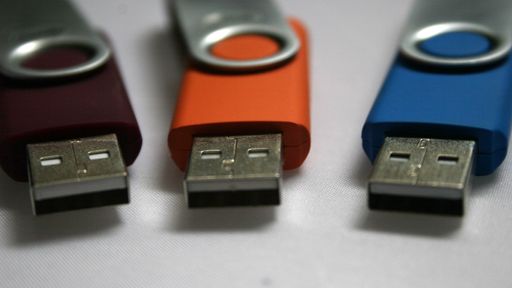
Pavo Solutions owns U.S. Patent No. 6,926,544 (the ’544 patent). The ’544 patent is directed to a flash memory device that has an attached rotary cover to protect the device’s USB port from damage and foreign substances. Specifically, the ’544 patent claims a “flash memory body comprised of a rectangular shaped case” and a “hinge protuberance on the case for pivoting the case with respect to the flash memory main body.” The phrase “pivoting the case” seems to have been a clerical error, and the phrase intended was “pivoting the cover.”
In 2014, Pavo Solutions sued Kingston, accusing Kingston of infringing the ’544 patent. Kingston sought inter partes review (IPR) of the patent. During IPR, Pavo asked the Patent Trial and Appeal Board to correct the clerical error regarding the description of its USB design, but the Board denied Pavo’s correction request on procedural grounds. A subset of the ’544 patent’s claims survived IPR, and the infringement case continued to trial. At the conclusion of the trial, a jury returned a verdict that Kingston had willfully infringed the ’544 patent and awarded Pavo $7.5 million in compensatory damages. The district court added 50 percent to the award, finding various factors weighed in favor of enhancement. The jury’s award was calculated based on a profit-based model of reasonable-royalty damages presented by Pavo’s expert witness. Kingston appealed.
Claim construction. The district court judicially corrected the claim phrase “pivoting the case with respect to the flash memory main body” to “pivoting the cover with respect to the flash memory main body.” Kingston argued that the district court erred in correcting the phrase because the language did not contain an error, and, if it did, the error was not minor, as the court had found. The Federal Circuit rejected the argument, finding the claim language as originally written contained an obvious and minor typographical or clerical error.
Kingston argued the error was not minor because correcting it required replacing one structural element with another. However, the phrase as written did not make sense, the court said, and even if the correction changed the structure described in the corrected phrase, the Federal Circuit explained that courts are not precluded from correcting minor errors even if the correction alters the claimed structure. Moreover, the correction did not broaden the claim in the ’544 patent because the original claim already required a pivoting structure in relation to the device’s main body. The structural limitations made clear that the reference to “case” was an error, and the claim did not make sense.
At trial, Kington proposed an alternate correction that would replace “flash memory main body” with “cover” so that the phrase would read “pivoting the case with respect to the cover.” The district court correctly determined that the court’s correction was not subject to a reasonable debate because Kington’s proposal and the court’s correction described the same action and resulted in the same claim scope.
Finally, the prosecution history did not suggest a different interpretation because Pavo and the examiner consistently characterized the claim as describing a pivoting case within the cover and a cover having a hinge element that functioned with the case. This suggested the parties understood the pivoting structure to be a cover. Although the Board denied Pavo’s request to correct the claim language during IPR, the denial was based on procedural rather than substantive grounds.
Willful infringement. Kingston argued that the jury’s willful-infringement verdict should be set aside because the company could not have formed the requisite intent to support a willfulness finding based on the original claim language. Kingston insisted that it could not have anticipated that a court would later correct the claims. However, reliance on an obvious and minor clerical error in claim language is not a defense to willful infringement, the court explained. The court also rejected Kingston’ argument that upholding the willful-infringement verdict amounted to calling Kingston reckless for relying on the Board’s rejection of Pavo’s correction request during IPR. The Board did not consider the substance of Pavo’s correction request, consequently, there was nothing for Kingston to rely on, according to the court.
Damages. Pavo’s expert witness relied on an earlier settlement agreement with a Pavo licensee that provided for a one-cent royalty payment to Pavo. The one-cent royalty represented 25 percent of the licensee’s profit from the sale of Pavo products. Accounting for differences between the licensee and Kingston, the expert concluded that Pavo and Kingston would have agreed to a slightly lower profit split of just over 18 percent, which amounted to a 40-cent royalty payment per unit. The Federal Circuit concluded that the district court did not abuse its discretion by refusing to exclude the expert’s testimony. The testimony was not unduly speculative, and the expert’s analysis correctly apportioned for both non-infringing and patented features.
Finally, the Federal Circuit ruled that Kingston had forfeited arguments that were not raised in the trial court in post-trial motions. For example, Kingston forfeited its argument that the district court’s jury instructions were incorrect by not objecting to the instructions, seeking a new trial, or filing a motion for judgment as a matter of law. Similarly, Kingston never sought a new trial on the grounds that Pavo prejudiced the jury by disclosing Kingston’s total revenue.
The Case is No. 21-1834.
Attorneys: Benjamin T. Wang (Russ August & Kabat) for PAVO Solutions LLC. Michael John Ballanco (Fish & Richardson PC) for Kingston Technology Co., Inc.
Companies: PAVO Solutions LLC; Kingston Technology Co., Inc.
MainStory: TopStory Patent TechnologyInternet FedCirNews CaliforniaNews