

Products Liability Law Daily Wrap Up, TOP STORY—CHEMICAL PRODUCTS—Fla.App.: Manufacturer of compressed gas owed no duty to third party injured by huffing consumer, (Jun 17, 2022)
Law Firms Mentioned:Cole, Scott & Kissane | Domnick Cunningham & Whalen | Foley Hoag LLP | Kubicki Draper PA
Organizations Mentioned:AW Distributing, Inc. | Daiho Sangyo, Inc. | Wal-Mart Stores East, LP
By Patricia K. Ruiz, J.D.
Under Florida law, there is no duty to prevent-and no liability for-a third party’s misconduct absent the existence of a special relationship. The court found no special relationship to support the imposition of any such duty.
A Florida appellate court affirmed a trial court’s decision holding that the manufacturer, the distributor, and the retailer of a compressed gas spray product were not liable for injuries caused by a consumer who used the product to get high while driving and then injured another person in a vehicular accident. The court held that the defendant companies were not strictly liable when injury to a third party, the appellant in this case, resulted from the consumer’s unintended and illegal use of the product; were not strictly liable for failure to warn when the warning on the product was sufficient to warn a reasonable person not to consume the product even though the warning did not prevent the consumer from misusing the product; and owed no duty to the injured party under a negligence theory because the companies had no special relationship with the consumer who misused the product and, thus, the companies could not supervise or control her behavior or her decision to become impaired while driving (Grieco v. Daiho Sangyo, Inc., June 15, 2022, Klingensmith, C.).
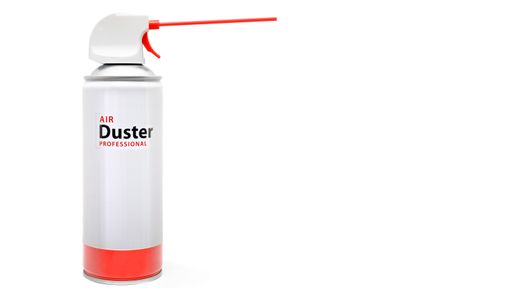
Ultra Duster is a compressed gas dusting spray manufactured by Daiho Sangyo, Inc., distributed by AW Distributing, Inc., and sold in several retail stores, including Wal-Mart Stores East, LP (collectively, defendant companies). The product, similar to other dust removers, contains a pressurized volatile, fluorinated hydrocarbon gas called 1.1-difluoroethane (DFE), which is used in many aerosol propellant consumer products. DFE is a central nervous system depressant which can produce a short high when inhaled and cause feelings of euphoria, dizziness, drowsiness, delusions, and hallucinations. Products using DFE have been associated with substance abuse in part because of their low cost and wide availability. To discourage inhalant abuse, most manufacturers, including Daiho, use bitterant, an additive designed to make the product unpleasant for human consumption, and include warning labels stating that “inhaling contents may be harmful or fatal” and notifying consumers that the product “contains a bitterant to help discourage inhalant abuse.”
In February 2012, a consumer addicted to DFE inhaled Ultra Duster while stopped at a red light, and the inhalation caused her to lose consciousness. When the light turned green, the consumer did not move her car but awakened when another driver honked his horn. She hit the gas, lost control of her car, and drove off the road, smashing into two vehicles parked in the appellant’s driveway. The appellant, who was standing in the driveway, became pinned under one of the vehicles and suffered severe injuries.
The appellant filed a civil suit against the manufacturer, distributor, and retailer of Ultra Duster alleging three claims-strict liability for defective design, strict liability for failure to warn, and negligence. He asserted: (1) the defendant companies knew that consumers used products like Ultra Duster to get high; (2) the added bitterant was not evenly distributed throughout the product to deter misuse; and (3) the cannister’s warning label was inadequate to prevent misuse. The companies filed motions for summary judgment, which the trial court denied, citing the existence of unspecified material issues of fact and finding that the foreseeability of whether the consumer would misuse the product and cause the resulting damage was a question for the jury. On a third attempt at summary judgment, the trial court found that the consumer’s voluntary conduct of driving while impaired broke the causation chain so that the defendant companies had no liability to the appellant as a third party. The appellant appealed.
Strict liability-design defect. For his strict liability design defect claim, the appellant was required to show that the defective design (the assertion that the bitterant was not efficiently or uniformly dispersed in the Ultra Duster product) made the product unreasonably dangerous. The defect must also cause unforeseeable dangers during normal, intended use of the product. The appellant asserted that the trial court made inappropriate factual determinations in its summary judgment ruling by drawing the conclusion that appellees did not need to make Ultra Duster a safer product. He also argued that Ultra Duster, with its combination of DFE and bitterant, failed to effectively disperse the bitterant in the way an ordinary consumer would expect. The defendant companies argued that the trial court correctly rejected the design defect theory on the ground that a product is not necessarily defective simply because it can become dangerous if used irresponsibly or illegally.
The court stressed that while the elements of strict liability and negligence are similar, strict liability focuses on the reasonable expectations of the consumer. In this case, the consumer who purchased and huffed the product, and not the injured appellant, was the “consumer,” and the appellant was not injured as a bystander while the product was being used as intended. Given the consumer’s intention to inhale the product for its unintended side effects, as well as the explicit warnings against doing so, the court could not make an inference that she had any ordinary expectation of the product performing safely in its customary use. However, a manufacturer is not under a duty in strict liability to design a product that is totally incapable of injuring those who foreseeably come in contact with the product.
While the appellant alleged that the product was not properly designed because the bitterant either did not properly mix with the DFE or did not effectively deter the consumer’s intentional misuse, the court found that neither theory met the standard for a claim premised on a theory of strict liability. The fact that the consumer continued misusing the product, whether because the bitterant had the potential for uneven disbursement or because of her addiction, did not plausibly suggest that the cannister she purchased was not manufactured properly. The appellate court also found it significant that the consumer admitted to using many different products similar to Ultra Duster, eventually becoming so accustomed to the taste of the bitterant that she no longer found it noticeable. Although a product must perform as safely as expected by the typical consumer, there is no obligation that the manufacturers make the product the safest possible or to make it physically impossible to ingest. Thus, the court held that the defendant companies were not strictly liable when a third party’s injury resulted from a consumer’s unintended and illegal use of the product. The appeals court affirmed the lower court’s decision on the issue.
Strict liability-failure to warn. As to the appellant’s strict liability failure to warn claim, the court found that the Ultra Duster product expressly warned unaware consumers of the dangers associated with the intentional misuse of the product, specifically inhalation, due to the risk of harm and fatality; it also provided explicit notice of the significant dangers to consumers’ health. Because the consumer admitted she knew about the warning before the incident but disregarded it with full knowledge of the possible consequences, the defendant companies had no duty to warn her further or specifically to warn that altering her mental state while driving might lead to an accident, causing injury to third parties. While the warning did not prevent the consumer from misusing the product, it was sufficient to warn a reasonable person not to consume it. Thus, the court affirmed summary judgment on the failure to warn issue.
Negligence. To prevail on a products liability claim based on negligence, a plaintiff must establish (1) a duty or obligation recognized by the law requiring the defendant to protect others from unreasonable risks; (2) a breach of that duty; (3) a reasonably close causal connection between the conduct and the resulting injury; and (4) actual loss or damages. To succeed on his negligence claim, the appellant was required to show that the defendant companies owed a specific duty to him; however, none existed in this case. Without a special relationship with the consumer, the companies had no ability to supervise or control her behavior and no involvement in her decision to become impaired while driving. Holding that the appellant’s injuries were the result of the consumer’s reckless indifference to her own safety and the safety of others, the court found that the appellant’s injuries were not the result of the companies’ conduct and affirmed the trial court’s grant of summary judgment.
The cases are Nos. 4D20-2294 and 4D20-2557.
Attorneys: Sean C. Domnick, Matthew T. Christ and Lindsey E. Gale (Domnick Cunningham & Whalen) for Michael Grieco. Sharon C. Degnan (Kubicki Draper PA) for Daiho Sangyo, Inc. Lissette Gonzalez (Cole, Scott & Kissane) for AW Distributing, Inc. August T. Horvath (Foley Hoag LLP) for Wal-Mart Stores East, LP.
Companies: Daiho Sangyo, Inc.; AW Distributing, Inc.; Wal-Mart Stores East, LP
MainStory: TopStory DesignManufacturingNews WarningsNews DefensesLiabilityNews CausationNews SCLIssuesNews ChemicalNews FloridaNews