

Health Law Daily Wrap Up, TOBACCO—U.S.: Supreme Court sides with FDA, e-cigarette manufacturers lose flavor expansion effort, (Apr 2, 2025)
Law Firms Mentioned:Thompson Hine LLP
Organizations Mentioned:Food and Drug Administration | Thompson Hine, LLP | U.S. Department of Justice | Wages and White Lion Investments, L. L. C. d/b/a Triton Distribution
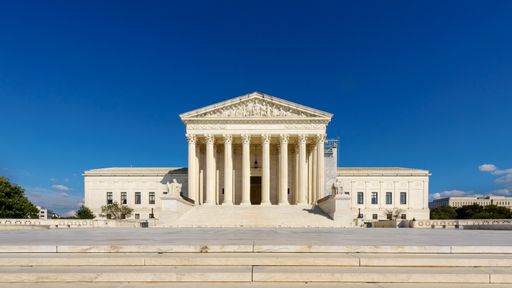
Flavor expansion was desired by e-cigarette manufacturers, but the court noted “...e-cigarettes carry their own health risks…dessert, candy, and fruit flavors, are particularly appealing to the young.”
In a case concerning efforts by the FDA to regulate the sale of electronic cigarettes (e-cigarettes) the U.S. Supreme Court unanimously ruled in favor of the FDA, vacating a decision of the Fifth Circuit. Last year, the Fifth Circuit found that that FDA denials of e-cigarette product manufacturers’ premarket tobacco product applications were arbitrary and capricious. The Court disagreed, noting the Family Smoking and Tobacco Control Act (TCA) of 2009 and the FDA’s ability to deny such an application unless an applicant shows that its product “would be appropriate for the protection of the public health.” During oral arguments on the case in December, the Court had signaled it would likely rule against the e-cigarette manufacturers (FDA v. Wages and White Lion Investments, L.L.C., No. 23-1038 (U.S. Apr. 2, 2025)).
Family Smoking and Tobacco Control Act. The TCA governed the case and informed the Court’s analysis. The TCA bars the FDA from banning all regulated tobacco products but also prohibits a manufacturer from marketing any “new tobacco product” without FDA authorization. One way to receive FDA authorization of a “new tobacco product” is through the submission of a premarket tobacco product application by manufacturers. To determine if a product “would be appropriate for the protection of the public health” as the TCA requires, the FDA must consider, among other things, “…the risks and benefits to the population as a whole” and take “into account” the likelihood that users of existing tobacco products will stop using those products and that non-users will start using them.
Analysis. Acknowledging the growth of the market, the Court wrote, “There is fierce public debate about the potential benefits and harms of e-cigarettes.” However, the Court also stated that, “One particular feature of e-cigarette products appears to drive this youth demand: the panoply of e-liquid flavors.”
In analyzing whether the FDA acted arbitrarily or capriciously, the Court found that the FDA’s denial orders were sufficiently consistent with its predecisional guidance—as to scientific evidence, comparative efficacy, and device type—and did not “run afoul” of the change-in-position doctrine. Regarding the failure to consider marketing plans, since the FDA did not seek review of the Fifth Circuit’s finding of error, the Court remanded for application of the proper standard. The Court noted too that, “The record does not suggest that the FDA contradicted its predecisional guidance by requiring certain cross-flavor comparisons.”
The Court also agreed with the FDA that the Fifth Circuit reading the Court’s 2023 decision in Calcutt v. FDIC was too broad but clarified that the FDA has not asked the Court to decide the harmless-error question. Based on Calcutt, the Fifth Circuit rejected the FDA’s harmless-error argument. The Court stated that the Fifth Circuit interpreted Calcutt’s discussion to mean that there is only one exception to the remand rule. However, according to the Court, the most natural interpretation of the Administrative Procedure Act’s language is that reviewing courts should adapt the “rule of prejudicial error” applicable in ordinary civil litigation (also known as the harmless-error rule) to the administrative-law context, and that includes the remand rule.
Ruling. The Court vacated the judgment of the Fifth Circuit and remanded the case for further proceedings.
What’s next? The other e-cigarette case pending before the Court, FDA v. RJ Reynolds Vapor Co., will be decided by July at the latest, and oral arguments have already been heard. President Trump had vowed to “save vaping” in his presidential campaign. The FDA under the Trump Administration may make rule changes to foster growth in the vaping industry, especially after the loss at the Supreme Court.
The case is No. 23-1038.
Judge: Alito, S.
Attorneys: Sarah M. Harris, U.S. Department of Justice, for Food and Drug Administration. Eric N. Heyer (Thompson Hine LLP) for Wages and White Lion Investments, L. L. C. d/b/a Triton Distribution.
Companies: Food and Drug Administration; Wages and White Lion Investments, L. L. C. d/b/a Triton Distribution
MainStory: TopStory CaseDecisions FDCActNews AdvertisingNews GCNNews OTCNews TobaccoNews SupremeCtNews