

Health Law Daily Wrap Up, TOBACCO—8th Cir.: Wages decision also covers menthol-flavored and open-tank ENDS products, (Jun 17, 2025)
Law Firms Mentioned:Chalmers, Adams, Backer & Kaufman, LLC
Organizations Mentioned:SWT Global Supply, Inc. | U.S. Department of Justice | U.S. Food & Drug Administration
By Sherri M. Schroeder, J.D.
The appeals court found the FDA’s decision to treat the PMTAs in question in the same way as other non-tobacco-flavored PMTAs was not arbitrary or capricious under the recent Supreme Court decision.
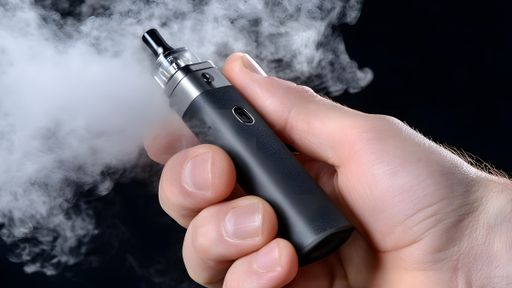
The U.S. Court of Appeals for the Eighth Circuit has denied SWT Global Supply, Inc., a Missouri-based manufacturers of electronic nicotine delivery system (ENDS) vaping products, review of the FDA’s denial of market authorization for SWT’s menthol-flavored ENDS products. The FDA’s denial order concluded that SWT’s premarket tobacco product application (PMTA) lacked sufficient evidence demonstrating that its flavored ENDS would provide a benefit to adult users that would adequately outweigh the risks to youth and that its marketing plan was insufficient. On appeal, SWT claimed that the FDA’s denial was arbitrary and capricious. However, while that appeal was pending, the U.S. Supreme Court decided FDA v. Wages & White Lion Investments, which the appeals court found to largely resolve the issues raised in the appeal, despite the fact that it did not concern menthol-flavored ENDS products (SWT Global Supply v. FDA, No. 23-2403 (8th Cir. Jun. 12, 2025)).
Wages. In Wages, ENDS manufacturers challenged the FDA’s denial orders of their PMTAs (see Supreme Court sides with FDA, e-cigarette manufacturers lose flavor expansion effort, Apr. 2, 2025). The Court held that the FDA’s denials of PMTAs for ENDS products with flavors other than tobacco or menthol “were sufficiently consistent with [the FDA’s] predecisional guidance and thus did not run afoul of the change-in-position doctrine.” While reaching this conclusion, the Supreme Court also held that the FDA had not changed position with regard to what scientific evidence would be required, how to demonstrate comparative efficacy, and how the FDA would treat open versus closed device types.
Change in position. SWT’s first argument upon appeal was that the FDA’s denial order was arbitrary and capricious because the FDA changed position without notice as to the scientific standard by which it would judge PMTA, “reversing its position on requiring long-term studies for PMTAs and imposing a new comparative efficacy requirement.” The court, however, found that Wages resolved this issue by rejecting this argument. The Supreme Court had determined that “[b]oth the TCA [the Family Smoking Prevention and Tobacco Control Act of 2009] itself and the FDA’s guidance left the agency broad discretion to decide what sort of scientific evidence an applicant was required to submit,” and thus “[n]o change in position occurred in this respect,” according to the appeals court. The appeals court also found that by denying PMTAs that failed to compare non-tobacco-flavored ENDS products to tobacco-flavored ENDS products, the FDA did not contradict any previously announced position. The court also stated, “Wages is decisive on this point despite the fact that it did not concern menthol-flavored ENDS products. Just as with other ENDS products, the agency did not articulate firm requirements regarding how it would treat menthol-flavored ENDS products before issuing its PMTA denials, so it never changed position.”
Marketing proposals. SWT next argued that the FDA’s denial order was arbitrary and capricious because the FDA failed to properly justify its finding that SWT’s marketing plan was insufficient, particularly because the denial ignored differences between closed and open ENDS products’ attractiveness to youth. However, the court found the FDA’s denial order specifically explained that despite “variability in the popularity of device types among youth,” it was “[s]till” the case that “across these different device types, the role of flavor [in attracting youth] is consistent.” The court also noted that in its denial, the FDA concluded menthol-flavored ENDS products’ popularity among youth made “it . . . reasonable and consistent to treat menthol-flavored ENDS PMTAs in the same way as other non-tobacco-flavored ENDS PMTAs.” Thus, the FDA’s decision to treat open and closed menthol-flavored ENDS products similarly, and to reject SWT’s PMTAs partially on that basis, was not arbitrary and capricious.
As to SWT’s claim that the FDA more broadly failed to justify its finding that the marketing plan in SWT’s PMTAs was insufficient, the court found that the agency had examined the relevant data and articulated a satisfactory explanation for its action. In its denial, the FDA explained that point-of-sale restrictions and marketing changes did not sufficiently protect youth because youth frequently accessed ENDS products after the point of sale. Contrary to SWT’s contention on appeal, the FDA acknowledged that the TraceVerify program was insufficient in this regard and explained instead that restrictions beyond the point of sale, such as biometric use barriers, could combat the problem.
Therefore, the court denied SWT’s petition for review.
The case is No. 23-2403.
Judge: Kelly, J.
Attorneys: Jerad Wayne Najvar (Chalmers, Adams, Backer & Kaufman, LLC) for SWT Global Supply, Inc. Catherine Meredith Padhi, U.S. Department of Justice, for U.S. Food & Drug Administration.
Companies: SWT Global Supply, Inc.; U.S. Food & Drug Administration
MainStory: TopStory CaseDecisions FDCActNews TobaccoNews ArkansasNews IowaNews MinnesotaNews MissouriNews NebraskaNews NorthDakotaNews SouthDakotaNews