

Products Liability Law Daily Wrap Up, SUPPLY CHAIN LIABILITY ISSUES—BABY PRODUCTS—M.D. Pa.: Claims against Amazon largely move forward in infant’s wrongful death action, (Oct 2, 2025)
Law Firms Mentioned:Campbell Conroy & O'Neil P.C. | Fellerman & Ciarimboli, P.C.
Organizations Mentioned:Amazon.com, Inc.
By Pankhuri Bhatnagar, B.A. LL.B.
The parents conceded their breach of implied warranty of fitness count and their recklessness claim was dismissed because Pennsylvania does not recognize it as a standalone cause of action.
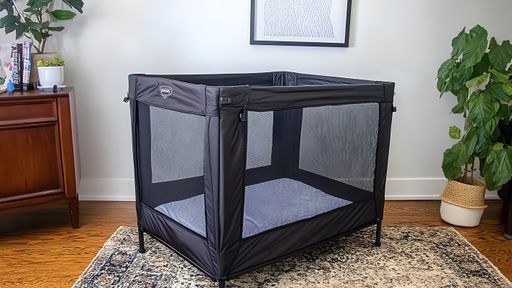
In an action filed by a couple following the tragic death of their infant in an allegedly defective playpen procured from Amazon’s online marketplace, a federal district court in Pennsylvania partly granted the seller’s partial motion to dismiss. The parents’ claims for express warranty, implied warranty of merchantability, negligence, negligent misrepresentation, equitable relief, and punitive damages were allowed to proceed as they were adequately pleaded, established that the seller knowingly breached its duty of care by negligently marketing an unsafe playpen and selling it with a counterfeit SGS certification, and demonstrated the seller’s conscious disregard for public safety (McLaughlin v. Amazon.com, Inc., No. 3:23-cv-839-JKM (M.D. Pa. Sept. 30, 2025)).
Background. A family purchased a YOBEST playpen via Amazon marketplace in March 2021. The product arrived without an instruction manual. The mother assembled it using Amazon's instructional videos and placed it in the living room, within her line of sight from her home office. On the day of the incident, the one-year-old’s mother and sister discovered her hanging from the playpen’s top center joint. The infant was declared dead due to mechanical asphyxia. The couple filed suit against Amazon.com, Inc. and Amazon.com Services, LLC (together, Amazon or seller), alleging that it knowingly marketed and sold the playpen with a counterfeit SGS safety testing certification and without the federally required children’s product certificate. The product was designed, manufactured, and assembled by a third-party Chinese vendor and was exclusively acquired by Amazon through an agreement without verifying the vendor’s reputation or the product’s non-defectiveness. The parents asserted that the seller acted as the playpen’s de facto manufacturer as it marketed, promoted, sold, supplied, and distributed the playpen to consumers in North America; collected revenue from its sales; provided replacement and refund assistance, assigned an Amazon Standard Identification Number (ASIN) to each playpen; provided express warranties as to its description, and retained exclusive rights to remove the product listing based on negative customer feedback. They brought 10 claims against the seller. Amazon moved to dismiss the claims for breach of express and implied warranty, negligence, reckless misconduct, negligent misrepresentation, punitive damages, and equitable relief.
Warranties. Amazon argued that the express warranty claims failed since the couple did not identify any individualized promise or affirmative statement attributable to it, but the couple pointed to the product’s website description as a “Sturdy Safety Play Yard with Soft Breathable Mesh” and attached a screenshot of its counterfeit SGS certification. Thus, they plausibly asserted that the seller made affirmative statements that the playpen was safe for use by children and had been professionally tested, which formed part of the basis of the bargain. Amazon argued that these representations were made by the playpen’s Chinese manufacturer. In Pennsylvania, the breach of express warranty requires that the affirmation of fact or promise to the buyer be made by a seller, 13 PA. CON. STAT. § 2313, defined as “a person who sells or contracts to sell goods.” Id. § 2103(a). Accordingly, it was sufficient to show that Amazon made the representations in question in its capacity as a seller. Next, the couple conceded that their breach of implied warranty of fitness for a particular purpose count was inadequately pleaded, while the breach of implied warranty of merchantability claim proceeded unchallenged.
Negligence and recklessness. Amazon accurately stated that “[t]here is no cause of action for recklessness under Pennsylvania law.” M.U. v. Downingtown High Sch. E., 103 F. Supp. 3d 612, 629 (E.D. Pa. 2015). The court dismissed recklessness as a standalone cause with prejudice but preserved allegations of reckless conduct embedded in other claims. A negligence claim requires proof that the defendant breached a duty of care which was the cause of the plaintiff’s harm. Schemberg v. Smicherko, 85 A.3d 1071, 1073-74 (Pa. Super. Ct. 2014). In considering whether a duty of care is owed, the court analyzes the: (1) parties’ relationship; (2) social utility of the defendant’s conduct; (3) nature of risk; (4) consequences of imposing a duty; and (5) public interest in the proposed solution. Althaus ex rel. Althaus v. Cohen, 756 A.2d 1166, 1169 (Pa. 2000). Here, there was a relationship between the family as purchasers and Amazon as the de facto manufacturer and/or seller of the playpen. It was evident that a product like a playpen, if safe and properly certified for children’s use, would serve a valuable utility in society, and that placing children in a defective and unsafe playpen poses substantial risk of injury and results in foreseeable harm. Balancing these factors, it was held that Amazon owed a duty of care which it allegedly breached by negligently placing the defective and unsafe playpen into the stream of commerce and selling it with a counterfeit SGS certification, all of which resulted in the death of the infant. As such, all elements of a negligence claim were properly pleaded.
Negligent misrepresentation. Amazon contended that this count was not supported by a duty and was not pleaded with the requisite particularity. The court sided with the parents, holding that the seller owed them a duty under Section 311 of the Restatement, which arises when one “undertakes to give information to another, and knows or should realize that the safety of the person of others may depend upon the accuracy of the information.” Id. § 311 cmt. b. They were also required to allege: “(1) a misrepresentation of a material fact; (2) made under circumstances in which the misrepresenter ought to have known its falsity; (3) with an intent to induce another to act on it; and (4) which results in injury to a party acting in justifiable reliance on the misrepresentation.” Bortz v. Noon, 729 A.2d 555, 561 (Pa. 1999). The complaint stated that the playpen’s safety and SGS certification were material facts which were misrepresented with the knowledge that customers would and did reasonably rely on them. That reliance allegedly led to the infant’s death. As for whether reliance on a misrepresentation is reasonable, that is usually a question for the jury. Tran v. Metro. Life Ins. Co., 408 F.3d 130, 135 (3d Cir. 2005). As such, this count was allowed to proceed.
Equitable relief. Amazon argued that the equitable relief claim seeking a ban on the playpen’s marketing and sale amounted to a permanent injunction, which was inappropriate due to adequacy of legal remedies and insufficient pleading. The court held that the claim was sufficiently alleged but the determination of whether the parents suffered irreparable injury or could succeed on the merits required further details, making dismissal at this stage unwarranted.
Punitive damages. A punitive damages claim must show that “(1) a defendant had a subjective appreciation of the risk of harm to which the plaintiff was exposed and that (2) he acted, or failed to act, as the case may be, in conscious disregard of that risk.” Feld v. Merriam, 485 A.2d 742, 747 (Pa. 1984). Here, the couple submitted that Amazon knew or should have known that the playpen was unsafe, defective, and unfit to be placed in the stream of commerce and knowingly sold it with a counterfeit SGS certification, causing the loss of a life. These facts were sufficient to permit this claim.
The case is No. 3:23-cv-839-JKM.
Judge: Munley, J.
Attorneys: Brian C. Corcoran (Fellerman & Ciarimboli, P.C.) for Shawn McLaughlin. Emily J. Rogers (Campbell Conroy & O'Neil P.C.) for Amazon.com, Inc.
Companies: Amazon.com, Inc.
MainStory: TopStory SCLIssuesNews BabyProductsNews DamagesNews PennsylvaniaNews