

ESG Daily, RENEWABLE FUELS—EU expands sustainability certification to hydrogen and recycled carbon fuels, (Oct 16, 2026)
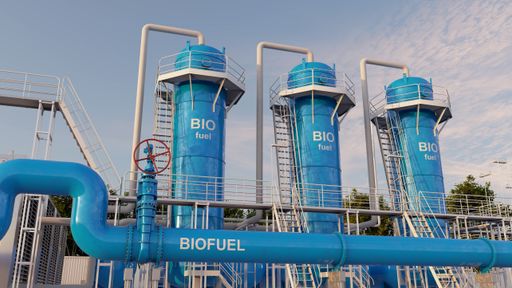
European Commission broadens recognition of RSB certification scheme to strengthen compliance verification and traceability across renewable fuel supply chains.
Renewable Fuels Certification Scheme. The European Commission has expanded its recognition of the Roundtable on Sustainable Biomaterials (RSB) EU RED voluntary scheme, extending certification to renewable fuels of non-biological origin, including renewable hydrogen-based fuels, and recycled carbon fuels.
Under Implementing Decision (EU) 2026/2316, published on 16 October, the Commission confirmed that the scheme satisfies EU requirements for verifying greenhouse gas emissions savings, renewable electricity sourcing and fuel traceability. The decision builds on the scheme’s existing recognition for biofuels, bioliquids and biomass fuels, consolidating several certification requirements within a single framework.
The extension follows an application submitted by RSB in July 2025 and subsequently amended to address concerns identified by the Commission. Following its assessment, Brussels concluded that the scheme provides sufficiently reliable emissions data, applies appropriate independent auditing standards and meets EU mass balance requirements.
The recognition has global geographical coverage and extends across the fuel supply chain, including all feedstocks for biomass-based fuels, such as waste and residues. For biomethane, however, the recognised chain of custody extends from the production unit to injection into interconnected gas infrastructure.
The decision replaces the previous recognition granted in 2022, providing a broader legal basis for economic operators to demonstrate compliance with EU renewable energy requirements.
Legal Context. The decision is adopted under Article 30(4) and (5) of the Renewable Energy Directive (EU) 2018/2001, which allows the Commission to recognise voluntary certification schemes as evidence that fuels meet EU sustainability and greenhouse gas emissions saving criteria. Its significance lies in extending the RSB scheme beyond biomass-based fuels to cover requirements applicable to renewable hydrogen and synthetic fuels. Under Article 27(6) of the Directive and Delegated Regulation (EU) 2023/1184, producers must demonstrate that electricity used to manufacture renewable fuels of non-biological origin meets specific renewable sourcing conditions.
The scheme also verifies emissions savings under Article 29a and Delegated Regulation (EU) 2023/1185, while supporting compliance with the obligation to record accurate fuel transactions and sustainability information in the Union or national databases under Article 31a.
Outlook. The decision enters into force on 5 November 2026 and applies until 5 November 2031, providing longer-term regulatory certainty for certified renewable fuel supply chains. For hydrogen producers, fuel suppliers and industrial purchasers, the expanded recognition offers a common certification route across fuel categories increasingly central to EU decarbonisation policy.
Source: Official Journal of the European Union.
MainStory: CleanEnergy ESGNews