

Labor & Employment Law Daily Wrap Up, REMEDIES, DAMAGES—U.S.: Injunction against EO authorizing federal worker layoffs stayed, (Jul 9, 2025)
Law Firms Mentioned:Altshuler Berzon
Organizations Mentioned:Altshuler Berzon, LLP | American Federation of Government Employees
By Kathleen Kapusta, J.D.
“With scant justification, the majority permits the immediate and potentially devastating aggrandizement of one branch (the Executive) at the expense of another (Congress), and once again leaves the People paying the price for its reckless emergency-docket determinations.”
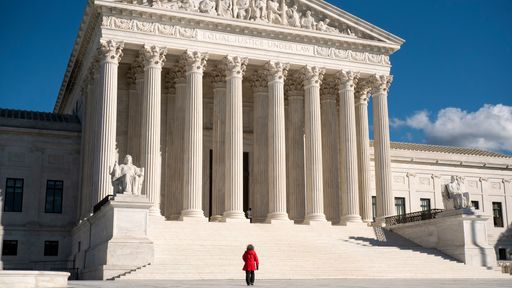
In a case from its emergency docket, the U.S. Supreme Court issued a two-paragraph unsigned order staying the preliminary injunction issued by a federal court in the Northern District of California enjoining President Trump’s Executive Order 14210, which requires nearly all federal agencies to “promptly undertake preparations to initiate large-scale reductions in force (RIFs)” and agency reorganizations. The Court stayed the injunction pending disposition of the appeal in the Ninth Circuit and disposition of a writ of certiorari. It found that the government was likely to succeed on its argument that the executive order and a joint memorandum from OMB and OPM implementing the order are lawful. It expressed no view on the legality of any Agency RIF and Reorganization Plan produced or approved pursuant to the order and memorandum. Justice Sotomayor concurred in the grant of a stay and Justice Jackson dissented (Trump v. American Federation of Government Employees, No. 24A1174 (U.S. July 8, 2025)).
Executive Order. In February 2025, President Trump issued Executive Order 14210, “Implementing the President’s ‘Department of Government Efficiency’ Workforce Optimization Initiative.” Section 3(c) of the EO states that agency heads “shall promptly undertake preparations to initiate large-scale reductions in force (RIFs) consistent with applicable law, and to separate from Federal service temporary employees and reemployed annuitants working in areas that will likely be subject to the RIFs.” According to the EO, “All offices that perform functions not mandated by statute or other law shall be prioritized in the RIFs….”
Lawsuit. Challenging the EO, a collection of unions, nonprofit organizations, and local governments sued the Trump administration. They alleged that the EO was ultra vires and usurped Congressional authority in violation of the Constitution’s separation of powers; that OMB, OPM, and DOGE acted ultra vires or beyond their authority in directing agencies to submit Agency RIF and Reorganization Plans (ARRPs) and engage in RIFs; that the joint memorandum from OMB and OMP implementing the EO violated the Administrative Procedure Act in several ways; and that the federal agency defendants’ ARRPs also violate the APA.
TRO and preliminary injunction. They requested a temporary restraining order, which the federal district court in California granted in May and a preliminary injunction, which the court granted two weeks later. In granting the preliminary injunction, the district court explained that agencies “may not conduct large-scale reorganizations and reductions in force in blatant disregard of Congress’s mandates, and a President may not initiate large-scale executive branch reorganization without partnering with Congress.” According to the court, not only was the injunction necessary to preserve the status quo and protect the power of the legislative branch, “the President likely must request Congressional cooperation to order the changes he seeks.”
Sotomayor concurrence. The Ninth Circuit declined to upset the temporary injunction, and the government appealed to the Supreme Court, which stayed the injunction finding the government was likely to succeed on its argument that the EO and memorandum were lawful. In her brief concurring opinion, Justice Sotomayor agreed with Justice Jackson that the President cannot restructure federal agencies in a manner inconsistent with congressional mandates. She argued, however, that the EO directs agencies to plan reorganizations and reductions in force “consistent with applicable law and the agency plans were not before the Court.” Thus, she wrote, the Court had “no occasion to consider whether they can and will be carried out consistent with the constraints of law.” She joined the Court’s stay “because it leaves the District Court free to consider those questions in the first instance.”
Jackson dissent. In a lengthy dissent, Justice Jackson argued that Congress has the power to establish administrative agencies and detail their functions. Over the past century, she observed, Presidents who have attempted to reorganize the federal government have first obtained authorization from Congress to do so, and in issuing his EO, Trump sharply departed from that settled practice “by allegedly arrogating this power to himself.” In issuing the injunction, she noted, “the District Judge thoroughly examined the evidence, considered applicable law, and made a reasoned determination that Executive Branch officials should be enjoined from implementing the mandated restructuring until this legal challenge to the President’s authority to undertake such action could be litigated.”
The district court’s “temporary, practical, harm-reducing preservation of the status quo was no match for this Court’s demonstrated enthusiasm for greenlighting this President’s legally dubious actions in an emergency posture,” she asserted, explaining that “the District Court not only issued such preliminary findings based on actual evidence, it is also the tribunal best positioned to make that determination.” Indeed, she pointed out, the district court, in a detailed 55-page decision, specifically found, based on the evidence presented, that several federal agencies were in the process of rapidly implementing reorganizations and large-scale reductions in force; that that proposed changes appeared to “intentionally or negligently flout the tasks Congress has assigned” to the agencies at issue; and that if it did not pause this restructuring while litigation was ongoing, “agencies will not be able to do what Congress has directed them to do.”
Emphasizing that the district court’s decision to issue the injunction was based on findings of fact, Justice Jackson asserted that it “is not this Court’s role to swoop in and second-guess a lower court’s factual findings, especially when that court has made well reasoned, preliminary judgments on a developing record. But that is precisely what the majority does in granting this stay.” Further, she argued, “deference toward lower court factfinding should be at its peak at this extremely early state of the litigation process—when what we are considering is an application for an emergency stay of a preliminary injunction.”
Consequences. Justice Jackson also pointed to “the extraordinary risk of harm that today’s ruling immediately unleashes,” including the promise of “mass employee terminations, widespread cancellation of federal programs and services, and the dismantling of much of the Federal Government as Congress has created it.” Further, she asserted, “If a President runs roughshod over the carefully crafted statutes that authorize and animate the Federal Government (as the District Court’s preliminary findings show to be likely happening here), he discards and disables the democratic system that created those laws. It is the duty of judges to safeguard that system.”
Hubristic. Calling the Court’s decision “hubristic and senseless,” she asserted that “Lower court judges have their fingers on the pulse of what is happening on the ground and are indisputably best positioned to determine the relevant facts—including those that underlie fair assessments of the merits, harms, and equities.” Rather than “disrupt the lower courts’ preservation of the status quo,” Jackson would “leave intact their protection of the historical relationship between Congress and the President, preventing irreparable harm to the plaintiffs and the public while the Judiciary does the critical work of evaluating this exercise of power.”
The case is No. 24A1174.
Judge: Per curiam.
Attorneys: D. John Sauer, Office of the Solicitor General, for Donald J. Trump. Stacey Monica Leyton (Altshuler Berzon) for American Federation of Government Employees.
Companies: American Federation of Government Employees
MainStory: TopStory RemediesDamages Layoffs PublicEmployees DOGE FedTracker LaborEmployment SupremeCourtNews GCNNews