

Labor & Employment Law Daily Wrap Up, PROCEDURE—D.C. Cir.: Investigation enjoined where unconstitutionally installed ITC ALJ issued protective order, (Apr 27, 2026)
Law Firms Mentioned:Clement & Murphy
Organizations Mentioned:Ciena Corp. | U.S. Department of Justice | U.S. International Trade Commission
By Todd Harrison, J.D.
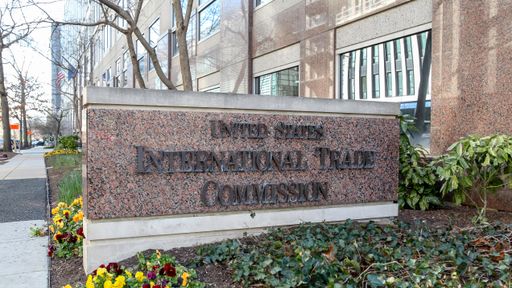
In response to an expert witness’s lawsuit alleging the ALJ lacked the authority to issue a binding protective order, the ITC argued that the lawsuit was both too early and too late.
Affirming a district court order permanently enjoining the International Trade Commission (ITC) from using an ALJ-issued protective order as the basis for an investigation or sanctions against an expert witness, the D.C. Circuit determined that the matter was ripe for review as it presented purely legal questions about timeliness, forfeiture, and the protective order’s enforceability. As to the ITC’s argument that the lawsuit was filed too late, contending that the witness had forfeited his claim by testifying and signing the 2017 protective order, the court noted that at that time the witness had no claim of injury to bring and no forum in which to bring it until the ITC launched its investigation against him (Sidak v. United States International Trade Commission, No. 23-5149 (D.C. Cir. Apr. 24, 2026)).
ALJ appointments. For several decades, the ITC’s chairman unilaterally appointed the agency’s ALJs without the votes of other commissioners. In 2018, the Supreme Court held unconstitutional the appointments of ALJs in the SEC selected by that agency’s staff. The Court indicated that ALJs are “inferior Officers,” which the Appointments Clause requires be appointed by the President, the courts, or the head of the department. At the ITC, this means the commissioners acting collectively, not the chairman acting alone.
Ratification. In anticipation of the Supreme Court’s holding, the ITC ratified the chairman’s prior appointments of ALJs, but not the past actions of those ALJs. The present case concerns one of those unratified actions.
Protective order. Shortly before the ITC ratified the chairman’s past appointments, an ALJ issued a 2017 protective order in a dispute between Qualcomm and Apple. The order required recipients of confidential business information to return or destroy that information when the case ended. The appellee testified in that case as an expert witness and agreed to abide by the protective order.
Investigation. Years after the Qualcomm-Apple case closed, the ITC suspected that the witness had not complied with the protective order’s document-destruction requirements, leading it to open an investigation.
Lawsuit. The parties exchanged several letters regarding a possible protective-order breach over the course of nine months, ultimately resulting in the witness filing this lawsuit. He argued that the protective order was void because the ALJ had not been properly appointed and the order had not been later ratified by the ITC. He asked the district court to hold the protective order unenforceable and to enjoin the ITC from imposing sanctions based on the order. The district court permanently enjoined the ITC from using the protective order as the basis for an investigation or sanctions against the witness. This appeal followed.
Standing. First, the appellate court determined that the witness has Article III standing. He faces a credible risk of professional sanctions arising from the ITC’s investigation, which suffices to show an injury in fact. That injury is traceable to the ITC’s reliance on the challenged ALJ order, and an injunction would redress it by halting the investigation and barring sanctions.
Further, the ITC has required the witness to submit affidavits and warned that an incomplete response could lead to adverse inferences. Compliance with those demands costs time and money, concrete injuries redressable by an injunction against the investigation. The court went on to find that the district court had jurisdiction and the Constitution provides a right of action.
Timing. According to the ITC, the suit to enjoin its investigation is both too early and too late. Too early because it has yet to make a final decision about the witness’s compliance with the protective order, and too late because he could have objected to the protective order when he testified in the Qualcomm-Apple case.
Too early? Addressing the argument that the case was too early, the court found that this was not so, and the matter was constitutionally and prudentially ripe for review. For the same reasons the witness’s suit against the ongoing investigation satisfies Article III’s standing requirements, the suit satisfies Article III’s ripeness requirements, explained the court.
Nevertheless, ITC argued that even though the witness had standing, his suit was not ripe. This argument relied on the prudential-ripeness doctrine. The court noted that although the Supreme Court has not disposed of a case purely on prudential ripeness in years, it also has not overruled the two-part test for prudential ripeness that it outlined in Abbott Laboratories v. Gardner, 387 U.S. 136 (1967).
Abbott Labs requires two inquiries: (1) whether the case raises legal questions or factual questions; and (2) whether delay of a judicial decision would impose hardships. Under this test, the suit was ripe, concluded the court. The matter presented purely legal questions about timeliness, forfeiture, and the protective order’s enforceability, and no further factual development would significantly advance the court’s ability to weigh in on the legal issues. In addition, the witness faces at least some hardship from being subjected to an enforcement proceeding he claims is illegitimate.
Investigation incomplete. In response, the ITC argued that review should wait until it finishes its enforcement proceedings, which it says fall “well within the Commission’s expertise.” The court was unmoved, noting that this was an Appointments Clause challenge, not a dispute over how the ITC conducts enforcement.
Inefficient. The ITC also argued that immediate review was inefficient and “might prove to have been unnecessary.” However, the court noted that this was true of many cases that raise purely legal questions, and under its ripeness precedents, neither the agency nor the court has a significant interest in postponing review when no further factual development is required to clarify the issue.
Finality. Further, the ITC contended that immediate review was unavailable because it had taken no final agency action. The court noted that while finality is an express requirement for judicial review under the Administrative Procedure Act, the witness here relied on an implied constitutional right of action in equity, and such rights of action have no finality requirement.
Too late? Turning to the ITC’s argument that the suit was filed too late, it contended that the witness had forfeited his claim by testifying in the Qualcomm-Apple case and signing the 2017 protective order. However, the court observed that the witness had no claim of injury to bring and no forum in which to bring it until the ITC launched its investigation. Even assuming he could have raised his Appointments Clause challenge then, he did not need to do so, said the court, explaining that agreeing to testify is materially distinct from invoking forum and affirmatively seeking a ruling from the Commission.
This, continued the court, made the present case distinguishable from Ciena Corp. v. Oyster Optics, LLC, 958 F.3d 1157 (Fed. Cir. 2020), which asked whether a forum-invoking party can sandbag its opposing party by asking unconstitutionally appointed adjudicators for a decision and then demanding an Appointments Clause do-over if the adjudicators’ decision is unfavorable. Ciena Corp. held that a party forfeits its Appointments Clause challenge if it “affirmatively [seeks] a ruling from the Board members” and is “content to have the assigned Board judges adjudicate its invalidity challenges until the Board rule[s] against it.”
Here, the court found that the witness had done nothing of the sort. He neither initiated the original ITC proceeding nor did he seek relief from the ITC. As such, he could not be credibly accused of sandbagging.
Narrow holding. The court pointed out that its timeliness holding was narrow. Like the district court, it did “not hold that parties to administrative proceedings can belatedly attack any adverse order based on alleged defects in the adjudicator’s authority,” and that ITC’s timeliness and forfeiture arguments would fare better if the witness were a party. As ITC had acknowledged at oral argument, this was an “unusual case,” and neither side could point to a comparable one. The key features of this dispute were that the witness was a third-party witness in the initial proceeding and had no obligation (nor opportunity) to raise his claim earlier in federal court. Accordingly, the judgment of the district court was affirmed.
The case is No. 23-5149.
Judge: Walker, J.
Attorneys: Paul D. Clement (Clement & Murphy) for J. Gregory Sidak. Brian Matthew Boynton, U.S. Department of Justice, for U.S. International Trade Commission, David S. Johanson, Rhonda K. Schmidtlein, Jason E. Kearns, Randolph J. Stayin and Amy A. Karpel.
MainStory: TopStory Procedure RemediesDamages DistrictofColumbiaNews GCNNews