

IP Law Daily, PATENT NEWS: Tesla asks Supreme Court for directions to detour around USPTO review policies, (Jul 31, 2026)
Law Firms Mentioned:Haynes and Boone, LLP
Organizations Mentioned:Granite Vehicle Ventures LLC | Tesla, Inc.
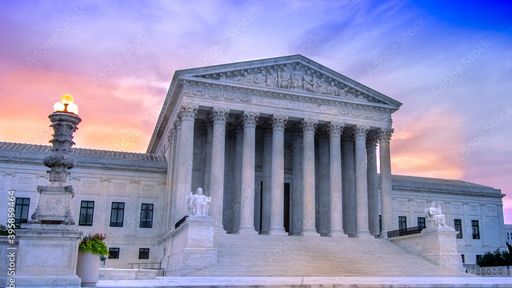
The electric car company joins Google and Intel in the fight over refusals to institute IPRs based on “non-statutory” considerations, such as the expected time to trial of infringement suits.
Electric vehicle maker Tesla, Inc., has joined fellow tech heavyweights Google and Intel in requesting the Supreme Court to enter the fray over recent policy changes at the U.S. Patent and Trademark Office regarding the agency’s decisions whether or not to institute review of issued patents before the Patent Trial and Appeal Board. Beginning last year, under Acting Director Coke Morgan Stewart and Director John Squires, the USPTO has established internal practices that have sharply curtailed administrative reviews under the America Invents Act. Frustrated challengers have failed to obtain remedies at the appellate level, based on provisions of the Patent Act that either mostly or entirely foreclose judicial review of the agency’s decisions in this context. Tesla, like Google and Intel, argues that the USPTO has engaged in extra-statutory actions that exceed its authority, and that these actions are reviewable in court. Specifically, Tesla asks the Court to overturn an appellate court decision denying it mandamus relief over the USPTO’s refusal to institute inter partes review of several patents directed to self-driving tech (Tesla, Inc. v. Granite Vehicle Ventures LLC, No. 26-136 (U.S. Jul. 27, 2026)).
Infringement suit; USPTO denial of IPR. Granite Vehicle Ventures LLC sued Tesla, Inc., in December 2024, alleging infringement of patents related to autonomous driving technology. Tesla filed five petitions with the USPTO seeking inter partes review (IPR) of the patents asserted by Granite. Tesla asserted that it filed the IPR petitions less than a year after being served with the complaint, thus satisfying the time limitation set by 35 U.S.C. §315(b).
Tesla submitted a “Sotera stipulation” that it would pursue only a limited, specific set of invalidity challenges in the district court litigation if IPR were instituted. This type of stipulation—now largely deemphasized by the USPTO—was used to get around Office policies regarding discretionary denials of institution of IPR when the “time to trial” is deemed short. The proximity of the district court’s trial date to the Patent Trial and Appeal Board’s projected statutory deadline for a final written decision was adopted as a discretionary review factor in Apple Inc. v. Fintiv, Inc., No. IPR2020-00019 (2020, designated as precedential). A Sotera stipulation—named after the precedential decision in Sotera Wireless, Inc. v. Masimo Corp., IPR2020-01019 (P.T.A.B. Dec. 1, 2020)—is an undertaking not to pursue in the parallel litigation any unpatentability grounds that could have been raised in the IPRs. For a time, this stipulation was a major factor in the process of deciding whether to institute an IPR, but the USPTO has downplayed its importance under the second Trump administration.
Despite the Sotera stipulation, the USPTO denied institution, stating that it was exercising its discretion to do so “based on a holistic assessment” of unspecified criteria. The Office did state a specific ground for denial: “[I]t is unlikely that a final written decision in this proceeding will issue before the district court trial occurs.” According to Tesla, the district court proceedings have taken much longer than the USPTO predicted, with trial now scheduled for June 2028.
Federal Circuit denial of mandamus. Tesla petitioned the U.S. Court of Appeals for the Federal Circuit for a writ of mandamus directing the USPTO to vacate the non-institution decisions and reconsider without relying on time-to-trial as a factor. Repeating the maxim that a writ of mandamus is “a “drastic and extraordinary remedy reserved for really extraordinary causes,” the Federal Circuit denied the mandamus petition. Turning away Tesla’s contention that USPTO Director John Squires exceeded his statutory authority, the Federal Circuit said that “the Director here merely concluded that instituting IPR would not be an efficient use of agency resources given the progress of the civil litigation between the parties at the time.” In the court’s view, this was not a circumstance warranting the exercise of mandamus authority. “Nor has Tesla shown any clear and indisputable right to disturb the non-institution decisions based on its contention that the Director failed to conduct proper notice-and-comment rulemaking,” the court explained. The court cited Apple Inc. v. Squires, No. 24-1864 (Fed. Cir. Feb. 13, 2026), as standing for the proposition that the USPTO’s “general statement[s] of policy” are exempted from notice-and-comment rulemaking procedures.”
Petition for writ of certiorari. Tesla filed a petition with the U.S. Supreme Court on July 27, seeking review of the Federal Circuit’s decision not to grant Tesla’s request for mandamus relief. The question presented is, “Whether courts have power to review a PTO decision denying inter partes review on grounds that are contrary to statute, like an extra-statutory restriction based on time to trial in separate litigation.”
Tesla argues that the Federal Circuit wrongly foreclosed judicial review of the Office’s non-institution decisions, “[leaving] the PTO free to devise limits on IPR beyond its authority.” According to Tesla, prior cases in which the Federal Circuit has held that “there is no reviewability” of the Office’s grounds for denying IPR institution, “except for colorable constitutional claims” involved the USPTO’s compliance with statutory limits, in contrast to cases involving extra-statutory grounds for denial. “This Federal Circuit precedent has expanded to cover the waterfront, foreclosing every statutory challenge to PTO institution criteria ever advanced,” Tesla states. “The Federal Circuit has shut off all available procedural avenues.”
The petition notes that the Federal Circuit has refused to review over a dozen challenges to the USPTO’s authority to establish criteria for discretionary institution denials. (More information on the USPTO’s policy changes is available in a Strategic Perspectives article titled “New USPTO leadership takes steps that seem to downplay PTAB, curtail inter partes reviews,” available here.) Tesla goes on to assert that the Federal Circuit’s current position means that the USPTO “can devise any limit on IPR—no matter how egregiously beyond its authority or arbitrary.” In Tesla’s view, this interpretation is an incorrect reading of the Patent Act’s limitation on appealability of decisions regarding institution of inter partes review in 35 U.S.C. § 314(d). Telsa reminds the Supreme Court that it held that “§314(d) does not ‘enable the agency to act outside its statutory limits’” in SAS Institute, Inc. v. Iancu, 584 U.S. 357, 371 (2018) (quoting Cuozzo Speed Technologies, LLC v. Lee, 579 U.S. 261, 275 (2016)).
Tesla points out that the Court has held that Section 314(d) applies to ordinary disputes about the application of statutory institution criteria, Thryv, Inc. v. Click-To-Call Technologies, LP, 590 U.S. 45, 54 (2020), but it argues that the provision “does not extend to the more fundamental question whether the PTO has authority to impose a new limit on institution.” Tesla also points out that it is not asking the Court to order the USPTO to institute review, but instead merely to require the Office to reconsider the discretionary denial of institution without relying on time-to-trial as a criterion.”
Similar pending petitions. Tesla’s petition makes note of two other pending petitions raising the same reviewability question: Google v. VirtaMove, Corp. (No. 25-1230) and Intel Corp. v. Squires (No. 26-73), the latter of which was also joined by Google. (For more details on the Google petition in No. 25-1230, see the Vital Briefing article titled “Google takes challenge of USPTO’s controversial ‘settled expectations rule’ to Supreme Court,” available here).
“Together, these cases present the reviewability question in every relevant procedural posture—and in the context of the two most consequential IPR limits the PTO has devised,” Tesla’s petition states. “This case is an ideal companion to those cases for resolving this exceptionally important, urgent issue.”
The Case is No. 26-136.
Attorneys: Michael Frank Qian (Haynes and Boone, LLP) for Tesla, Inc. D. John Sauer, Solicitor General, for John A. Squires, Under Secretary of Commerce for Intellectual Property and Director of the United States Patent and Trademark Office.
Companies: Tesla, Inc.; Granite Vehicle Ventures LLC
MainStory: TopStory Patent USPTO GCNNews