

IP Law Daily, PATENT NEWS: Senate Judiciary Committee hears varying opinions on patent-eligibility rules, (Jul 16, 2026)
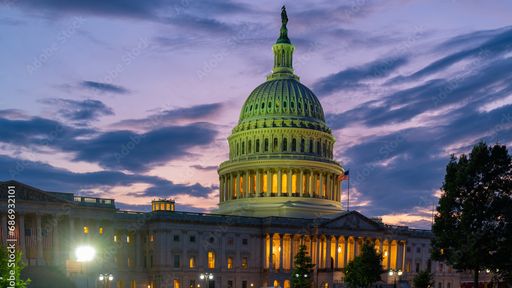
In a hearing examining the need for patent reform legislation, witnesses sparred over the pros and cons of the Supreme Court’s framework for limiting protectable subject matter.
Witnesses provided differing views on the existing framework for determining whether inventions are patentable, in a hearing before the Senate Judiciary Committee on July 14, titled “From Genes to Machines: the Patent Eligibility Debate.” The four experts invited to address the committee were evenly divided between those who defended the current system articulated by the Supreme Court and those who support legislative efforts to expand subject-matter eligibility. Some witnesses told the committee that recent decisions limiting patentability had created uncertainty, throttled innovation, and threatened America’s technological leadership. Others took the position that the current system was working, had in fact promoted innovative activity, and was necessary to protect businesses from heavy costs associated with defending against infringement claims over low-quality patents.
“Inventions patentable.” Section 101 describes the inventions that are eligible for patent protection. The section is brief and expansively worded, simply stating, “Whoever invents or discovers any new and useful process, machine, manufacture, or composition of matter, or any new and useful improvement thereof, may obtain a patent therefor, subject to the conditions and requirements of this title.” However, the courts have placed limits on the scope of patentable matter.
Supreme Court’s Section 101 jurisprudence. In a series of cases, most notably Alice Corp. Pty. Ltd. v. CLS Bank Int’l, 573 U.S. 208, and Mayo Collaborative Servs. v. Prometheus Labs., Inc., 566 U.S. 66, the Supreme Court set forth a framework for determining whether subject matter is patent-eligible under Section 101. While the language of Section 101 is broad, the Court determined that three categories of subject matter are not eligible for patent protection: laws of nature, natural phenomena, and abstract ideas. The Alice/Mayo test directs courts to first determine whether a challenged claim is directed to one of those categories. If not, the claim is eligible. If so, courts are next to examine whether the elements of the claim add an “inventive concept” that transforms the claim into a patent-eligible application. Lower courts and the USPTO have struggled with applying this framework, and the Supreme Court has turned down numerous requests by petitioners to clarify the test.
PERA. The hearing was largely focused on legislation pending in both chambers of Congress, the Patent Eligibility Restoration Act (PERA) (H.R. 3152; S. 1546). The House bill and identical Senate bill both were introduced on May 1, 2025, and have not progressed since then. PERA would amend Section 101 to establish that only specified subject matter is ineligible for patenting. The categories of ineligible subject matter would be limited to (1) mathematical formulas that are not part of a useful process, machine, manufacture, or composition; (2) mental processes that are performed solely in the human mind; and (3) unmodified human genes as they exist in the human body.
Testimony of former USPTO Director Andrei Iancu. IP attorney Andrei Iancu, who led the USPTO during President Trump’s first term, told the committee that there was an urgent need to pass PERA. According to Iancu, America’s status as “the world’s innovation leader” is at stake. He noted that Congress has not significantly changed the law on subject-matter patentability since 1793, although “technology has changed beyond recognition since then.” He criticized the judge-made exceptions “granted onto” this text, which courts say they cannot apply consistently or fairly. “The result is driving investment, jobs, and entire industries away from the United States, in precisely the fields that will define this century: computer-implemented inventions, medical diagnostics, biotechnology, and advanced computing,” Iancu said. Patent-eligibility policy should be set by Congress, not the courts, he argued.
Iancu noted concerns expressed in Alice by the opinion’s author Justice Thomas that a too-restrictive approach to Section 101 risked “swallow[ing] all of patent law.” According to Iancu, that is what is happening under the current judge-made framework. “Lower courts applying these decisions now routinely reject genuine technological inventions at the threshold—without ever asking whether they are new, non-obvious, or well described,” he said. Furthermore, the uncertainty is harmful to innovation. “When the judges who apply this law every day say they cannot tell what is eligible for a patent, inventors and investors certainly cannot.”
In response to questions from committee members, Iancu also warned that uncertainty regarding patent protection was driving an increased emphasis on trade secrets as a means of guarding IP, which contradicted the general policy of the IP system to promote openness and public disclosure of innovations.
Iancu told the committee that PERA provided a targeted solution to the patent-eligibility problem and praised the legislation for “preserv[ing] the broad, technology-neutral categories that have served the country since 1793.” He also lauded the clarity of the proposal and asserted that it contained adequate guardrails against excessively broad patents.
Testimony of CCIA Senior Director J. John Lee. The next witness, J. John Lee, Senior Director and Head of Intellectual Property Policy, at the Computer & Communications Industry Association (CCIA), expressed a different viewpoint. Lee argued that evidence contradicted the contention that current case law is too unpredictable. He cited a study published in the Iowa Law Review that looked at every patent-eligibility decision by the Federal Circuit from 2012 and 2023 and found that district courts were affirmed in 85.3% of Section 101 cases and the USPTO was affirmed in 95.5% of them. According to Lee, “the data demonstrates that the current framework provides meaningful predictability while continuing a longstanding principle: patents should cover genuine inventions without granting exclusive rights over the fundamental ideas, laws of nature, and natural phenomena upon which future innovation depends.”
Lee argued that recent Supreme Court decisions applied longstanding principles regarding subject-matter eligibility and did not create new ones. “While the Supreme Court’s recent Section 101 decisions certainly represented an important inflection point and sparked substantial debate about their impact on patent law, the evidence undercuts the narrative that they fundamentally changed the law or created unworkable and unpredictable legal rules,” he said.
Moreover, he argued that current patent-eligibility law had actually resulted in a net increase to innovation in not just patenting, but also in R&D spending and venture capital investment across many technology sectors, including artificial intelligence. Section 101 jurisprudence provided a safeguard against low-quality patents and litigation abuse, according to Lee. He told the committee that the Alice/Mayo system had helped to prevent patent assertion entities from attacking businesses with spurious and costly patent litigation.
“If Congress considers changes to Section 101, those changes should be carefully calibrated with stakeholder input, supported by empirical evidence, and designed to address demonstrated problems while preserving the strengths of the existing framework,” Lee testified.
Testimony of Sue Peschin, Alliance for Aging Research. The next witness, Sue Peschin, President and CEO, Alliance for Aging Research, conveyed her organization’s strong support for PERA. According to Peschin, PERA’s reforms to Section 101 would facilitate the clinical implementation of medical discoveries. She echoed Iancu’s remarks that the Alice/Mayo framework was too vague and unpredictable for courts to effectively apply it, and she asserted that it has “prevented patents not only on basic natural discoveries—which most people agree should remain unpatentable—but also on practical inventions and medical innovations that build on those discoveries.”
Peschin pointed to medical diagnostics as a particularly vulnerable field, asserting that “the Supreme Court's decisions have made it extraordinarily difficult to obtain patent protection for methods that detect disease, measure biomarkers, or translate biological insights into actionable clinical tools.” She said that the USPTO has rejected many biotechnology and diagnostic patents for lack of Section 101 eligibility and told the committee that “PERA would largely eliminate those barriers for diagnostics and let those inventions be judged under the normal patentability rules.”
Testimony of Debra Leonard, M.D., Ph.D. The final witness, physician and former University of Vermont professor Debra Leonard, disagreed with Lee on the merits of PERA, telling committee members that basic information used for medicine—such as human DNA used in diagnostic and other procedures—should not be patented. She stated her support for the principle that products of nature, laws of nature, and abstract ideas should not be eligible for patent protection, and she argued that abrogating the Alice/Mayo framework would be “bad for patients, bad for providers, and bad for precision medicine.”
Leonard urged the senators to preserve the Court’s Section 101 rules and to reject PERA’s approach. “I am greatly concerned that … PERA, as written, would bring us back to a time in which patient care was greatly restricted and potentially harmed by patents on human genes,” she said. According to Leonard, the current system has promoted—not hindered—advances in gene therapy, CRISPR technology, precision oncology, and other aspects of medical science, giving the United States the global lead in genomics and precision medicine. “That success has occurred under the current patent eligibility framework, not despite it,” Leonard asserted. “We must continue to reward true innovation through patents on novel technologies, therapies, and laboratory methods, while ensuring that the building blocks of biology remain available for researchers, clinicians, and patients alike.”
Statement of former USPTO Solicitor Thomas Krause. Former USPTO Solicitor Thomas Krause submitted comments defending current Section 101 doctrine. “Section 101 serves an essential gatekeeping function,” Krause told the committee. “Properly understood, it should help confine patents to the kinds of human-made contributions that advance the useful arts and thereby further the Constitution’s purpose of promoting progress. The Supreme Court’s modern cases seek to serve that function by making it more difficult to obtain patents on the use of computers to implement non-technological ideas and patents whose contribution lies principally in discoveries about nature.” He asserted that a recent study showed that the Supreme Court’s Alice framework has not adversely affected software startups.
Krause warned that PERA and similar proposed amendments would undermine Section 101’s gatekeeping function by “broaden[ing] eligibility across several categories of claims that current law sensibly restricts.” These would include claims directed to financial products, tax strategies, and other commercial practices.
“Patent reform should address the documented weaknesses of the existing system rather than lower eligibility thresholds on the unsupported assumption that more patents necessarily produce more innovation,” Krause wrote. “If Congress nevertheless revisits § 101, it should preserve the provision’s essential gatekeeping role and consider clearer statutory lines that further limit or eliminate patents on non-technological subject matter and on claims whose asserted inventive contribution lies principally in a discovery about nature.”
Statement of C4IP. The Council for Innovation Promotion (C4IP) sent the committee a letter in which its executive director, Frank Cullen, praised PERA as much-needed legislation and “a thoughtful legislative solution to a problem that has vexed inventors, the courts, and the innovation community for well over a decade.” C4IP is a bipartisan organization that advocates for strong IP rights. It is chaired by Iancu and another former USPTO director, David Kappos.
The letter asserts that the Supreme Court’s decisions on Section 101 eligibility have shut the doors of the patent system to critical areas of innovation “from medical diagnostics and other life sciences to a wide array of inventions involving computers.” According to C4IP, evidence shows that inventions are being “abandoned” because of the lack of reliable patent protection. “PERA will correct the excesses of recent court decisions on subject-matter eligibility and bring predictability and uniformity to this area of the law for courts, patent examiners, innovators, and the public,” the letter stated. C4IP also warned the committee that the United States risks losing its competitive edge over countries with broader patent-eligibility provisions.
MainStory: TopStory Patent GCNNews