

IP Law Daily, PATENT—Fed. Cir.: $13.2 million jury verdict against NCR reversed, damages vacated in POS company’s infringement lawsuit, (Dec 18, 2024)
Law Firms Mentioned:McDermott Will & Emery LLP | Patterson & Sheridan LLP
Organizations Mentioned:CloudofChange, LLC | McDermott Will & Emery, LLP | NCR Corp. | Patterson & Sheridan, LLP
By Saurabh Kashyap, B.A., LL.B., LL.M.
Evidence showed that NCR neither "used" the patented system nor exercised control over its merchants "using" it.
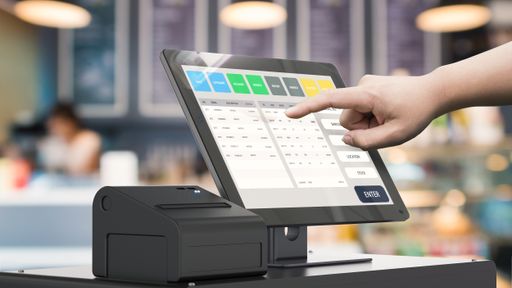
The U.S. Court of Appeals for the Federal Circuit reversed a Texas federal district court’s denial of defendant NCR Corporation’s motion for judgment as a matter of law (JMOL) in an infringement lawsuit and vacated a $13.2 million jury verdict in favor of plaintiff CloudofChange, LLC. The Federal Circuit held that NCR did not directly infringe the plaintiff’s web-based point of sale (POS) patents, as it neither "used" the patented system nor controlled or benefited from its operation under the applicable legal framework. The court further determined that NCR was not vicariously liable for its merchants’ actions, as they independently operated the system without NCR’s direction or control (CloudofChange, LLC v. NCR Corp., No. 23-1111 (Fed. Cir. Dec. 18, 2024)).
Background. The plaintiff/appellee, CloudofChange, is a technology company specializing in web-based POS systems designed to assist small businesses in managing their operations. The defendant/appellant, NCR Corporation, is a leading retail technology provider providing POS solutions and offering merchants software and hardware to conduct and manage transactions efficiently.
In this lawsuit, CloudofChange asserted its U.S. Patent Nos. 9,400,640 (the ’640 patent) and 10,083,012 (the ’012 patent). These patents share a specification and a priority date of February 5, 2008, and describe a web-based POS builder system that enables non-expert users to build and edit POS terminals remotely. Claim 1 of the ’640 patent, for example, recites a system comprising POS terminals, an internet connection to a web server, POS workstations, and builder software that operates over the internet.
CloudofChange alleged that NCR’s POS solution, NCR Silver, infringed multiple claims of its asserted patents. The lawsuit focused on NCR Silver's ability to let merchants customize POS terminals, perform transactions, and edit menus via software hosted on NCR's servers. CloudofChange pursued a single infringement theory, arguing that NCR directly “used” the patented system by hosting the backend, providing software, and requiring merchants to maintain internet access, which, it claimed, demonstrated NCR's control over the system.
The district court agreed, finding NCR’s role in hosting the backend and offering NCR Silver as a subscription service sufficient to establish system use. It held that NCR directed or controlled merchants’ actions, enabling system operation, and cited NCR’s Merchant Agreement requiring merchants to maintain internet access as evidence of control.
After a four-day trial, the jury found NCR directly infringed all asserted claims of the ’640 and ’012 patents and that the infringement was willful. The jury awarded CloudofChange $13.2 million in damages and rejected NCR’s invalidity defense.
NCR filed post-trial motions for JMOL and a new trial, arguing it did not control or benefit from the system, that jury instructions were flawed, and that the damages award improperly relied on the entire market value rule. The district court denied the motions, upholding the jury’s verdict. NCR appealed, challenging the findings of infringement and liability.
Federal Circuit’s analysis. In reviewing the district court’s decision, the Federal Circuit applied the legal framework established in Centillion Data Systems, LLC v. Qwest Communications International, Inc., 631 F.3d 1279 (Fed. Cir. 2011). This framework requires a party to both control and benefit from the entire patented system to constitute “use” under the law. The court further examined principles of vicarious liability articulated in Akamai Technologies, Inc. v. Limelight Networks, Inc., 797 F.3d 1020 (Fed. Cir. 2015). These principles establish that an entity may be liable for another’s actions only if it directs or controls the actions or if a legal relationship, such as agency, exists between them.
System use determination. Analyzing the facts, the Federal Circuit concluded that NCR did not “use” the patented system as defined under Centillion. Merchants, not NCR, initiated the system’s operation and gained its primary benefits. NCR’s role was limited to hosting backend services and providing software, which did not include operating the POS terminals or executing the claimed system functions. Merchants independently performed these actions, including connecting to the internet and customizing their POS systems. By focusing on the absence of control over the system’s entirety, the court determined that NCR failed to meet the legal threshold for “use.”
Vicarious liability. Turning to the issue of vicarious liability, the appellate court found no evidence that NCR directed or controlled its merchants' activities. The Federal Circuit noted that NCR's Merchant Agreement, which required merchants to maintain an internet connection, was insufficient to establish control over how the system was used. This requirement ensured connectivity for service functionality, not compliance with specific actions constituting infringement. Thus, the appellate court ruled that NCR could not be held vicariously liable for its merchant's independent use of the system without any legal or contractual obligation directing them to perform infringing acts.
The Case is No. 23-1111.
Judge: Stoll, K.
Attorneys: Jerry Robin Selinger (Patterson & Sheridan LLP) for CloudofChange, LLC. Paul Whitfield Hughes III (McDermott Will & Emery LLP) for NCR Corp.
Companies: CloudofChange, LLC; NCR Corp.
MainStory: TopStory Patent FedCirNews TexasNews GCNNews