

Banking and Finance Law Daily Wrap Up, FINANCIAL TECHNOLOGY—Democrats cite insufficient ethics provisions for “no” vote on CLARITY Act cloture, (Sep 16, 2026)
Organizations Mentioned:American Bankers Association | Americans for Financial Reform | Association of Military Banks of America | Bank Policy Institute | Blockchain Association | Consumer Bankers Association | Digital Asset | Financial Services Forum | Independent Community Bankers of America | Mid-Size Bank Coalition of America | National Bankers Association | Public Citizen | World Liberty Financial
By Justin Marcus Smith, J.D.
Most Democrats said the bill failed because it lacked of clear ethics provisions to hold President Trump, future presidents, and members of Congress accountable.
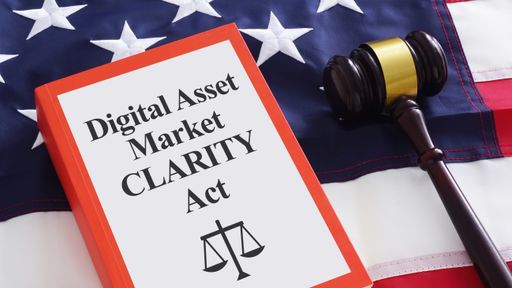
The U.S. Senate failed to advance H.R. 3633, the Digital Asset Market CLARITY Act of 2025 (CLARITY Act), on a Sept. 15, 2026, cloture vote. Cloture would have ended debate. The vote was only 49 in favor of cloture, 50 against. Proponents and detractors alike generally expressed an urgent need for a clear regulatory framework for digital assets, but Democrats expressed strong reservations about insufficient ethics provisions, especially in light of Trump family involvement with World Liberty Financial. Three Republicans, Senators Susan Collins (R-Me.), Josh Hawley (R-Mo.), and Thom Tillis (R-N.C.), crossed party lines to vote with 47 Democrats who voted “no.” However, the bill needed many more “yes” votes, 60 in total, to cross the cloture hurdle. There is a theoretical path for the Senate to revisit the vote after entry of a motion to reconsider.
Senate Banking Committee Chairman Tim Scott (R-S.C.) called for the SEC and CFTC to “set clear rules of the road for digital assets until Congress legislates.” He said he would continue to work to “keep the future of finance here in America.”
Senate Banking Committee Ranking Member Elizabeth Warren (D-Mass.), in remarks delivered before the Senate vote, said the bill posed a “massive risk” to the country. She criticized President Trump for, in her view, using the Presidency to promote crypto instead of focusing on efforts to prosecute crypto scams and to block terrorists and drug traffickers from using crypto. She claimed the President and his family have “raked in $1.4 billion from their crypto ventures” and that there was no one who had more to gain personally from the bill. Warren said the bill did not allow state Attorneys General to bring any enforcement actions against the President and that it would do nothing to stop him from “becoming the first President in American history to own and regulate his own bank.” She also said the bill would make it easier for terrorists, drug cartels, and rogue states to buy and sell weapons and pay off government officials using crypto, all while increasing the risk of a “crypto-fueled economic crash.” She concluded her remarks emphasizing the need for crypto regulation, but not a crypto bill written by the crypto industry to benefit itself.
Like Senator Scott, Senate Majority Leader John Thune (R-S.D.) said the GENIUS Act has proved how innovation can surge with certainty. Insofar as the “overwhelming majority of crypto owners want clear rules of the road and protections like those provided in the GENIUS Act,” he said the CLARITY Act would ensure U.S. leadership in financial technology.
Senator Dave McCormick (R-Pa.) released a statement expressing deep disappointment with the bill’s failure. He said members of both parties had worked together to develop a “clear, responsible regulatory framework for digital assets” with substantive changes requested by Democrats. He emphasized his view that community banks and entrepreneurs are “worse off” without the bill and that he would continue to push for a new one.
Senate Banking Digital Assets Subcommittee Chair Cynthia Lummis (R-Wyo.) released a statement after the bill’s failure expressing her dismay that Democrats who voted against the bill had “voted against American leadership and handed China and every one of our foreign competitors exactly what they wanted.”
Senator Angela Alsobrooks (D-Md.), while acknowledging the need for legislation to regulate digital assets and protect consumers, said she voted “no” because the bill lacked clear ethics provisions to hold President Trump, future presidents, and members of Congress accountable. However, she cited progress made and that she would keep “fighting to regulate this technology, protect the millions of
Americans who own crypto, and ensure that communities across Maryland can harness the benefits of digital assets safely.”
Senator Ruben Gallego (D-Ariz.) similarly blamed failure of the bill on Republicans’ refusal to “say no to the president.” He added, “Republicans should have worked more closely with Senate Democrats to craft a bill that could pass with strong ethics provisions.”
Senator Reverend Raphael Warnock (D-Ga.) released a statement explaining that he voted “no” because Republicans insisted on protecting President Trump’s “rampant corruption.” He said he otherwise agreed with the need for regulatory certainty.
Senator Mark R. Warner (D-Va.) released a statement explaining that he voted “no” because the bill would have allowed the President to personally profit. He said, “The president should not be able to use the power and influence of his office to benefit his own crypto holdings while his administration makes decisions that could directly affect their value.” He advocated for strong ethics requirements in future legislation. He noted Congress otherwise “got close to resolving some of the toughest outstanding issues around law enforcement and national security[.]”
Senator Catherine Cortez Masto (D-Nev.) called the CLARITY Act version that failed a “step backwards” from the language passed out of the Banking, Housing, and Urban Affairs Committee. She said the bill would have undermined the ability of law enforcement to investigate and stop bad actors from using crypto for illicit finance; would have ignored state and Tribal law about illegal gaming; and did not go “far enough to address key ethics issues.”
House Committee on Financial Services Chairman French Hill (R-Ark.) and House Committee on Agriculture Chairman Glenn “GT” Thompson (R-Pa.) issued a joint statement urging “clear rules of the road for the digital asset ecosystem.” They said they remained committed to sending “framework legislation to the President’s desk that secures the United States’ leadership in financial innovation."
Banking trades statement. In a joint statement, the American Bankers Association with seven other leading banking trade associations said they “continue to support creating a strong, durable regulatory framework for digital assets that will set the course for U.S. global leadership for decades to come.” The other seven associations were: Association of Military Banks of America; Bank Policy Institute; Consumer Bankers Association; Financial Services Forum; Independent Community Bankers of America; Mid-Size Bank Coalition of America; and the National Bankers Association. The associations encouraged Congress to “adopt targeted changes to stablecoin yield policy” but did not elaborate further.
Blockchain Association statement. Blockchain Association CEO Summer Mersinger issued a statement assuring that the association will continue its work to “provide long-overdue consumer protection provisions and regulatory clarity for America’s digital asset users and entrepreneurs.” He noted that the European Union, United Kingdom, Singapore, United Arab Emirates, and Japan have already established regulatory frameworks of their own. He said the Blockchain Association will not rest until the industry has “clarity in the United States.”
AFR statement. Mark Hays, Associate Director of Cryptocurrency and Financial Technology at Americans for Financial Reform, issued a statement that the Democrats and the three Republican Senators “stood up for the public interest.” The statement continued that those voting no had rejected a “deeply flawed” and “dangerous” bill that “would have exposed our entire financial system, and all of us, to the industry’s endemic fraud, scams, and volatility and supercharged President Trump’s endless crypto grift.”
Public Citizen statement. Bartlett Naylor, economist for Public Citizen, issued a statement echoing the AFR view. He said “responsible” Senators who voted against the bill “defied the septic spill of political spending by the crypto sector and denounced President Trump’s historic crypto corruption.”
Companies: American Bankers Association; Americans for Financial Reform; Association of Military Banks of America; Bank Policy Institute; Blockchain Association; Consumer Bankers Association; Financial Services Forum; Independent Community Bankers of America; Mid-Size Bank Coalition of America; National Bankers Association; Public Citizen; World Liberty Financial
MainStory: TopStory BankingOperations Blockchain CommunityDevelopment FinancialIntermediaries FinancialStability GCNNews PrudentialRegulation SecuritiesDerivatives