

Labor & Employment Law Daily Wrap Up, FEDERAL REGULATIONS—Commerce rewrites its Title VI regulations to eliminate disparate impact liability and affirmative action requirements, (Apr 15, 2026)
Organizations Mentioned:U.S. Department of Commerce
By Brandi O. Brown, J.D.
The rule is final and effective immediately upon its publication in the Federal Register, which is scheduled for tomorrow.
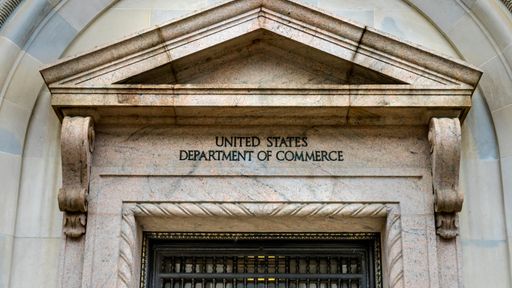
The U.S. Department of Commerce has amended its regulations implementing Title VI of the Civil Rights Act of 1964, eliminating provisions concerning disparate impact liability and affirmative action. It purports to do so in order to “align the Department’s regulations with Title VI’s original public meaning, avoid constitutional concerns, reduce compliance costs, and serve the public interest,” as well as to “implement changes directed in Executive Order 14281.” The final rule cross-references and incorporates the reasoning of the Department of Justice in its final rule published in December.
“Serious” concerns. According to the Commerce Department’s notice, “There are serious statutory and constitutional concerns with the legality of the Department’s Title VI disparate-impact regulations. The Department also has serious policy concerns with its current disparate-impact regulations, including that the disparate-impact standard creates confusion, undermines public confidence in the nation’s civil rights laws and the rule of law, and produces burdensome litigation and compliance costs.”
The Department’s regulation at 15 CFR 8.4, entitled “Discrimination prohibited,” outlines the core prohibitions against discrimination. Prior to this regulation, Commerce notes, it included provisions prohibiting facially neutral policies that have a disparate impact.
Changes made to subsections. Specifically, section 8.4(b) enumerated specific discriminatory acts that were prohibited, including, among others, providing different services or benefits, subjecting individuals to segregation or separate treatment, restricting the enjoyment of advantages or privileges afforded to others, and using criteria or administrative methods that have the effect of discriminating. It also prohibited recipients from selecting sites or locations for facilities with the purpose or effect of excluding individuals on prohibited grounds.
Section 8.4(b)(2) was a general prohibition of unintentional disparate impact and the rule deleted that paragraph. Section 8.4(b)(3) was amended to remove language about “effect,” such as language that provided that a funding recipient may not make selections with the “purpose or effect” of discriminating, or “with the purpose or effect of defeating or substantially impairing the accomplishment of the objectives of” Title VI or the Department’s implementing regulations.
Section 8.4(b)(6) required a recipient to take affirmative action to overcome the effects of prior discrimination. It was deleted. Commerce claimed that the provision promoted “potentially illegal race discrimination to the extent there is a lack of narrow tailoring” and that it “problematically requires recipients to consider and use race preferences when the recipient may not want to consider or use race preferences.”
Where employment is not primary objective. Section 8.4(c), which addresses employment practices, established that where a primary objective of the federal financial assistance is to provide employment, a recipient is prohibited from discriminating in its employment practices and it specified that, even where providing employment was not a primary objective, the same prohibitions applied if a recipient’s discriminatory employment practices tended to exclude individuals from participation in or denied them the benefits of the federally assisted program. This second circumstance, covered by subsection (c)(2) was deleted.
The rule is final and effective immediately upon its publication in the Federal Register, which is scheduled for April 16, 2026.
MainStory: TopStory FederalRegulations AgencyNews ESGNews Discrimination GCNNews