

Products Liability Law Daily Wrap Up, EXPERT EVIDENCE—ELECTRONIC PRODUCTS—D.N.J.: Home Depot wins adverse-inference jury instruction; expert evidence partly permitted in synagogue fire case, (Oct 26, 2026)
Law Firms Mentioned:Blader & Lehmann, PC | Parsky & Galloway, LLC
Organizations Mentioned:Home Depot, Inc.
By Pankhuri Bhatnagar, B.A. LL.B.
Expert evidence proceeded apart from unsupported opinions that two space heaters were defective, and the synagogue’s failure to preserve the fire scene evidence warranted a spoliation inference.
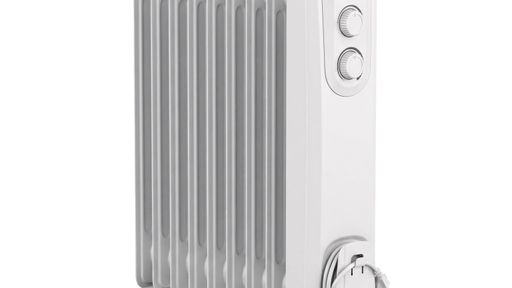
In an action brought against the seller of two space heaters by a rabbi alleging that the heaters’ defects caused a fire at a synagogue, the federal district court in New Jersey granted the seller’s motion for spoliation sanctions in part and denied it in part. The seller’s motion to exclude the synagogue’s experts was partly granted, while the synagogue’s motion to exclude the seller’s rebuttal expert was denied. The court found that the synagogue acted in bad faith by selectively preserving the suspected heaters while discarding other potentially relevant evidence and delaying notice to the seller, warranting an adverse-inference instruction at trial (Mykoff v. Home Depot, Inc., No. 18-13110 (GC) (TJB) (D.N.J. Oct. 21, 2026)).
Background. In October 2015, a rabbi purchased two Cuori oil-filled space heaters for a synagogue in New Jersey and placed them on either side of the synagogue’s bimah. A fire broke out near the bimah the following day, causing extensive damage. The heaters were manufactured by Cuori Electrical Appliances Co. Ltd. and sold by Home Depot. Investigators could not determine the exact cause of the fire and only found that it originated from the bimah’s right side and that the heater was one of many potential causes, including the outlet, extension cord, switch, or failure of the power-off timers. The synagogue preserved the Cuori heaters but discarded a Sunbeam heater found at the scene and failed to preserve other potential evidence, including electrical components and debris. Home Depot was not notified until litigation began approximately three years later. The synagogue alleged that defective heaters caused the fire. The parties filed competing Daubert motions challenging their respective experts, and Home Depot sought sanctions for spoliation.
Evidence exclusion. The court permitted the rabbi’s metallurgist to testify that wire fragments from the heaters showed signs of electrical arcing. His visual inspection, microscopic examination, and energy-dispersive X-ray fluorescence analysis followed recognized National Fire Protection Association (NFPA) guidelines. Home Depot’s criticisms concerning alternative fire causes were misplaced because the metallurgist's role was limited to metallurgical analysis.
The court also permitted a fire investigator to testify that a Cuori heater malfunction caused the fire because the bimah had been utilized several times earlier, the only difference was the heater added on the day of the incident, the burn patterns were inconsistent with a source other than the Cuori heater, and the Sunbeam heater could not have been involved as it was recovered from the synagogue’s lower section and sustained only limited damage. The expert followed the NFPA 921 scientific method, reviewed investigative reports and photographs, examined the remaining evidence, and properly considered alternative hypotheses. Disputes over his assessment of the evidence and witness testimony went to weight, not admissibility.
The rabbi’s products liability expert was qualified based on his extensive practical experience examining oil-filled heaters and investigating electrical failures. His opinions about Home Depot’s knowledge of prior heater failures and the fire hazards associated with internal malfunctions were admissible because they rested on incident reports, product reviews, physical examinations, and exemplar testing. However, his opinions that the heaters contained specific defects, including inadequate metal thickness and defective wiring, were excluded because he failed to identify applicable industry standards or adequately explain the methodology supporting those conclusions, relying instead on experience, intuition, and “common sense.”
The court denied the synagogue’s motion to exclude Home Depot’s electrical engineering expert. His opinion that the wire damage resulted from melting rather than electrical arcing was grounded in NFPA guidance and his review of the fire scene photographs, deposition transcripts, and laboratory inspections of the subject heaters. His technical discussions of possible alternative ignition sources beneath the bimah identified limitations in the synagogue’s investigation rather than asserting a definitive alternative cause, making him a rebuttal expert. Those opinions were sufficiently reliable and could be tested through cross-examination.
Spoliation sanctions. The court found that the synagogue had a duty to preserve the fire scene immediately after the fire because litigation was reasonably foreseeable and the Cuori heaters were suspected as a possible cause. Bull v. United Parcel Serv., Inc., 665 F.3d 68, 73 (3d Cir. 2012). That duty included preserving the Sunbeam heater and other evidence that could support alternative explanations. Allstate Ins. Co. v. Sunbeam Corp., 865 F. Supp. 1267, 1279 (N.D. Ill. 1994). The court further found actual suppression or withholding in bad faith. The synagogue selectively preserved the Cuori heaters while discarding the Sunbeam heater and other debris, indicating bad faith. The rabbi also sought changes to the official fire investigation report that would have replaced references to Sunbeam heaters with Cuori heaters and removed information potentially harmful to the synagogue’s case. These actions supported a finding of advantage-seeking conduct.
Home Depot was prejudiced because it lost the opportunity to inspect the scene independently and investigate alternative causes. Although its expert identified possible alternatives, he could not determine the actual cause without a timely site investigation. The court declined to impose a dispositive sanction, finding that an adverse inference was sufficient. The jury may be instructed that the lost evidence could have been unfavorable to the synagogue.
The case is No. 18-13110 (GC) (TJB).
Judge: Castner, G.
Attorneys: Arnold Carl Lakind (Blader & Lehmann, PC) for Rabbi Abraham Mykoff. Christen Elizabeth McCullough (Parsky & Galloway, LLC) for Home Depot, Inc.
Companies: Home Depot, Inc.
MainStory: TopStory ElectronicProductsNews EvidentiaryNews ExpertEvidenceNews NewJerseyNews