

Securities Regulation Daily Wrap Up, EXCHANGES AND MARKET REGULATION—Senate takes key procedural step towards reopening federal government, (Nov 10, 2025)
By Mark S. Nelson, J.D., Sheila Lynch-Afryl, J.D., M.A., Brandi O. Brown, J.D., Tom Leithauser
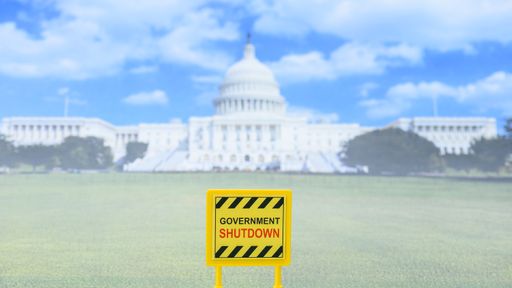
The continuing resolution would reopen the government until the end of January 2026.
The Continuing Appropriations Act, 2026 (H.R. 5371) would reopen large parts of the government until January 30, 2026, subject to passage of full-year appropriations bills, and provide full-year funding for certain programs. The bill is short on details about financial services regulators, such as the SEC and the CFTC, but it does address key cybersecurity resources and some health and employment issues.
The Senate voted 60 to 40 to invoke cloture on November 9. While enough Democratic senators supported the procedural vote to put the bill on a path toward enactment, the Senate and House must still pass the bill and the president must sign it into law before the shutdown can formally end.
SEC and CFTC. The SEC’s shutdown plan indicated that its employees would likely return to work within a few days after legislation to resolve the shutdown and reopen the government has been enacted into law. The agency’s shutdown guidance issued before the shutdown began stated: “Non-excepted employees should monitor the news for information on an additional appropriations bill and, unless told otherwise, should report back to duty on their next scheduled workday once a continuing resolution or an appropriations bill is enacted (passed by the House and the Senate and signed by the President).”
As reported in Politico Morning Money (Nov. 10, 2025), some commentators have recently speculated that the government shutdown may have impacted the speed with which SEC Chair Paul S. Atkins can implement an aggressive agenda on many topics, including crypto, shareholder proposals, and the easing of quarterly reporting requirements. However, the transition from one administration to another generally takes between six months to almost a full year regarding major policy initiatives and thus, the pace of regulatory change often increases during the second through fourth years of a new administration while still covering most of the expected topics.
The SEC’s Division of Corporation Finance had already issued more detailed guidance regarding delaying amendments and registration statements at the time the shutdown began. The guidance impacts companies that removed a delaying amendment or filed a new registration statement without a delaying amendment. Here, CorpFin stated the following post-shutdown procedures:
We will consider requests to accelerate the effective date of such registration statements if they are amended to include a delaying amendment prior to the end of the 20-day period and acceleration pursuant to Rule 461 is appropriate.
In cases where we believe it would be appropriate for a registrant to amend to include a delaying amendment, we will notify that registrant.
The CFTC likewise anticipates that its employees also would return to work in the same manner as SEC employees. The CFTC’s pre-shutdown guidance stated:
The Office of Public Affairs (OPA) will notify the public of closure and reopening of CFTC offices through the CFTC Website. The website will remain operational because it has already been fully funded prior to the lapse in appropriations. However, the website will generally not be updated or maintained during a lapse in appropriations.
Employees are responsible for monitoring the news for information about the reopening of the agency after Congress appropriates funds.
Employees are expected to return to work on their next regularly scheduled workday, unless on preapproved leave, following enactment of appropriations legislation.
CISA. The bill would give Congress more time to consider legislation to renew the Cybersecurity Information Sharing Act of 2015 (CISA 2015), which sunset on Sept. 30.
Widely regarded as a foundational cybersecurity law, CISA 2015 encouraged private sector entities to share cyber threat information among themselves and with the federal government. Its expiration has led to uncertainty by some businesses about whether they might face legal repercussions if they continue sharing information about cyber attacks.
Legislation that would renew the legal regime around information-sharing for another decade cleared the House Homeland Security Committee in September. Similar legislation was introduced in the Senate by Sens. Gary Peters (D., Mich.), ranking member of the Senate Homeland Security and Governmental Affairs Committee, and Mike Rounds (R., S.D.), chairman of the Armed Services Committee’s cybersecurity subcommittee.
But the Peters-Rounds bill, the Protecting America from Cyber Threats Act (S 2983), has faced opposition from Sen. Rand Paul (R., Ky.), chairman of the Homeland Security and Governmental Affairs Committee, who has objected nine times to requests that the Senate adopt the bill by unanimous consent.
Healthcare provisions. The package includes three full-year fiscal year 2026 appropriations bills, one of which would extend the following expired health care provisions through January 30:
pandemic-era Medicare telehealth flexibilities and the Hospital at Home program;
$8 billion in cuts to Medicaid disproportionate share hospitals;
payment cuts and reporting requirements under the Medicare clinical laboratory fee schedule;
the Medicare-Dependent Hospital and low-volume programs;
physician fee schedule 1.0 floor for work geographic practice cost indices (GPCIs);
bonuses under the ambulance fee schedule;
the temporary inclusion of authorized oral retroviral drugs as covered Part D drugs; and
funding for community health centers, the National Health Service Corps, teaching health centers that operate graduate medical education programs, special diabetes programs, sexual risk avoidance education, personal responsibility education, and family-to-family health information centers.
It also includes the Over-the-Counter Monograph Drug User Fee Amendments (H.R. 4273), which reauthorizes the Over-the-Counter Monograph User Fee Act.
While the Senate will vote on a separate bill to extend the tax credits, its success is not a certainty. Many Republicans oppose the enhanced subsidies, mostly citing fraud and improper enrollment. Over the weekend President Donald Trump made a series of Truth Social posts about the ACA, including that “the OBAMACARE SCAM” goes to Democrats’ “BEST FRIENDS IN THE INSURANCE INDUSTRY” and argued that “Republicans should give money DIRECTLY to your personal HEALTH SAVINGS ACCOUNTS.” An extension has, however, received some bipartisan support; for example, last week four Representatives released bipartisan “principles” for “temporarily extending and reforming” the enhanced subsidies, which include a two-year extension and various “guardrails” to prevent improper payments.
Protection for federal workers. Senator Tim Kaine (D-VA) provided one of the key votes in favor of the agreement. In a statement, he explained that not only did the Republicans promise a vote to extend the Affordable Care Act premium credits, but that they also made changes to protect the federal workforce, which he added was necessary to earn his vote.
“This legislation will protect federal workers from baseless firings, reinstate those who have been wrongfully terminated during the shutdown, and ensure federal workers receive back pay, as required by a law I got passed in 2019,” he explained. “That’s a critical step that will help federal employees and all Americans who rely on government services.”
MainStory: TopStory CFTCNews CommodityFutures CorporateGovernance Enforcement ExchangesMarketRegulation FedTracker Securities FinancialIntermediaries InvestorEducation IPOs PublicCompanyReportingDisclosure RiskManagement SECNewsSpeeches SecuritiesOfferings