

Securities Regulation Daily Wrap Up, ENFORCEMENT—U.S.: Supreme Court to continue refining disgorgement law, (Jan 12, 2026)
Law Firms Mentioned:Haynes and Boone, LLP
Organizations Mentioned:Haynes & Boone, LLP
By Anne Sherry, J.D.
The SEC had agreed that the question is important, noting that “disgorgement has remained a central feature of the congressional scheme.”
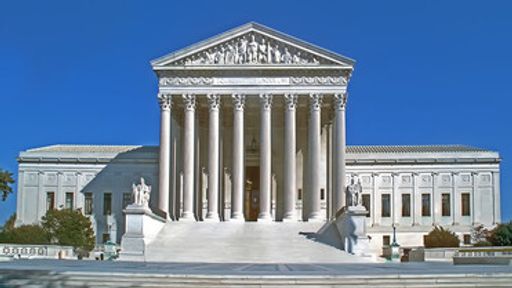
The Supreme Court granted an unopposed petition for certiorari to consider whether the disgorgement remedy requires a showing of pecuniary harm to investors. The SEC agreed with the petitioner that by ordering disgorgement without requiring such a showing, the Ninth Circuit created a circuit split that is appropriate for resolution. The appeal also saw support from three groups of amici curiae.
In 2020, the SEC charged seven individuals—including the petitioner, Ongkaruck Sripetch—and nine entities with obtaining $6.6 million in illicit profits by manipulating microcap stocks. Via a consent judgment, Sripetch conceded the SEC’s factual allegations for purposes of a motion for penalties. The district court set the disgorgement amount at $2.25 million.
Sripetch appealed, and the Ninth Circuit aligned itself with the First Circuit to hold that an award of disgorgement does not require a showing that investors experienced pecuniary harm. The petition for certiorari argued that the split between the First and Ninth Circuits on the one hand, and the Second Circuit’s decision in SEC v. Govil on the other, “is not going anywhere on its own, and the intolerable confusion will persist until this Court intervenes.”
Several amici filed briefs backing the petitioner, with concerns including that the Ninth Circuit’s reasoning applies to cases that do not involve fraud or scienter, like registration violations.
The SEC in its response agreed to certiorari, as it had done before in Kokesh v. SEC. The Sripetch case is poised to be the third in a series of Supreme Court decisions within the last 10 years defining the contours of the disgorgement remedy, joining Kokesh (the 2017 ruling that disgorgement constitutes a penalty subject to a five-year statute of limitations) and Liu v. SEC (the 2020 ruling that disgorgement is permissible as equitable relief where it does not exceed a wrongdoer’s net profits and is awarded for victims).
The case is No. 25-466.
Attorneys: Daniel L. Geyser (Haynes and Boone, LLP) for Ongkaruck Sripetch. D. John Sauer for the SEC.
MainStory: TopStory Enforcement FedTracker GCNNews Securities FraudManipulation SecuritiesOfferings SupremeCtNews