

Labor & Employment Law Daily Wrap Up, DISCRIMINATION—DISABILITY—10th Cir.: Employee, fired after refusing EAP counseling, revives claim following Muldrow, (Jul 22, 2025)
Law Firms Mentioned:Law Offices of Ralph Lamar | Littler Mendelson
Organizations Mentioned:Littler Mendelson, PC | Sisters of Charity of Leavenworth Health System, Inc.
By Marjorie Johnson, J.D.
The district court determined that she did not suffer an adverse employment action under the Tenth Circuit’s pre-Muldrow standard requiring she show a “significant change” to her employment.
A federal district court must reassess whether, in light of the Supreme Court’s Muldrow decision, an employee suffered an adverse employment action under the ADA and Rehabilitation Act when her former employer conditioned her employment on a willingness to participate in mental health counseling with its third-party EAP provider and fired her when she refused. Reversing summary judgment against her and remanding, the Tenth Circuit explained that, while the district court may have been correct that she did not meet the stricter pre-Muldrow standard, she may meet the Supreme Court’s subsequently announced new standard requiring that she show only some injury with respect to her employment terms or conditions (Scheer v. Sisters of Charity of Leavenworth Health System, Inc., No. 24-1055 (10th Cir. July 21, 2025)).
In 2014, the health system hired the employee as a representative in its physician billing department. In that role, she researched and appealed outstanding medical claims, contacted insurance companies, and took on special projects from her supervisors.
PIP. Over the next four years, she received seven corrective actions based on her failure to hit productivity targets, and her supervisors also counseled her for professional and behavioral issues. Her supervisors eventually determined that she should be placed on a performance improvement plan (PIP), and one supervisor sent a draft of the PIP to the HR director on August 23, 2019.
“Talks of suicide.” On August 22—one day before her supervisor drafted the PIP—the employee expressed to a coworker, a supervisor, and the department manager that she was struggling with personal issues. All three reported concerns for her mental well-being and safety, and the manager emailed the HR director with a “summary of the talks of suicide.”
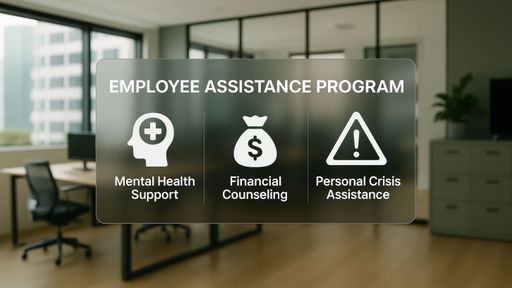
Mandatory counseling. The HR director then revised the PIP to include an “action plan” consisting of a mandatory referral to the employer’s third-party employee assistance program (EAP) for counseling. When the managers presented the revised PIP to her, she initially disputed that she had problems with productivity, became upset, and left the meeting. But she then returned and said she would try the PIP. The managers then explained that, as part of the PIP, visiting with the EAP was a condition of continued employment. She initially agreed and signed the PIP but expressed concerns about the employer having access to her medical records.
Fired after refusing EAP referral. Later that day, the HR director presented her with the EAP formal referral form, which authorized the provider to disclose to the employer whether she attended counseling sessions and complied with the EAP’s recommendations. The HR director explained that if she did not sign it, her employment would be terminated. After consulting an attorney, she refused to sign the form and was subsequently fired.
Perceived disability claim. She sued, alleging the employer violated the ADA and the Rehabilitation Act by firing her based on the erroneous perception that she suffered from a disability of mental illness. Granting summary judgment against her, the district court concluded that the mandatory referral to counseling was not an adverse employment action under the Tenth Circuit’s pre-Muldrow standard since it did not cause a “significant change” to her employment status. Therefore, the court concluded that she was terminated because she refused to fulfill a condition of her PIP and not because of a perceived disability. She appealed, and the EEOC filed an amicus brief in her support.
Muldrow standard. Soon after the district court issued its order, the Supreme Court issued its decision in Muldrow v. City of St. Louis, 144 S. Ct. 967 (2024), in which it unambiguously “change[d] the legal standard used in any circuit that has previously required ‘significant,’ ‘material,’ or ‘serious’ injury.” The Court held instead that an employment action is adverse if a plaintiff can demonstrate that she experienced “some harm respecting an identifiable term or condition of employment” as a result of that action, emphasized the Tenth Circuit. This means an employer’s action “must have left [the plaintiff] worse off, but need not have left her significantly so.” Though Muldrow arose under Title VII, the Tenth Circuit joined other federal appeals courts in holding the new some-harm standard also applied to ADA claims.
Reevaluate on remand. While the district court “dutifully followed” Tenth Circuit precedent at the time it issued the decision below, in light of the Supreme Court’s subsequent instruction in Muldrow, the employee no longer needed to satisfy that higher, pre-Muldrow standard. Accordingly, the case was remanded with instructions for the district court to reevaluate the employee’s claims under the test set forth in Muldrow.
The case is No. 24-1055.
Judge: Eid, A.
Attorneys: Ralph E. Lamar, IV (Law Offices of Ralph Lamar) for Bethany Scheer. David Charles Gartenberg (Littler Mendelson) for Sisters of Charity of Leavenworth Health System, Inc.
Companies: Sisters of Charity of Leavenworth Health System, Inc.
MainStory: TopStory DisabilityDiscrimination Discrimination Discharge ColoradoNews KansasNews NewMexicoNews OklahomaNews UtahNews WyomingNews GCNNews