

Products Liability Law Daily Wrap Up, DESIGN AND MANUFACTURING DEFECTS—MOTOR VEHICLE EQUIPMENT—S.D. Ohio: Kia granted summary judgment in sunroof defect lawsuit, (Mar 20, 2026)
Law Firms Mentioned:Dinsmore & Shohl, LLP | Greg Coleman Law PC
Organizations Mentioned:Kia Motors America, Inc. | Kia Motors Corp.
By Wendy Biddle, J.D.
The plaintiff failed to produce expert testimony or other evidence necessary to establish his negligent design claim.
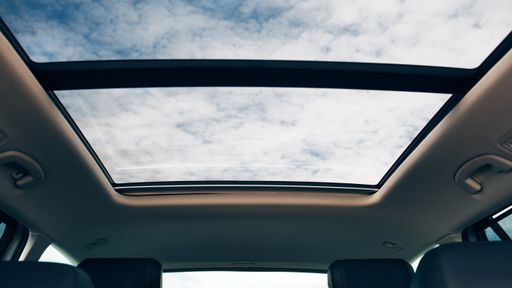
The federal court in Cincinnati, Ohio, dismissed with prejudice all claims brought by a consumer against Kia Motors America, Inc. and Kia Motors Corporation in a product liability case centered on an allegedly defective panoramic sunroof after his vehicle's panoramic sunroof shattered while he was driving on a highway. The court granted Kia's motion for summary judgment, concluding that the consumer failed to present sufficient evidence of a design defect and that his warranty claims were legally foreclosed (Kondash v. Kia Motors America, Inc., No. 1:15-cv-00506-JPH (S.D. Ohio Mar. 18, 2026)).
Background. The consumer purchased a 2012 Kia Optima EX from Kings Kia, an authorized dealership in Cincinnati, Ohio, in March 2012. The vehicle featured a panoramic sunroof, which Kia marketed as a premium upgrade designed to fill the car's interior with sunshine. For over three years, the consumer drove the vehicle without experiencing any issues with the sunroof.
On July 12, 2015, while the plaintiff and his wife were returning home from a wedding in Pennsylvania, the sunroof spontaneously shattered as they drove on an interstate highway at approximately seventy miles per hour. The consumer described hearing what sounded like "a shotgun sound in the back of the car" that was "extremely loud and scary." Initially, the sunshade beneath the sunroof caught most of the broken glass, but wind soon ripped the sunshade away, causing glass shards to rain down on both occupants. Because they were wearing short sleeves and shorts, the tiny glass fragments cut their arms, legs, and heads.
The consumer testified that he was "very alert and aware" of his surroundings at the time and did not observe anything strike his vehicle. There were no overpasses above the highway, no vehicles directly in front of him that could have kicked up debris, and the only nearby vehicle was approximately three car lengths behind. After pulling over, the consumer inspected the sunroof's track for damage and searched through the broken glass for rocks or other debris, but found nothing to explain the breakage.
The following day, the consumer brought his vehicle to the Kings Kia dealership. The odometer showed 62,139 miles, exceeding the warranty coverage of sixty months or 60,000 miles, whichever came first. Nevertheless, Kia replaced the sunroof as a courtesy without charge. Kondash continued driving the vehicle for approximately two and a half years, adding 34,696 miles, though he claimed he significantly reduced his usage due to fear of another sunroof failure. He ultimately stopped driving the vehicle in November 2017 and left it parked on his driveway, where it has remained exposed to the elements and sustained hail damage and impact from siding that blew off his home during a windstorm. The replacement sunroof has never shattered.
Prior to the plaintiff’s sunroof shattering, Kia became aware there may be a problem with its panoramic sunroofs and investigated. However, none of its internal tests revealed any defect in the sunroof’s manufacturing or assembly.
The consumer brought a putative class action suit against Kia for negligent design, unjust enrichment, breach of warranties, and for violating the Ohio Consumer Sales Practices Act. Kia moved to dismiss, which the court partially granted, dismissing the OCSPA and unjust enrichment claims. The plaintiff then moved to certify the putative class, which Kia opposed, and the court denied class certification. The court also excluded the plaintiff’s expert witness.
Kia moved for summary judgment on the remaining negligent design and breach of warranties claims.
Negligent design claim. The consumer alleged that Kia negligently designed the panoramic sunroof and that the sunroof posed an unreasonable risk of bodily injury. To establish negligent design, a plaintiff must prove that the defendant had a duty to design against reasonably foreseeable hazards, breached that duty, and that the breach proximately caused the plaintiff's injuries.
The court identified three independent grounds for dismissing the negligent design claim. First, the court determined that the consumer failed to identify the alleged defect with the required specificity under Ohio law. While the consumer pointed to various features of the panoramic sunroof—including that it was made of tempered glass, was four millimeters thick, contained ceramic paint exceeding industry averages, was curved, and was directly fastened to the vehicle—he failed to identify which specific feature rendered the sunroof defective or provide evidence as to how these design aspects caused the shattering.
Second, the court concluded that expert testimony was necessary in this case because sunroof design involves highly technical questions not within the knowledge of lay witnesses or jurors. The court noted that designing a sunroof requires weighing safety characteristics of various types of glass, glazing and testing glass to meet regulatory standards, and evaluating performance standards for safety, wind noise, fuel economy, and scratch resistance. Ohio law requires experts for design defect cases when the subject matter is highly technical.
The consumer attempted to avoid the expert testimony requirement by arguing that the sunroof was "patently defective" because it spontaneously shattered without external cause. The court rejected this argument, noting that the National Highway Traffic Safety Administration (NHTSA) had explained that road debris can cause imperceptible impact damage that results in subsequent breakage due to additional stresses. The court emphasized that mere speculation is insufficient to establish a design defect claim, and that a plaintiff must respond with evidence permitting a jury to go beyond speculation.
The consumer also argued that expert testimony was unnecessary because Kia had admitted the existence of a design defect. The court disagreed, finding that Kia's acknowledgment of sunroof shattering incidents did not constitute an admission of design defect. Rather, Kia's documents stated it was "unable to determine the root cause" in some instances and attributed other breakages to "external influences such as rock impact."
Third, the court held that the consumer failed to identify a feasible alternative design, which is an independent requirement for negligent design claims under Ohio law. In all but the simplest cases, a plaintiff must offer expert testimony establishing that a practical and technically feasible alternative design existed. The consumer argued that vehicles without panoramic sunroofs or with traditional sunroofs constituted alternative designs, but the court ruled that a design for a different product will not suffice. The court concluded that the consumer needed to introduce evidence of alternative panoramic sunroof designs that would have reduced breakage risk.
Finally, the court addressed the plaintiff’s alternative theory under the consumer-expectations test, which asks whether a product is more dangerous than an ordinary consumer would expect when used in an intended or reasonably foreseeable manner. While this test typically does not require expert testimony to establish consumer expectations, the court held that expert testimony remains necessary to prove that the design defect proximately caused the plaintiff's injuries when the causal theory is sufficiently complex. The court found that the consumer's reliance on the absence of observed external impacts at the moment of shattering invited impermissible speculation and ignored the possibility of earlier imperceptible damage.
Warranty claims. The court also granted Kia summary judgment on the warranty claims. The express warranty claim failed because the vehicle was out of warranty by more than 2,000 miles at the time of the sunroof breakage, and the consumer effectively conceded this point by failing to respond to Kia's arguments. The implied warranty claim failed under contract law due to lack of privity, as the consumer purchased the vehicle from a dealership rather than directly from Kia. It also failed under tort law for the same reasons as the negligent design claim—lack of evidence of a defect.
The court granted Kia's motion for summary judgment and dismissed the consumer's amended complaint with prejudice, terminating the case that had been pending since July 2015.
The case is No. 1:15-cv-00506-JPH.
Judge: Hopkins, J.
Attorneys: Adam A. Edwards (Greg Coleman Law PC) for Tom Kondash. Harold T. Schisler, II (Dinsmore & Shohl, LLP) for Kia Motors America, Inc. and Kia Motors Corp.
Companies: Kia Motors America, Inc.; Kia Motors Corp.
MainStory: TopStory DesignManufacturingNews MotorEquipmentNews MotorVehiclesNews OhioNews