

Products Liability Law Daily Wrap Up, DESIGN AND MANUFACTURING DEFECTS—HOUSEHOLD PRODUCTS—N.D. Cal.: Claims against cooler maker move forward in consumer’s finger injury case, (Oct 1, 2026)
Law Firms Mentioned:Cozen O'Connor | Johnson Becker PLLC
Organizations Mentioned:Igloo Products Corp.
By Pankhuri Bhatnagar, B.A. LL.B.
The consumer sufficiently alleged both a design defect and causation, and evidence of a subsequent recall of the subject cooler reinforced his theories of defect.
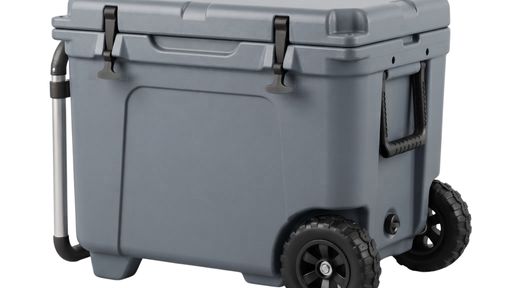
In an action arising from a consumer’s finger injury when the tow handle of a roller cooler allegedly pinched his finger during movement, a federal district court in California denied the cooler manufacturer’s motion to dismiss. Applying the consumer-expectations test, the court found that removing a cooler from a bear box was plausibly a reasonably foreseeable use, that a finger injury during normal operation failed to meet ordinary consumer safety expectations, and that the complaint adequately explained how the handle’s allegedly defective design caused the injury (Bruce v. Igloo Products Corp., No. 26-cv-07888-WHO (N.D. Cal. Sept. 25, 2026)).
Background. A man purchased the Latitude 90 Roller Cooler designed, manufactured, marketed, distributed, and sold by Igloo Products Corporation. During a family camping trip, he stored the cooler in a bear box and later attempted to slide it out while retrieving water. As he pulled the cooler, the tow-handle lever caught, trapping his left index finger in the hinge and causing immediate bleeding. The handle took off his nail and a chunk of his finger, and the consumer continued to suffer numbness and pain afterwards. In February 2025, the Consumer Product Safety Commission recalled Igloo brand coolers of the same type after receiving 12 reports of fingertip injuries caused by handles pinching consumers’ fingers against the coolers. The consumer alleged that the handle’s defective design caused his injury and asserted strict products liability and negligence claims. Igloo moved to dismiss both claims.
Design defect. California recognizes both the consumer-expectations and risk-benefit tests for design defects. The consumer proceeded under the consumer-expectations test, which asks whether the product performed as safely as an ordinary consumer would expect when used in an intended or reasonably foreseeable manner. Colgate v. JUUL Labs, Inc., 345 F. Supp. 3d 1178, 1192 (N.D. Cal. 2018). Igloo argued that the consumer had not plausibly alleged either foreseeable use or a failure to meet ordinary safety expectations. The court rejected both arguments. The allegations that the cooler was being used to store water during camping, had been placed in a bear box, and was being removed from that box were sufficient at the pleading stage to establish reasonably foreseeable use.
The consumer also specifically alleged that the tow-handle design allowed fingers to become pinched between the handle and cooler during normal use, which adequately identified how the product allegedly failed to perform safely. A reasonable consumer would not expect that a cooler’s tow handle would allow his digits to be pinched during normal operation. Moreover, the same type of cooler had allegedly been recalled after similar fingertip injuries, and the court found that a risk serious enough to result in a mass recall could plausibly exceed ordinary consumer safety expectations. Lee v. Igloo Products Corp., Case No. 2:25-CV-01526, 2026 WL 2428161, at *3 (E.D. Cal. Aug. 19, 2026). The manufacturer’s arguments requiring greater specificity at this stage were rejected and its cited precedents were inapposite as they bore on different claims or at different litigation stages. The design-defect theory therefore was adequately pleaded.
Causation. California product-liability claims require allegations establishing both defect and causation. Stephen v. Ford Motor Co., 134 Cal. App. 4th 1363, 1373 (2005). The consumer alleged that while his hand was on the handle and he was sliding the cooler from the bear box, his finger became caught in the hinge, immediately causing bleeding and injury. He further alleged that the handle’s design permitted the finger to become pinched between the handle and cooler. Those allegations directly connected the alleged design defect to the injury and went beyond merely relying on the accident itself. State Farm Gen. Ins. Co. v. Gen. Elec. Co., 799 F. Supp. 3d 996, 1005 (C.D. Cal. 2025). Accordingly, causation was also properly pleaded and Igloo’s motion was denied.
The case is No. 26-cv-07888-WHO.
Judge: Orrick, W.
Attorneys: Zackary S. Kaylor (Johnson Becker PLLC) for David Bruce. Erica W. Rutner (Cozen O'Connor) for Igloo Products Corp.
Companies: Igloo Products Corp.
MainStory: TopStory DesignManufacturingNews HouseholdProductsNews CausationNews CaliforniaNews