

Products Liability Law Daily Wrap Up, DEFENSES TO LIABILITY—CHEMICAL PRODUCTS—10th Cir.: Illegality defense bars wrongful death claims against computer duster manufacturers, (Sep 5, 2025)
Law Firms Mentioned:Lewis Brisbois Bisgaard & Smith LLP | Sharp Law LLP | Shook, Hardy & Bacon L.L.P. | Tyson & Mendes
Organizations Mentioned:AW Distributing, Inc. | AW Product Sales & Marketing, Inc. | Falcon Safety Products, Inc. | Norazza, Inc.
By Brian Craig, J.D.
Because huffing computer duster is illegal, and the claims all hinged on injuries sustained from huffing, Kansas law barred the products liability claims.
In a products liability case brought against several manufacturers of computer duster by the father of a consumer who died from inhalant abuse of the product, the U.S. Court of Appeals for the Tenth Circuit held that the illegality defense under Kansas law barred the claims. In affirming dismissal of the claims by the federal district court in Kansas, the appellate court held that because huffing computer duster is illegal, and the claims all hinged on injuries sustained from huffing, Kansas law barred the claims. The panel concluded that Kansas’ illegality defense bars claims when a consumer’s illegal act has a causal connection to the person’s injuries (Messerli v. AW Distributing, Inc., No. 23-3241 (10th Cir. Sept. 3, 2025)).
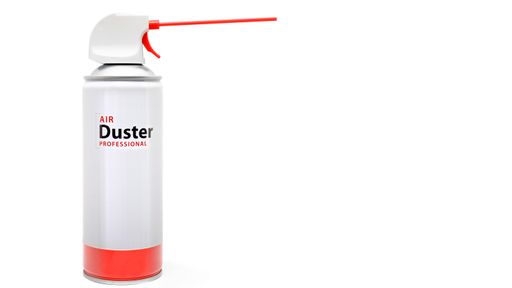
In 2018, a man began inhaling computer dusters containing 1,1-Difluoroethane (DFE), a chemical that causes an intense, immediate, and short-lived intoxication when inhaled. He became addicted and started huffing four or more cans of computer duster per day. In 2020, his family found him unconscious and surrounded by empty cans. Three days later, he died of DFE intoxication at the age of 29. The consumer’s father brought suit against the manufacturers of computer duster brands regularly used by his son, namely: AW Distributing, Inc.; AW Product Sales & Marketing, Inc.; Falcon Safety Products, Inc.; and Norazza, Inc. The complaint alleged strict liability, negligence, wrongful death, and breach of warranty claims. The decedent’s father argued that the manufacturers’ products were responsible for his son’s death, and that the companies failed to produce a reasonably safe product. The district court granted the manufacturers’ motion to dismiss (and later denied the father’s certification motion), concluding that because inhaling computer duster is a crime in Kansas, the claims were barred by the illegality defense. The decedent’s father appealed.
Illegality defense. The Tenth Circuit held that the illegality defense under Kansas law barred the claims. Under Kansas law, tort claims are barred when the plaintiff’s illegal act has a causal connection to his injuries. The Kansas Supreme Court has long recognized the general rule that a plaintiff will not be permitted to recover when it is necessary for him to prove his own illegal act, as a part of his cause of action. The panel recognized that other states have also applied illegality or wrongful-conduct defenses to products liability claims. The appeals court found that the illegality defense existed for all tort actions at common law, including products liability actions. Without clear abrogation from the Kansas Legislature or Kansas Supreme Court, the illegality defense is still available to defendants.
Comparative fault. The panel rejected the argument from the decedent’s father and the estate that the comparative fault statute adopted by Kansas precluded application of the illegality defense. The Tenth Circuit held that the mere availability of common-law or statutory comparative negligence, which permits a plaintiff to recover even if his own negligence contributed to his injuries, does not negate application of the wrongful conduct rule. The Kansas comparative fault statute explicitly abrogates only contributory negligence. The illegality defense is sufficiently different from contributory negligence, the court found.
Applying the illegality defense to the present case, the court explained that to curb inhalant abuse, Kansas outlawed inhaling toxic vapors with the intent of causing a condition of euphoria, excitement, exhilaration, stupefaction, or dulled senses of the nervous system. Halogenated hydrocarbons like DFE are among the toxic vapors the statute outlaws. The dusters at issue contained the liquified gas, DFE, a halogenated hydrocarbon that, when inhaled, produces an immediate, intense high. The complaint alleged that the man freely and willingly inhaled computer duster and that the injury was the proximate cause of his death. Because huffing computer duster is illegal, and the claims all hinged on injuries sustained from huffing, Kansas law barred the products liability claims.
The district court correctly concluded that the consumer violated the Kansas law that prohibits inhaling toxic vapors, and those illegal actions caused his death. Therefore, the Tenth Circuit affirmed the district court’s dismissal of the product liability claims.
The case is No. 23-3241.
Judge: Tymkovich, T.
Attorneys: Sarah Bradshaw (Sharp Law LLP) for Robbin Messerli. Mitchell B. Malachowski (Tyson & Mendes) for AW Distributing, Inc. and AW Product Sales & Marketing, Inc. Scott D. Kaiser (Shook, Hardy & Bacon L.L.P.) for Falcon Safety Products, Inc. Jared Harpt (Lewis Brisbois Bisgaard & Smith LLP) for Norazza, Inc.
Companies: AW Distributing, Inc.; AW Product Sales & Marketing, Inc.; Falcon Safety Products, Inc.; Norazza, Inc.
MainStory: TopStory DefensesLiabilityNews ChemicalNews DesignManufacturingNews WarningsNews ColoradoNews KansasNews NewMexicoNews OklahomaNews UtahNews WyomingNews