

Products Liability Law Daily Wrap Up, DAMAGES—HOUSEHOLD PRODUCTS—E.D. Mo.: Manufacturer arguments fail to dismiss liability claim alleging that its defective dehumidifier caused fire, (Mar 18, 2026)
Law Firms Mentioned:Evans and Dixon LLC | Gordon Rees LLP
Organizations Mentioned:Gree Electric Appliances, Inc. of Zhuhai | Gree USA, Inc. | Hong Kong Gree Electric Appliances Sales Co., Ltd. | MJC America Holdings Co., Inc. | MJC America, Ltd. d/b/a Soleus International, Inc.
By Susan L. Smith, JD, MA
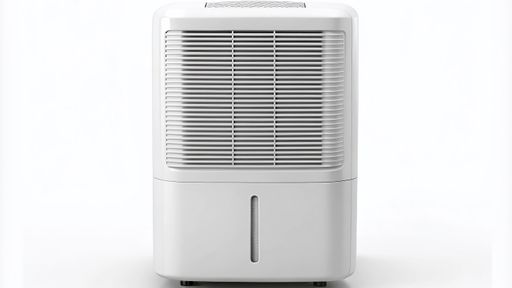
A dehumidifier manufacturer and other defendants could not convince the court to dismiss a complaint alleging that a defective dehumidifier caused a house fire and subsequent death of the plaintiffs’ parents.
A federal district court in Missouri denied the request of a dehumidifier manufacturer and other defendants to grant them summary judgment, finding that the children of a married couple who perished in a house fire on November 10, 2022, provided sufficient evidence of genuine issues of material fact to sustain their complaint. The children and the husband’s estate alleged that the fire was caused by a defective dehumidifier. They asserted nine claims under Missouri law, including strict liability, failure to warn, breach of implied warranty of merchantability, negligence, breach of express warranty, product liability negligence, violation of the Missouri Merchandising Practices Act, joint venture liability, civil conspiracy, and negligence per se. The manufacturer, Gree USA, Inc. (Gree), and other defendants contended that the cause of the fire was undetermined. The court stated that evaluation of a summary judgment motion requires assessing the proffered evidence in the light most favorable to the non-moving party. The court found that the defendants’ arguments invited the court to exceed its role on summary judgment by weighing evidence and making credibility determinations. The court concluded that genuinely disputed material facts prevented granting the defendants’ motion for summary judgment (Hillman v. Gree USA, Inc., No. 4:23-cv-00830-SEP (E.D. Mo. Mar. 16, 2026)).
Background. One of the children (the purchaser) claimed to have purchased the dehumidifier from Home Depot in 2013. The defendants contended that she purchased the dehumidifier in 2011. The dehumidifier was covered by warranty. The defendants claimed that they first became aware that they sold defective dehumidifiers before the date of the fire, first becoming aware of problems with their dehumidifiers in September of 2012. The children contended that a test conducted in November 2010 made Gree aware of the defect. Gree recalled the dehumidifier in 2013 and claimed that a recall notice was sent to the purchaser, but she denied receiving it.
Court’s analysis. The court noted that when considering whether facts are material and subject to genuine dispute, the court must view the facts and draw reasonable inferences in the light most favorable to the party opposing the summary judgment motion.
Causation. The defendants contended that if the court excluded the children’s experts’ opinions, the children could not meet their burden of establishing the existence of a product defect and causation. The court did not exclude the experts’ opinions after finding that, with those opinions, the children met their burden of presenting sufficient evidence to allow a reasonable jury to find in their favor on causation.
Punitive damages. The defendants argued that the children’s request for punitive damages should not go to the jury because: (1) one of the children purchased the dehumidifier before the defendants discovered the defects in their dehumidifiers; (2) the fire occurred nearly a decade after the defendants sent the purchaser a recall notice, making it a dissimilar act; and (3) they had already been sufficiently punished for their wrongful conduct. The court determined that none of those arguments justified granting the defendants judgment as a matter of law on punitive damages. The court explained that the defendants’ argument assumed their position on two disputed material facts: when Gree knew of the defects in its products and when the purchaser bought the dehumidifier. The court determined that with this argument, the defendants were inviting the court to exceed its role on summary judgment by weighing evidence and making credibility issues and did not solve the timeline problem. Thus, the defendants’ first argument for summary judgment on punitive damages failed.
The second argument—that because the fire occurred nearly a decade after the defendants recalled the dehumidifier, the fire was a dissimilar act for which punitive damages would be improper—was nowhere developed; therefore, the court found that the defendants failed to carry their initial burden of informing the court of the basis for their entitlement to judgment as a matter of law. Finally, the defendants contended that they should not be subjected to punitive damages because they already had been subjected to substantial fines and forfeiture in the criminal context, and two Gree executive had been convicted of crimes related to delaying the recall of Gree dehumidifiers. The court determined that the defendants failed to demonstrate entitlement to judgment as a matter of law on the basis that they were already subject to punitive damages.
Failure to warn. The defendants asserted that they were entitled to summary judgment on the failure to warn claim because the 2013 recall notified the purchaser of the danger. In Missouri, to prevail on a failure to warn claim, a plaintiff must prove, among other elements, that the defendant did not give adequate warning of danger. The defendants here argued that the children could not satisfy the requirement because Gree sent the purchaser a notice of recall before the fire. The children disagreed, citing to (1) the purchaser’s testimony that she was not aware of the recall until after the fire; and (2) the testimony of the custodian of records from the company responsible for mailing the recall notices that their process involved no attempt to verify that the notice was received by the purchaser. The court stated that evidence of non-receipt did not nullify the presumption of receipt but left the question for the determination of the jury under all of the facts and circumstances of the case. The court found that a reasonable juror could find that the defendants did not provide adequate notice of the danger posed by the dehumidifier.
Express warranty claim. The defendants argued that the breach of express warranty claim failed because the purchaser did not rely on a warranty when purchasing the dehumidifier. The court found that the children provided enough evidence for a reasonable jury to conclude that the purchaser purchased a defective Gree dehumidifier, which subsequently caused the fire in which the children’s parents perished. In addition, the purchaser presented evidence that would allow a reasonable jury to conclude that the user manual contained a warranty. The court stated that whether the defendants were entitled to summary judgment turned on whether the children had adduced sufficient evidence for a reasonable juror to find that the warranty was a material factor inducing the buyer to purchase the good. The court noted that the defendants did not cite anything in support of the alleged absence of a genuine dispute regarding any representation that was material to the purchaser’s decision to purchase the dehumidifier. The court found that the defendants were not entitled to summary judgment on the purchaser’s express warranty claim.
Civil conspiracy claim. The defendants contended that the civil conspiracy claim must be dismissed because it relied on conduct that occurred after the dehumidifier was purchased. The court determined that the defendants’ argument assumed their own position in the dispute over when the purchaser bought the dehumidifier. Thus, the court stated that the defendants’ argument failed.
The case is No. 4:23-cv-00830-SEP.
Judge: Pitlyk, S.
Attorneys: Matthew M. McArthur (Evans and Dixon LLC) for Brenda Hillmann, Andrew Zerr, Loretta Ament and Loretta Ament. Donald Robert Hageman, III (Gordon Rees LLP) for Gree USA, Inc., Gree Electric Appliances, Inc. of Zhuhai, MJC America, Ltd. d/b/a Soleus International, Inc., MJC America Holdings Co., Inc. and Hong Kong Gree Electric Appliances Sales Co., Ltd.
Companies: Gree USA, Inc.; Gree Electric Appliances, Inc. of Zhuhai; MJC America, Ltd. d/b/a Soleus International, Inc.; MJC America Holdings Co., Inc.; Hong Kong Gree Electric Appliances Sales Co., Ltd.
MainStory: TopStory DamagesNews HouseholdProductsNews CausationNews WarningsNews ExpertEvidenceNews MissouriNews GCNNews