

Banking and Finance Law Daily Wrap Up, CRIMES AND OFFENSES—OFAC final rule consolidates sanctions penalty provisions in new regulations, (Sep 24, 2026)
Organizations Mentioned:Office of Foreign Assets Control | U.S. Department of Justice
By Shashi Kant, BALLB, LLM
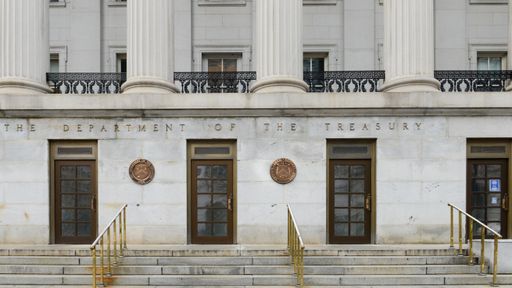
The Treasury Department’s sanctions office has consolidated penalty procedures for multiple sanctions programs into one new regulatory part.
The Treasury Department’s Office of Foreign Assets Control (OFAC) has issued a final rule adding a new part 505, the Sanctions Penalties Regulations, to title 31 of the Code of Federal Regulations (CFR). According to OFAC, the new regulations consolidate penalty information that applies to multiple sanctions programs and that is currently located in individual parts of 31 CFR chapter V. OFAC said the rule makes no substantive changes to these penalty provisions. The rule is effective on the date of publication in the Federal Register, which is scheduled for September 25, 2026.
Consolidation. OFAC said the rule reproduces information regarding enforcement procedures and penalties, including the rights of U.S. persons being investigated for violations. The initial version of the regulations covers penalties for violations of sanctions issued under the International Emergency Economic Powers Act (IEEPA) and the United Nations Participation Act (UNPA), according to the agency. OFAC stated that, following publication, it will update parts within 31 CFR chapter V to replace existing penalty information with cross-references to the new part. The agency said this approach is intended to help standardize penalty provisions and ease compliance with the Federal Civil Penalties Inflation Adjustment Act of 1990.
Structure of the regulations. Under the rule, subpart D sets out the IEEPA civil penalty process from the issuance of a Pre-Penalty Notice to final agency action, and subpart E covers UNPA penalties. The regulations provide that substantive prohibitions, definitions, interpretations, and licenses for each sanctions program remain in the part of chapter V dedicated to that program.
Penalty amounts. The regulations state that IEEPA provides for a maximum civil penalty of the greater of $377,700 or twice the amount of the transaction underlying the violation. Under the rule, a person who willfully commits, attempts, or conspires to commit a violation, or aids or abets one, may be fined up to $1,000,000 upon conviction and, if a natural person, imprisoned for up to 20 years. The rule provides the same criminal penalty levels for willful violations of orders issued under section 5(a) of the UNPA. According to the preamble, OFAC considers the facts and circumstances of an apparent violation when determining civil penalties, including whether the conduct was willful or reckless, the violator’s awareness of the conduct, and harm to sanctions program objectives. OFAC said base penalties are halved when it learns of a violation through a voluntary self-disclosure. The agency said apparent violations it refers for criminal investigation or prosecution may still be subject to OFAC civil penalties.
Enforcement procedures. Under the rule, OFAC will issue a written Pre-Penalty Notice when it has reason to believe a violation occurred and determines that a civil monetary penalty is warranted. An alleged violator may respond in writing within 30 days, and a failure to respond within that period is deemed a waiver of the right to respond, the regulations state. The rule provides that a Penalty Notice issued after OFAC considers the response constitutes final agency action, which the violator may challenge in federal district court. If a violator does not pay, the matter may be referred for administrative collection by Treasury or to the U.S. Department of Justice (DOJ) for a civil suit, according to the rule. The regulations also allow OFAC to issue a Finding of Violation where it concludes that an administrative response is warranted but a civil monetary penalty is not the most appropriate response.
Public disclosure. The rule requires OFAC, at least monthly, to publish on its website certain information about civil penalty proceedings that end in a penalty or settlement. For entities, the published information includes the entity’s name and location, the sanctions program, a description of the violation, whether the entity voluntarily disclosed it, and the penalty or settlement amount, according to the regulations. The rule states that information on proceedings against individuals will be released on an aggregate basis and will generally not include the individual’s name.
Other statutes. OFAC said civil penalties for sanctions violations under other statutes remain in their existing CFR locations. The rule identifies these as the Trading with the Enemy Act, section 2339B of the Antiterrorism and Effective Death Penalty Act of 1996, the Foreign Narcotics Kingpin Designation Act, and the Clean Diamond Trade Act.
MainStory: TopStory BankingOperations CrimesOffenses GCNNews PrudentialRegulation