

Labor & Employment Law Daily Wrap Up, COVERAGE, LIABILITY—9th Cir.: Ministerial exception bars mashgiach’s claims against Orthodox Jewish Congregation of America, (Jan 2, 2025)
Law Firms Mentioned:Jackson Lewis | Law Offices of Micheal Elliot Friedman
Organizations Mentioned:Jackson Lewis, PC | Union of Orthodox Jewish Congregations of America
By Kathleen Kapusta, J.D.
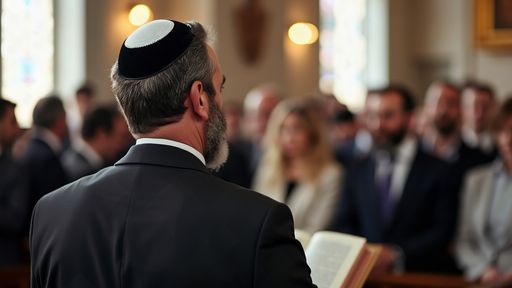
A mashgiach is appointed by a board of Orthodox rabbis to guard against any violation of the Jewish dietary laws.
Affirming summary judgment in favor of the Union of Orthodox Jewish Congregations of America (OU) against the employment- related claims of a mashgiach—an Orthodox Jew who supervises food preparation to ensure kosher compliance—the Ninth Circuit found the OU was a religious organization and the mashgiach was its minister and thus his claims were barred by the First Amendment’s ministerial exception. Clarifying the scope and purpose of the exception, the court further held that issues involving a religious institution cannot be bifurcated into being either “religious” or “nonreligious” and a religious institution does not need to identify a religious justification for its employment-related decisions to invoke the exception. Judge Sanchez concurred in part and concurred in the judgment (Markel v. Union of Orthodox Jewish Congregations of America, No. 23-55088 (9th Cir. Dec. 30, 2024)).
The mashgiach, who had been appointed by a board of Orthodox rabbis to guard against violations of the Jewish dietary laws, worked for the OU, a not-for-profit corporation that serves the Orthodox Jewish community. In addition to providing religious programming, advocacy, and youth programs for a network of synagogues, the OU also ensures that kosher food is widely available. Indeed, it runs the largest kosher certification program in the United States. During his seven years with the OU, the mashgiach was responsible for the kosher integrity of grape products at two wineries.
Lower court proceedings. Claiming he was denied a promotion and raise promised to him by his supervisor, a Rabbi, and that the OU did not properly pay him overtime, the mashgiach sued the OU and the Rabbi. Granting summary judgment against his claims, the district court, in an issue of first impression in the circuit, held that a mashgiach is a “minister” within Orthodox Judaism and that OU was a religious organization.
Religious institution. On appeal, the mashgiach argued that OU was not a religious institution because its kosher food certification program turns a profit and OU competes with for-profit kosher certification companies in the market. Pointing out that the Supreme Court, which has never defined “religious institution,” has declined to adopt a rigid formula for determining when an employee is a “minister,” the Ninth Circuit declined to adopt a rigid formula for determining whether an institution is religious.
In Our Lady of Guadalupe Sch. v. Morrissey-Berru, the Ninth Circuit observed, the Supreme Court implicitly held that two Catholic primary schools were religious institutions by holding that the ministerial exception applied. “That these schools charged tuition fees or competed to some extent with other private schools in the market was of no moment,” the appeals court reasoned, and “All that mattered was that the schools had a religious mission.” Finding no reason to deviate from this broad understanding of what constitutes a religious organization, the court held that the “acceptance of revenue does not deprive an organization with a religious mission of First Amendment protections.”
Pointing out that it has rejected the mashgiach’s limited understanding of religious organizations in other cases defining “religious organization” in statutes such as Title VII, the appeals court found that OU was a religious organization.
Minister. Addressing next whether the mashgiach was OU’s minister, the Ninth Circuit turned to the Supreme Court’s 2012 Hosanna-Tabor Evangelical Lutheran Church and Sch. v. EEOC decision, in which it identified four relevant circumstances—including whether the employer holds the employee out as a minister, the employee’s title, whether the employee holds herself out as a minister, and job duties—but did not highlight any as essential. In Our Lady, however, the Court emphasized the employee’s role within the religious organization.
Essential role. Applying both Hosanna-Tabor and Our Lady, and recognizing that Judaism has many ministers, the court found that the mashgiach was OU’s minister as his role was essential to OU’s religious mission. As head mashgiach for two wineries, he was responsible for the kosher integrity of OU’s grape products. Further, observed the court, keeping kosher is essential to observing Orthodox Judaism and OU’s central mission is to support Orthodox Jews as they strive to fully live their faith.
In addition, said the court, to qualify to serve in his position, the mashgiach had to submit a letter from an Orthodox rabbi certifying that he was an observant Jew, including that he kept the Sabbath and followed kosher laws. “Because only observant Orthodox Jews can serve as a mashgiach for the OU, and because they are necessary to carrying out OU’s religious mission of ‘ensuring the wide availability of kosher food,’ a mashgiach is a minister for purposes of the ministerial exception,” the court stated, joining the Fourth Circuit, which, in 2004, also held in Shaliehsabou v. Hebrew Home of Greater Washington, Inc., that a mashgiach is a Jewish minister.
Secular dispute. Rejecting the mashgiach’s argument that the ministerial exception should not apply because his dispute with OU was secular, the court pointed out that a religious institution’s decisions, even if facially secular, are often intertwined with religious doctrine and issues involving a religious institution cannot be bifurcated into being either religious or non-religious. Noting that the Supreme Court has explained that “[i]t is a significant burden on a religious organization to require it, on pain of substantial liability, to predict which of its activities a secular court will consider religious.... [A]nd an organization might understandably be concerned that a judge would not understand its religious tenets and sense of mission,” the court here refused to impose such a burden on religious organizations.
Religious justification. After clarifying that a religious institution’s decisions should not be delineated between religious and secular, the court emphasized that the ministerial exception forbids courts from requiring religious institutions to provide a religious justification before invoking the exception. Citing to its 1999 decision in Bollard v. California Province of the Society of Jesus and the Seventh Circuit’s 2021 decision in Demkovich v. St. Andrew the Apostle Par., the court explained that both decisions “show that religious organizations need not have a specific religious purpose to invoke the ministerial exception” as such a “narrow conception of religiousness” would contradict Supreme Court precedent.
Protection. Finally, noting that it has not yet considered whether the ministerial exception protects supervisors and other religious leaders as well as the employer, the court, citing the broad purpose of the exception, found it does provide such protection. “Since the same constitutional harm looms regardless of whether an employee-plaintiff’s employment-related claims are against the religious organization or its leaders, we hold that the ministerial exception protects both.”
Concurrence. Concurring in part and concurring in the judgment, Judge Sanchez declined to join in the majority’s conclusion that the Supreme Court, in Our Lady, took a broad view of who counts as a minister. “This case,” Sanchez wrote, “does not require us to adopt either a broad or narrow view of the ministerial exception, or to wade into questions about whether a court can differentiate between ‘secular’ or ‘religious’ decisions. To the extent the majority suggests that the ministerial exception also bars non-employment-related claims brought by a ministerial employee, that view is at odds with both Supreme Court and circuit precedent.”
The case is No. 23-55088.
Judge: Nelson, R.
Attorneys: Michael Elliot Friedman (Law Offices of Micheal Elliot Friedman) for Yaakov Markel. Leonora M. Schloos (Jackson Lewis) for Union of Orthodox Jews Congregations of America.
Companies: Union of Orthodox Jewish Congregations of America
MainStory: TopStory CoverageLiability Procedure WageHour TortClaims AlaskaNews ArizonaNews CaliforniaNews HawaiiNews IdahoNews MontanaNews NevadaNews OregonNews WashingtonNews GCNNews