

IP Law Daily, COPYRIGHT—U.S.: Internet service provider Cox not liable for users’ music piracy, (Mar 25, 2026)
Law Firms Mentioned:Clement & Murphy, PLLC | Orrick, Herrington & Sutcliffe LLP
Organizations Mentioned:Cox Communications | Cox Communications, Inc. | Orrick Herrington | Sony Music Entertainment | Sony Music Entertainment, Inc.
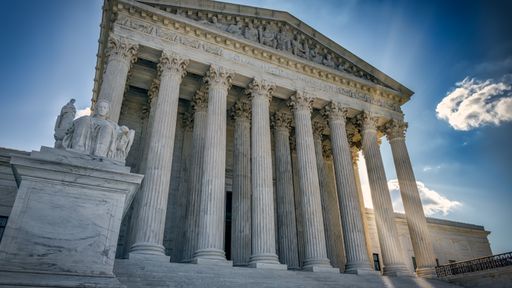
Music companies failed to show that Cox Communications, by allegedly failing to terminate customers who repeatedly shared copyrighted works, intended that its service be used for infringement.
A company is not liable as a copyright infringer for merely providing a service to the general public with knowledge that it will be used by some to infringe copyrights, the U.S. Supreme Court has held in an important decision on Internet service provider (ISP) liability for users’ acts of music piracy. The Court reversed a decision by the U.S. Court of Appeals for the Fourth Circuit in an opinion authored by Justice Clarence Thomas. All nine justices agreed that the appellate court was incorrect in holding that ISP Cox Communications was contributorily and willfully liable for its users’ infringement, potentially putting Cox on the hook for $1 billion in statutory damages. Cox had been sued by many of the largest music publishers and recording labels, including Sony, Arista, EMI, Atlantic, Elektra, and UMG, which accused Cox of failing to prevent its customers from engaging in repeated acts unlawful file-sharing. In the Court’s view, the record showed that Cox did not intend for its service to be used to commit copyright infringement. Justice Sonia Sotomayor filed an opinion concurring in the judgment, joined by Justice Ketanji Brown Jackson, expressing a different rationale for the reversal—specifically that the music industry plaintiffs failed to show that Cox had the specific knowledge required to find intent under a common-law aiding-and-abetting theory. The concurring opinion also warns that the majority, by placing limitations on available theories of secondary liability for copyright infringement, “upends” the incentive system created by the Digital Millennium Copyright Act and renders its safe harbor “obsolete” (Cox Communications, Inc. v. Sony Music Entertainment, No. 24-171 (U.S. Mar. 25, 2026)).
The case has drawn attention not just because of its significance to the parties and other ISPs and rights owners, and the massive damages figure at stake, but also because of its potential impact on Internet users. Cox had argued that the music industry parties had in effect proposed a “two-notices-and-terminate” policy for Internet customers. Cox contended that a policy of terminating users on this basis would “trigger mass evictions from the internet.”
Infringement dispute. The music industry plaintiffs alleged that users of Cox’s broadband Internet service infringed the copyrights to thousands of songs via illicit file-sharing. The music industry plaintiffs contended that Cox was secondarily liable for the users’ infringement. The key issue was whether Cox’s mere knowledge of the users’ infringement amounted to “materially contributing” to the infringement or whether the plaintiffs would have to show that Cox somehow affirmatively fostered the infringement.
Cox’s knowledge of infringement. Cox, like other ISPs, had limited knowledge about how its Internet services are used and who uses them, the Supreme Court pointed out. “They do know which IP address corresponds to which subscriber’s account, but they cannot distinguish one individual user from another,” the Court said. Additionally, ISPs cannot directly control how their Internet services are used. The music industry plaintiffs also faced difficulties in identifying the individual infringers of their works. Sony engaged the brand protection company MarkMonitor to track infringement of their copyrights across the Internet by tracing detected infringement to an IP address. MarkMonitor then sent notices to Cox—approximately 163,000 of them over the two-year period relevant to the litigation.
Cox’s responses to infringement. Cox asserted that it created a system of responding to those notices, involving a warning sent to subscribers associated with an IP address that had been the subject of two MarkMonitor notices. Additional notices led to warnings and suspensions of accounts until the subscribers responded to the warnings, and after a 13-notice threshold was reached, subscribers were subject to termination. Sony argued that this system was insufficient, as evidenced by the fact that it led to only 32 terminations. Sony also pointed to evidence that Cox was unwilling to lose revenue by terminating subscribers. Cox responded with the argument that its warning and suspension system had stopped 98 percent of identified infringement.
Jury verdict; Fourth Circuit holding. In December 2019, a jury found Cox liable for willful contributory and vicarious infringement of 10,017 songs and awarded $1 billion in statutory damages. Cox appealed to the Fourth Circuit, which, on February 20, 2024, reversed the district court with respect to the music industry plaintiffs’ claim of vicarious infringement. However, the Fourth Circuit affirmed the finding that Cox was contributorily liable for its users’ direct infringement. The appellate court reasoned that “supplying a product with knowledge that the recipient will use it to infringe copyrights is exactly the sort of culpable conduct sufficient for contributory infringement.” As Justice Thomas summed up the holding, “the Fourth Circuit agreed [with the district court] that because Cox provided Internet service to known infringers, it was a willful infringer itself.”
Petition for review. Cox filed a petition for certiorari with the Supreme Court on August 15, 2024, presenting two questions:
Did the Fourth Circuit err in holding that a service provider can be held liable for “materially contributing” to copyright infringement merely because it knew that people were using certain accounts to infringe and did not terminate access, without proof that the service provider affirmatively fostered infringement or otherwise intended to promote it?
Did the Fourth Circuit err in holding that mere knowledge of another’s direct infringement suffices to find willfulness under 17 U.S.C. § 504(c)?
The Court granted certiorari regarding both questions on June 30, 2025, about a month after the Solicitor General filed a brief on behalf of the U.S. government, urging the Court to reverse the Fourth Circuit’s decision on the contributory infringement verdict. Oral argument was held December 1, 2025.
Contributory copyright liability—intent. The Court opened its opinion by describing the standards for contributory copyright liability. “The provider of a service is contributorily liable for a user’s infringement if it intended its service to be used for infringement,” explained the Court. “The intent required for contributory liability can be shown only if the party induced the infringement or the provided service is tailored to that infringement,” the Court said, citing Metro-Goldwyn-Mayer Studios Inc. v. Grokster, Ltd., 545 U. S. 913, 930 (2005) and Sony Corp. of America v. Universal City Studios, Inc., 464 U. S. 417, 440-441 (1984). Inducement involves active encouragement of infringement through specific acts, such as the promotion and marketing of software as a tool to infringe copyrights, as seen in the Grokster case. As for the second way to show intent, a service is tailored to infringement if it is not capable of substantial or commercially significant noninfringing uses. This rule is exemplified by the Sony case, in which Sony’s Betamax video tape recorder was held not to be inherently infringing because it was capable of substantial noninfringing uses.
Knowledge not enough. “This Court has repeatedly made clear that mere knowledge that a service will be used to infringe is insufficient to establish the required intent to infringe,” the Court said, citing cases in which “mere indifferent supposition or knowledge on the part of the seller” was not enough to trigger liability. The Court also confirmed in Grokster that “a court would be unable to find contributory infringement liability merely based on a failure to take affirmative steps to prevent infringement.”
Cox not contributorily liable. “Thus, Cox is not contributorily liable for the infringement of Sony’s copyrights,” the Court said. “Cox provided Internet service to its subscribers, but it did not intend for that service to be used to commit copyright infringement. Holding Cox liable merely for failing to terminate Internet service to infringing accounts would expand secondary copyright liability beyond our precedents.”
In the Court’s view, Cox neither induced users to infringe nor provided a service tailored to infringement. Sony provided no evidence of encouragement to infringe, such as express promotion and marketing. Moreover, the Court noted, “Cox repeatedly discouraged copyright infringement by sending warnings, suspending services, and terminating accounts. The Court also stated that the ISP’s service was clearly capable of substantial or commercially significant noninfringing uses. “Cox simply provided Internet access, which is used for many purposes other than copyright infringement,” it said. Therefore, the Court reversed the Fourth Circuit’s decision and remanded the case.
DMCA safe harbor. The majority opinion briefly dealt with—and waved away—Sony’s argument that the safe harbor provided by the Digital Millennium Copyright Act (DMCA) “would have no effect if Internet service providers are not liable for providing Internet service to known infringers.” According to the majority, Sony overread the DMCA. “Sony does not contend that the DMCA expressly imposes liability for Internet service providers who serve known infringers. It does not,” the Court said. “The DMCA merely creates new defenses from liability for such providers. And, the DMCA made clear that failure to comply with the safe-harbor rules ‘shall not bear adversely upon … a defense by the service provider that the service provider’s conduct is not infringing’” (citing 17 U.S.C. § 512(l).
Concurring opinion. Writing separately to concur in the judgment, Justice Sotomayor expressed dissatisfaction with the majority’s reasoning. “The majority holds that Cox is not liable solely because its conduct does not fit within the two theories of secondary liability previously applied by this Court,” Sotomayor wrote. “In so doing, the majority, without any meaningful explanation, unnecessarily limits secondary liability even though this Court’s precedents have left open the possibility that other common-law theories of such liability, like aiding and abetting, could apply in the copyright context. By ignoring those past decisions, the majority also upends the statutory incentive structure that Congress created.”
Sotomayor took issue with the majority’s restriction of secondary copyright infringement liability. “The inflexible limit the majority imposes is nowhere to be found in either Sony or Grokster,” she asserted. “Far from supporting the majority’s limitation of secondary liability, Sony teaches that the scope of secondary liability for copyright infringement should be defined by reference to other areas of the law.” Additionally, the Court in Grokster made it clear that Sony neither displaced other theories of secondary liability nor foreclosed rules of fault-based liability derived from the common law.
“The majority’s limiting of secondary liability here dismantles the statutory incentive structure that Congress created,” Sotomayor wrote, referring to the DMCA’s safe harbor, recourse to which is predicated on adopting and reasonably implementing a policy to terminate repeat infringers when appropriate. “Congress did not provide that ISPs could never be secondarily liable for copyright infringement,” Sotomayor explained. “Instead, it struck a balance by creating incentives for ISPs to take reasonable steps to prevent copyright infringement on their networks, while also assuring ISPs that they do not need to take on the impossible task of responding to every instance of infringement on their networks.” Sotomayor argued that the majority “completely upends that balance and consigns the safe harbor provision to obsolescence.” She opined, “After today … ISPs no longer face any realistic probability of secondary liability for copyright infringement, regardless of whether they take steps to address infringement on their networks and regardless of what they know about their users’ activity.”
Sotomayor agreed with the majority that Cox could not be held liable in this case, but for a different reason. “Plaintiffs cannot prove that Cox had the requisite intent to aid copyright infringement for Cox to be liable on a common-law aiding-and-abetting theory,” she asserted. She noted the application of common-law aiding-and-abetting rules in the case of Twitter, Inc. v. Taamneh, 598 U. S. 471 (2023), in which social media platforms were held not to be liable for aiding and abetting a terrorist attack by ISIS by knowingly hosting content posted by ISIS and its followers. The plaintiffs in Twitter lost because they failed to allege that pro-ISIS accounts or content received “any special treatment,” Sotomayor explained. Nor did they put forth any other facts indicating that the platforms intended to aid the attack.
Noting that a showing of intent required a specific showing of knowledge, Sotomayor said that “based on plaintiffs’ evidence, Cox does not actually know that specific users will commit infringement using Cox’s network.” She pointed out that when Cox received a notice from MarkMonitor, “the notice specifies only which connection was used to infringe, not who used it to commit infringement.” That informational gap, she said, was fatal in this case. “Without proof that Cox knew more about individual instances of infringement, and without evidence of ‘pervasive, systemic, and culpable assistance’ needed to support a more generalized theory of liability … plaintiffs have at most shown that Cox was ‘indifferent’ to infringement conducted via the connections it sells.” This was not enough for aiding and abetting liability to attach, she concluded.
The Case is No. 24-171.
Judge: Thomas, C.
Attorneys: E. Joshua Rosenkranz (Orrick, Herrington & Sutcliffe LLP) for Cox Communications, Inc. Paul D. Clement (Clement & Murphy, PLLC) for Sony Music Entertainment.
Companies: Cox Communications, Inc.; Sony Music Entertainment
MainStory: TopStory Copyright TechnologyInternet GCNNews