

IP Law Daily, COPYRIGHT—U.S.: Copyright Act places no additional time limits on damages recovery for timely filed claims, (May 9, 2024)
Law Firms Mentioned:Cravath, Swaine & Moore LLP | Paul, Weiss, Rifkind, Wharton & Garrison LLP
Organizations Mentioned:Artist Publishing Group, LLC | Cravath Swaine & Moore, LLP | Michelman & Robinson, LLP | Music Specialist, Inc. | Warner Chappell Music, Inc. | Warner/Chappell Music, Inc. | Wharton & Garrison, LLP
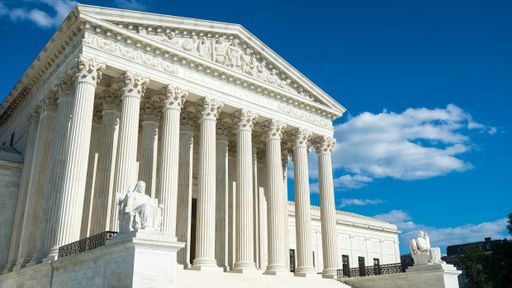
The Court assumed without deciding that a “discovery accrual rule” applies to copyright infringement claims, but three dissenting Justices cast doubt on that assumption.
If a copyright infringement claim is timely under the Copyright Act’s statute of limitations—which provides that an infringement claim must be brought within three years of its accrual—there is no additional time-based limit preventing the recovery of damages for any infringement that occurred more than three years before the lawsuit was filed, a divided U.S. Supreme Court has held. The majority, in an opinion authored by Justice Elena Kagan, assumed without deciding that a claim is timely under the Act if it is brought within three years of when the plaintiff discovered the infringement. The Court affirmed a decision of the U.S. Court of Appeals for the Eleventh Circuit, which held that 1980s music producer Sherman Nealy and his publishing company will be entitled to claim damages going back over a decade (regardless of the Copyright Act’s three-year statute of limitations) if they prevail in a copyright infringement lawsuit against the publisher over recordings that allegedly made unauthorized use of older recordings owned by Nealy. The decision resolves a circuit split between the Eleventh Circuit and the Ninth Circuit on the one hand, and the Second Circuit on the other, regarding the question of whether the discovery rule of accrual contains a time limit on retrospective damages (or “damages lookback”). Three dissenters, in an opinion written by Justice Gorsuch, would have dismissed the case as improvidently granted because it “sidesteps the logically antecedent question whether the Act has room for such a [discovery] rule.” Justice Gorsuch takes the position that the Copyright Act “almost certainly does not tolerate such a rule,” making the majority’s opinion here a “dead letter” (Warner-Chappell Music, Inc. v. Nealy, No. 22-1078 (U.S. May 9, 2024)).
Underlying copyright dispute. On December 28, 2018, Nealy filed suit against Warner-Chappell, alleging infringement of several of his works that allegedly began in 2008 but that Nealy was unable to discover until years later. According to Nealy, Warner-Chappell distributed copies of recordings to which he owned the rights, without compensating him or getting his permission. Warner-Chappell moved for summary judgment, arguing in part that the claims were barred by the statute of limitations.
Characterizing the case as a dispute over copyright ownership with respect to the recordings at issue, the district court ruled that Nealy’s claims accrued when Nealy knew or should have known that Warner-Chappell was challenging Nealy’s ownership of the works. In the district court’s view, factual questions precluded summary judgment. The district court certified for interlocutory appeal, asking the Eleventh Circuit to decide whether damages were limited to a three-year lookback period as calculated from the date of the filing of the complaint.
Eleventh Circuit’s holding. The appellate court held that under the discovery rule, the Act’s three-year timeline does not begin to run until the owner “knows or has reason to know” an injury occurred. The panel held that a court calculating damages could look back as far as the beginning of the infringement.
Petition for review. Warner Chappell then filed a petition for certiorari, presenting the question, “Whether the Copyright Act’s statute of limitations for civil actions, 17 U.S.C. 507(b), precludes retrospective relief for acts that occurred more than three years before the filing of a lawsuit.” In granting the petition, the Supreme Court changed the wording of the question presented, rendering it as follows: “Whether, under the discovery accrual rule applied by the circuit courts and the Copyright Act's statute of limitations for civil actions, 17 U. S. C. § 507(b), a copyright plaintiff can recover damages for acts that allegedly occurred more than three years before the filing of a lawsuit.”
Discovery rule. The Court noted that the question presented incorporates the assumption that the discovery rule governs the timeliness of copyright claims. “We have never decided whether that assumption is valid—i.e., whether a copyright claim accrues when a plaintiff discovers or should have discovered an infringement, rather than when the infringement happened,” the Court explained. “But that issue is not properly presented here, because Warner Chappell never challenged the Eleventh Circuit’s use of the discovery rule below.” The Court therefore confined its review to the disputed remedial issue and excluded consideration of the discovery rule, deciding only that a plaintiff with a timely claim under the rule can obtain damages going back more than three years.
No time limit on damages. According to the Court, the Copyright Act’s statute of limitations establishes a three-year period for filing that begins to run when a claim accrues. This is the only applicable “clock.” “The ‘time-to-sue prescription,’ as we have called it, establishes no separate three-year period for recovering damages, this one running from the date of infringement,” the Court said. The remedial provisions of the Act, in 17 U.S.C. § 504, do not themselves place a limit on damages lookback.
The Court characterized the Second Circuit’s contrary view as “self-defeating” because it recognizes a discovery rule, enabling plaintiffs to sue for infringing acts that took place more than three years before suit was filed, while then taking away the value in what it has conferred, by preventing the recovery of damages for “older infringements.” This approach “makes the discovery rule functionally equivalent to its opposite number—an accrual rule based on the timing of the infringement,” explained the Court. Although the Court did not decide that the discovery rule applies in copyright infringement cases, it rejected applying a “judicially invented damages limit.”
Therefore, if Nealy’s claims are timely under the discovery rule of accrual, he may obtain damages for them with no additional time limit, the Court concluded.
Dissenting opinion. Justice Gorsuch dissented, joined by Justices Thomas and Alito. He criticized the majority for “sidestepping” the antecedent question of whether the discovery rule is applicable to infringement cases brought under the Copyright Act. In Justice Gorsuch’s view, “the Act almost certainly does not tolerate a discovery rule,” meaning that the majority opinion’s statements about how the rule operates were “a dead letter.” According to the dissenting opinion, the Court observed in Petrella v. Metro-Goldwyn-Mayer, Inc., 572 U.S. 663, 670 (U.S. 2014), that the Copyright Act’s statute of limitations provision was worded in a way that called for the application of the standard “incident of injury rule.” Under this rule, a copyright claim arises or accrues when the infringing act occurs. In practice, this would mean that Nealy’s claims were untimely to the extent that he filed suit more than three years after they occurred. Acknowledging that the parties had not addressed the question of whether the discovery rule is proper in copyright cases, Justice Gorsuch wrote that he would have dismissed this case as improvidently granted.
Practitioner commentary. “This is a straightforward and common sense ruling that applied the plain text of the Copyright statute to the question presented,” said Jennifer A. Mauri, senior associate at Michelman & Robinson, LLP. “The majority makes clear that it is not opining as to whether the discovery rule is appropriate or under what circumstances that rule might be appropriate. Instead, it assumes that the discovery rule is valid. Under that assumption, it is hard to imagine a different outcome.”
Mauri continued, “If the discovery rule is in play to permit a copyright owner to bring suit past the three-year mark of when the infringement actually occurred, then it follows that the copyright holder can also seek damages for that infringement. Otherwise, even if the copyright holder establishes infringement, it would be a hollow victory—a judgment with no damages to compensate the copyright holder.”
Regarding the decision’s impact, Mauri said, “Overall, this ruling is pro-copyright owner and gives teeth (in the form of potential damages) to copyright owners who discover an infringement beyond the three-year statute of limitations. Practically speaking, because of the circuit split on the contours of the discovery rule, plaintiffs who are looking to take advantage of the discovery rule will be well advised to consider which forum would be most friendly to their particular circumstances.”
She cautioned that the discovery rule is not a cure-all for plaintiffs’ delays in filing suit, however. “Plaintiffs will still have to establish that the discovery rule should apply, and defendants are going to be even more incentivized to oppose a plaintiff’s efforts to apply the discovery rule because of the now increased potential for damages going back the past three years,” Mauri said.
With respect to the dissenting opinion and its relevance to future Supreme Court jurisprudence on the discovery rule, she found it “interesting that the dissent focused not on the question presented, but rather, used the dissent to argue that the discovery rule should not exist at all.” According to Mauri, “This telegraphs that at least three of the justices are ready to reject the discovery rule. And, with the remaining justices explicitly holding back from opining on the applicability of the discovery rule, it appears that the Court may be ready to strike down the discovery rule entirely—which would, of course, render today’s decision moot.”
The case is No. 22-1078.
Judge: Kagan, E.
Attorneys: Kannon K. Shanmugam (Paul, Weiss, Rifkind, Wharton & Garrison LLP) for Warner Chappell Music, Inc. and Artist Publishing Group, LLC. Joe Wesley Earnhardt (Cravath, Swaine & Moore LLP) for Sherman Nealy and Music Specialist, Inc. Jennifer A. Mauri (Michelman & Robinson, LLP).
Companies: Warner Chappell Music, Inc.; Artist Publishing Group, LLC; Music Specialist, Inc.
MainStory: TopStory Copyright